Social Posts for GEO: How Instagram, LinkedIn, TikTok, Facebook, and X Feed AI Citations
GEO Social AI Strategy

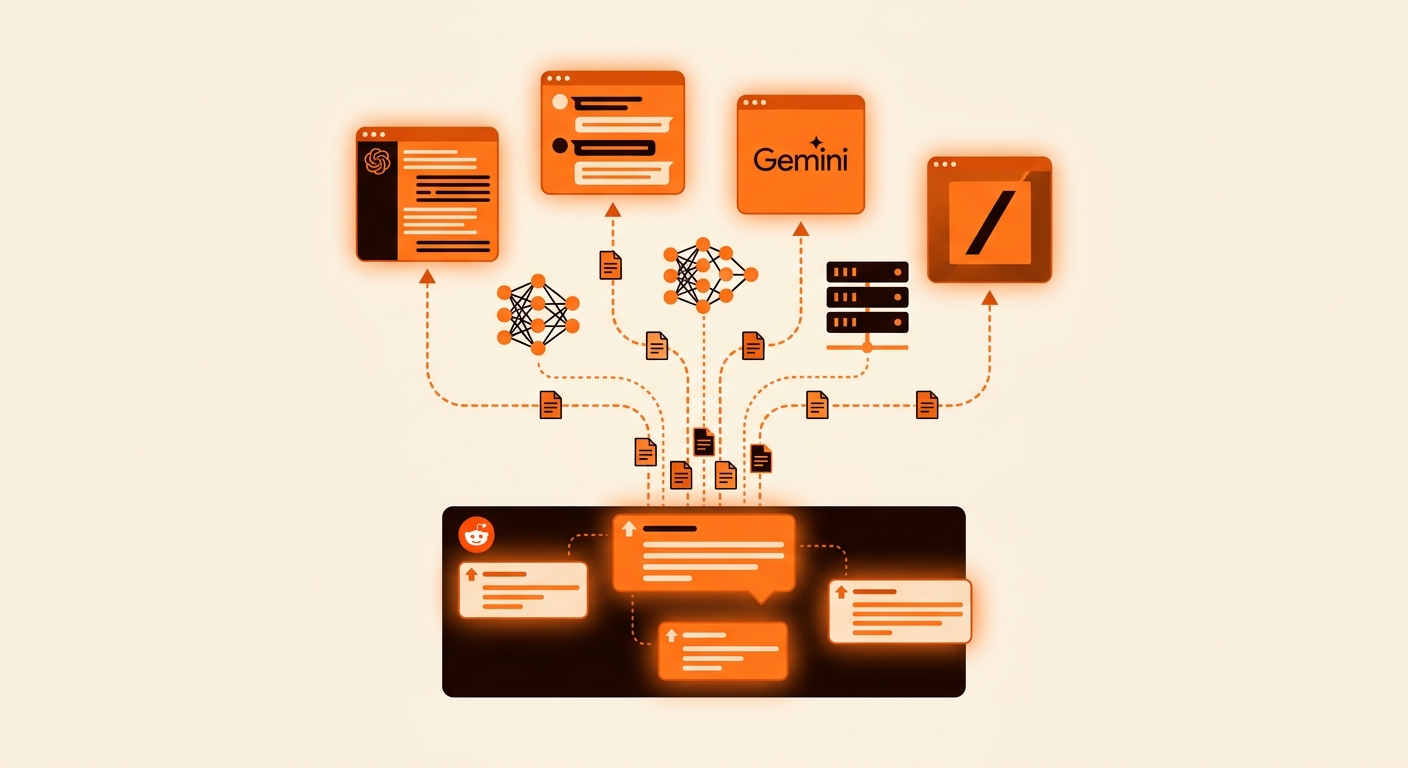
Social posts contribute to AI citations more than most marketing operations realize. Zeover tracks where social content is cited across ChatGPT, Claude, Gemini, Grok, and Perplexity, and surfaces which platforms drive brand visibility. Audit your social GEO surface.
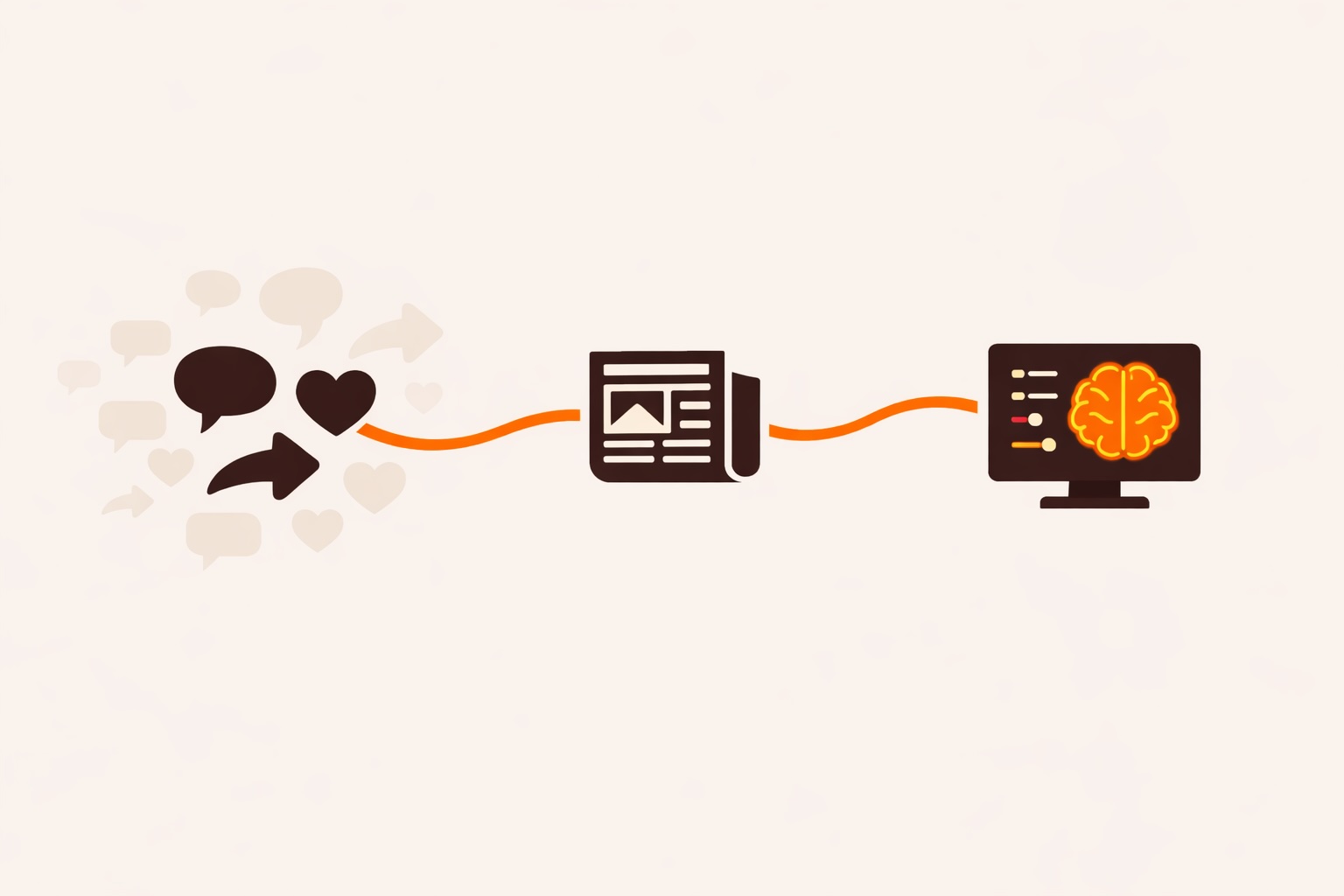
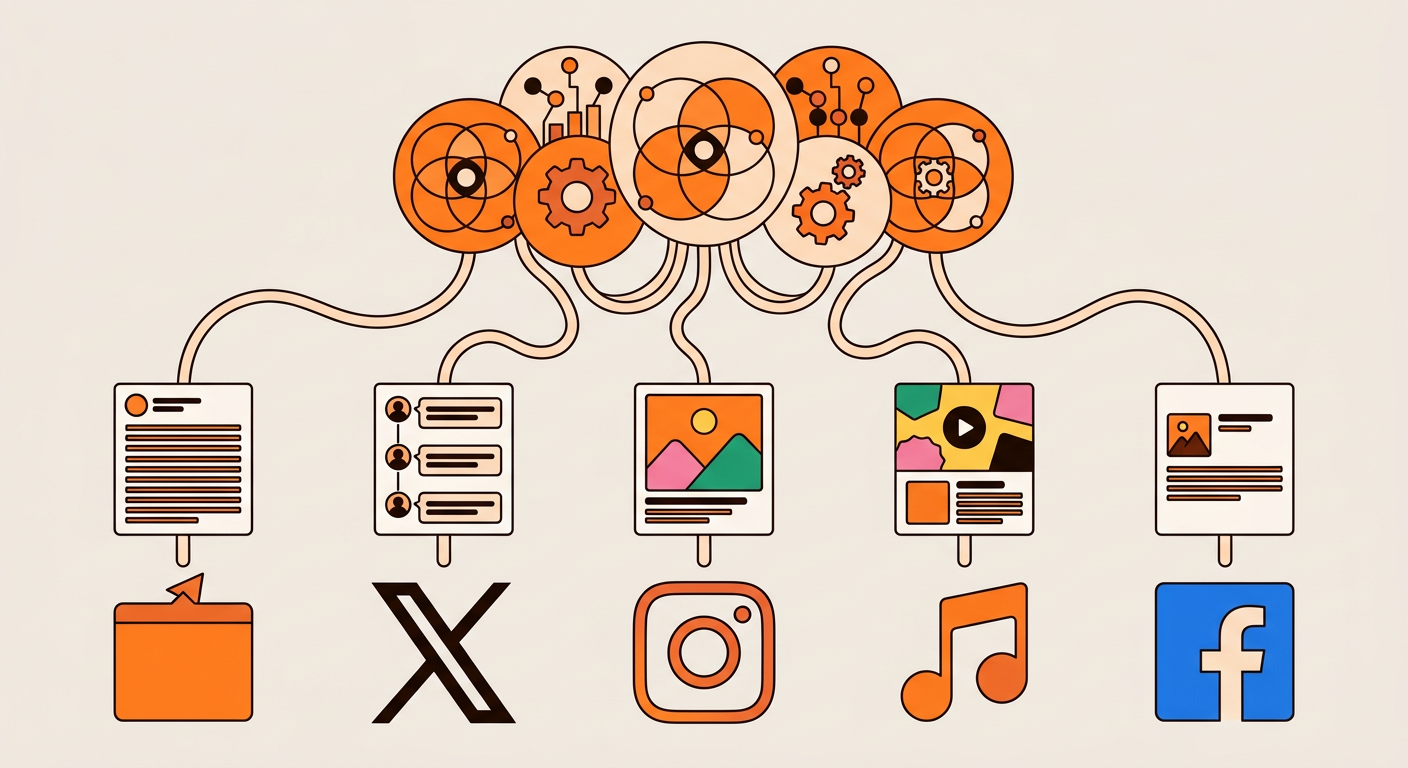
The 2023 social media playbook treated each platform as an audience-engagement channel: post for impressions, build follows, drive clicks. In 2026, social posts also feed AI engines that pull them into answers. Each platform contributes differently. LinkedIn dominates B2B citations. X surfaces time-sensitive queries. Instagram and TikTok carry consumer queries. Facebook contributes to local and community-shaped queries. Operations that adjust their social cadence to feed both the audience and the AI engines double-count their effort.
TL;DR
- An early-2026 analysis of 325,000 AI prompts found LinkedIn cited in 14.3% of ChatGPT Search responses, 13.5% of Google AI Mode responses, and 5.3% of Perplexity responses. LinkedIn ranked as the second most-cited domain overall, trailing only Reddit.
- A separate longitudinal analysis of 1.4 million citations across six AI models found LinkedIn climbed from approximately #11 on ChatGPT in November 2025 to approximately #5 by February 2026. Twofold citation growth in four months.
- LinkedIn is the strongest single AI citation source for B2B queries. Founder posts, company-page posts, and employee thought leadership all surface in answers when prompted about category-defining questions.
- X feeds Grok directly and meaningfully feeds the other engines for time-sensitive content. Real-time news, breaking announcements, and category commentary earn citations.
- Cross-posting the same content to all five platforms underperforms on every platform. Platform-native cadence is the only approach that produces citation lift proportional to the effort.
LinkedIn: The B2B Citation Engine
LinkedIn is the single highest-impact social platform for AI citations on B2B queries in 2026. The 325,000-prompt analysis put it at 14.3% citation share on ChatGPT Search, 13.5% on Google AI Mode, and 5.3% on Perplexity. For professional queries specifically, a separate longitudinal study put LinkedIn at the #1 cited domain across six AI platforms.
The platform-by-platform skew matters for content strategy. ChatGPT Search and Google AI Mode favor individual creators: roughly 59% of cited LinkedIn content came from individual members, with personal posts and personal articles outpacing company pages. Perplexity showed the opposite skew: roughly 59% of its cited LinkedIn content originated from Company Pages. Operations that publish only through the company page underperform on the engines that disproportionately cite individual contributors.
Three reasons LinkedIn punches above its weight on AI citations:
Index quality. LinkedIn pages are heavily indexed by AI training data and live retrieval. The platform's URL structure and content density make extraction efficient for engines.
Authority signals. LinkedIn profiles carry verifiable identity: employer, role, education, endorsements. AI engines weight content from named employees higher than anonymous social posts. The same claim under a verified VP of Engineering carries more retrieval weight than the same words under an anonymous handle.
Long-form posts. LinkedIn's 3,000-character post limit produces content closer to micro-blogs than tweets. Long-form posts get extracted as citation candidates at meaningfully higher rates than short-form social.
What works on LinkedIn for GEO:
- Founder posts about the category. "Three things we learned shipping X in 2025" with named examples and numbers.
- Company-page posts with substance. Not "we're hiring" but "the data we found in our 1,200-customer study."
- Employee thought leadership. Domain-specific posts from named employees with their titles and the brand mentioned in context.
- Article-format posts. LinkedIn Articles (the longer-form posts) rank in search results and get extracted at higher rates than short Updates.
A 2026 B2B operation publishing 3-5 substantive LinkedIn pieces per month sees citation lift on B2B AI queries that volume-Twitter operations don't see. Founders who post once a week from a personal profile compound faster than company pages that post daily because of the verified-identity weighting.
X: Time-Sensitive Citation Surface
X feeds Grok directly and feeds the other engines meaningfully for time-sensitive content. The platform's contribution shape:
Recency. X's real-time stream is indexed almost instantly by Grok and within hours by other engines. A timely post about a category development can earn citations the same week.
Handle and hashtag structure. Posts referencing other accounts and using category-relevant hashtags build the entity graph AI engines use to reason about who belongs to what category.
Conversation context. Replies and quote-tweets create context AI engines extract for nuanced answers. A reply with substance gets cited; a one-word reaction does not.
What works on X for GEO:
- Substantive thread posts. A thread with 5-10 connected posts on a category development beats a single 280-character take.
- Founder commentary on category news. Real-time reactions to industry events get cited when the event becomes a query.
- Original data and stats. Posts with original numbers ("we measured X across 500 customers") get cited at higher rates than commentary on others' data.
- Replies to authoritative accounts. A substantive reply to a major industry account inherits some of the parent post's citation authority.
X's contribution to citations runs smaller than LinkedIn's for evergreen B2B queries but dominates for time-sensitive ones. Grok's grounding on X content also means brand mentions on X carry disproportionate weight if the brand wants Grok visibility specifically. We covered the broader case for social brand mentions in the brand-mentions vs. backlinks piece and the research roundup on social and GEO.
Instagram And TikTok: Consumer Surfaces
Instagram and TikTok contribute mostly through caption text and structured metadata (handles, hashtags, geotags). The video itself doesn't get extracted directly for citations; the surrounding text does.
What works:
- Caption length and substance. Long captions with category context, specific claims, and named details get extracted. "Look at this!" doesn't.
- Hashtag strategy. Category-relevant hashtags help discoverability inside the platform; the AI citation lift is smaller than the engagement lift but real.
- Geotags for local queries. Particularly important for hospitality, retail, and service businesses serving local markets.
- Bio completeness. The brand's account bio carries citation weight when AI engines summarize the brand. Treat the bio like a positioning sentence; consistency across accounts matters.
The video transcripts platforms expose (TikTok captions, Instagram Reels descriptions) increasingly feed AI engines. Operations that produce captions with substance get citations that video-only competitors miss. For consumer brands targeting Gen Z, TikTok captions and bio copy do more for AI visibility than any single ad spend at comparable cost.
Facebook: Local And Community
Facebook's contribution to AI citations in 2026 runs smaller than LinkedIn or X but real for specific query types:
Local and community queries. Facebook Pages with active engagement contribute to AI engines answering "best category near location" or "events in a neighborhood" queries. For multi-location brands, an active Facebook Page per location adds material weight.
Long-running brand pages. Established pages with a decade of consistent posting have more citation surface than newer pages with comparable activity. The history compounds.
Reviews on Facebook Pages. AI engines treat Facebook Page reviews similarly to other review aggregators (Google reviews, Yelp). The citation lift is modest but additive, especially for restaurants and retail.
For most B2B operations, Facebook is a maintenance investment rather than a growth investment in 2026. Keep the Page complete and current; don't expect aggressive Facebook-specific production to earn proportional citation lift. For local consumer brands, Facebook still earns its slot in the cadence.
What Doesn't Cross-Post
A common 2024 mistake: write content once, cross-post identical text across all five platforms. The 2026 result is that the post performs poorly on every platform because each platform's algorithm and the AI engines' platform-specific retrieval penalize duplication. The same paragraph on LinkedIn, X, Instagram, and Facebook reads as automated to both the algorithms and the engines, and citation weight drops accordingly.
The fix is platform-native cadence:
- LinkedIn: long-form, named-author, professional voice. Numbers and named examples.
- X: thread or sharp single post, conversational, time-sensitive.
- Instagram: visual-first with caption substance.
- TikTok: video-first with text overlay and structured caption.
- Facebook: Page-style with community engagement focus.
Operations that adjust per platform see disproportionate engagement lift and AI citation lift. Operations that cross-post see neither.
A Defensible 2026 Cadence For B2B
- LinkedIn: 3-5 meaningful posts per week (mix of company-page, founder, and employee). Two of those should be founder or employee posts under a named profile, given how heavily ChatGPT and Google AI Mode weight verified individuals.
- X: 5-10 posts per week, mix of original threads and substantive replies. Bias toward time-sensitive content and original data.
- Instagram: 2-4 posts per week if the brand has visual substance; less if not.
- TikTok: 2-4 videos per week if video is the brand's medium; skip if not.
- Facebook: weekly Page update; maintain rather than invest.
The cadence assumes 4-8 hours per week of social production time across the team. Operations that try to invest more without specializing per platform usually see fading returns. Operations that try to do all five at once with one writer running everything produce mediocre content on five platforms, which is worse than excellent content on two.
What's Worth Doing First
For an operation with weak social presence:
- Lock LinkedIn first. Company page complete, founder profile active, 3-5 substantive posts a week. For B2B, this is the single most impactful move in the social GEO playbook given the 14.3% citation share on ChatGPT Search alone.
- Add X for time-sensitive content. Founder voice, thread format, original data when it exists.
- Audit Instagram bio and Facebook Page. Bring both to current and consistent. Bio copy carries more weight than most operators recognize.
- Decide whether TikTok and visual Instagram earn investment. Some categories yes, some no. The decision depends on whether the brand has visual substance to draw on, not on whether the demographic seems plausible.
- Track citations from social specifically over the next quarter. Watch LinkedIn citation rate on B2B prompts and X citation rate on category-news prompts. Adjust based on what moves.
Three months of focused work produces a social GEO presence that contributes to citation rate measurably. The 325,000-prompt analysis cited above also held a different lesson: even the most-cited domain rarely exceeds 5% of total citations across all queries. There is no winner-take-all dynamic at the platform level. The brand that earns a citation slot on LinkedIn and another on X and a third on Reddit (via brand mentions, not posts) compounds faster than the brand that tries to own one platform exhaustively. The long tail is where the AI citation share lives.