
Category: AI Strategy

AI Visibility Tracker: What to Measure, How to Track It, How to Act

AI Visibility Tracker: What to Measure, How to Track It, How to Act

What actually matters when tracking AI visibility: mention rate, citation rate, share of voice, accuracy, and competitor presence — plus a practical DIY tracking framework and a platform evaluation checklist.


How to Rank in ChatGPT: A Practical Guide to AI Search Optimization

How to Rank in ChatGPT: A Practical Guide to AI Search Optimization

How ChatGPT actually selects, weighs, and cites brands — with and without browsing — and a concrete framework to improve mention accuracy, citations, and benchmark tracking over time.

GEO for Restaurants: A Practical Playbook for AI Visibility

GEO for Restaurants: A Practical Playbook for AI Visibility

A practical playbook for independent restaurants and small groups: menu schema, Google Business Profile signals, review consistency, location pages, and a week-by-week action checklist to improve AI recommendation rates.

How to Do GEO? A Practical 5-Step Guide for Marketing Teams

How to Do GEO? A Practical 5-Step Guide for Marketing Teams

A practical, no-fluff framework for Generative Engine Optimization: how to audit AI readability, benchmark real buyer prompts across ChatGPT, Claude, Gemini, Grok and Perplexity, fix schema/structure gaps, study citations, and build a repeatable GEO content loop.

What Is an AI Marketing Optimization Platform, and Do You Need One?

A clear, practical definition of the AI Marketing Optimization Platform category: continuous benchmarking, brand entity governance, machine-readability auditing, and brand-governed content generation, plus how to tell if your team needs one now or later.

How to Rank in Claude: A Practical Guide for Generative Engine Optimization

Claude weights primary sources and community discussion more heavily than ChatGPT or Gemini. Here is what Claude actually cites, how its web search behavior works, and how to build content that earns citations there specifically.

AI Marketing Platform for Startups: What to Set Up Before You Scale

Startups have a structural advantage in AI visibility. Here is the practical first-year setup: locked brand boilerplate, schema and llms.txt from day one, an early benchmark baseline, and a lean content cadence a small team can actually sustain.

How to Rank in Perplexity: A B2B Guide to Winning More AI Citations

Perplexity is citation-first by design, averaging 6-7 citations per response. Here is how its Sonar retrieval works, what earns citations, how it differs from ChatGPT, Gemini, and Claude, and a practical checklist for B2B brands.

Marketing Skills for AI Agents: What to Install, What to Build, and Where Zeover Fits

Installable Marketing Skills for Claude Code, Cursor, and Codex are spreading fast. They're useful, but they don't solve brand governance, benchmark tracking, or citation measurement on their own. Here's what to install, what to build, and how MCP and a closed-loop GEO platform like Zeover fit into an agentic marketing stack.

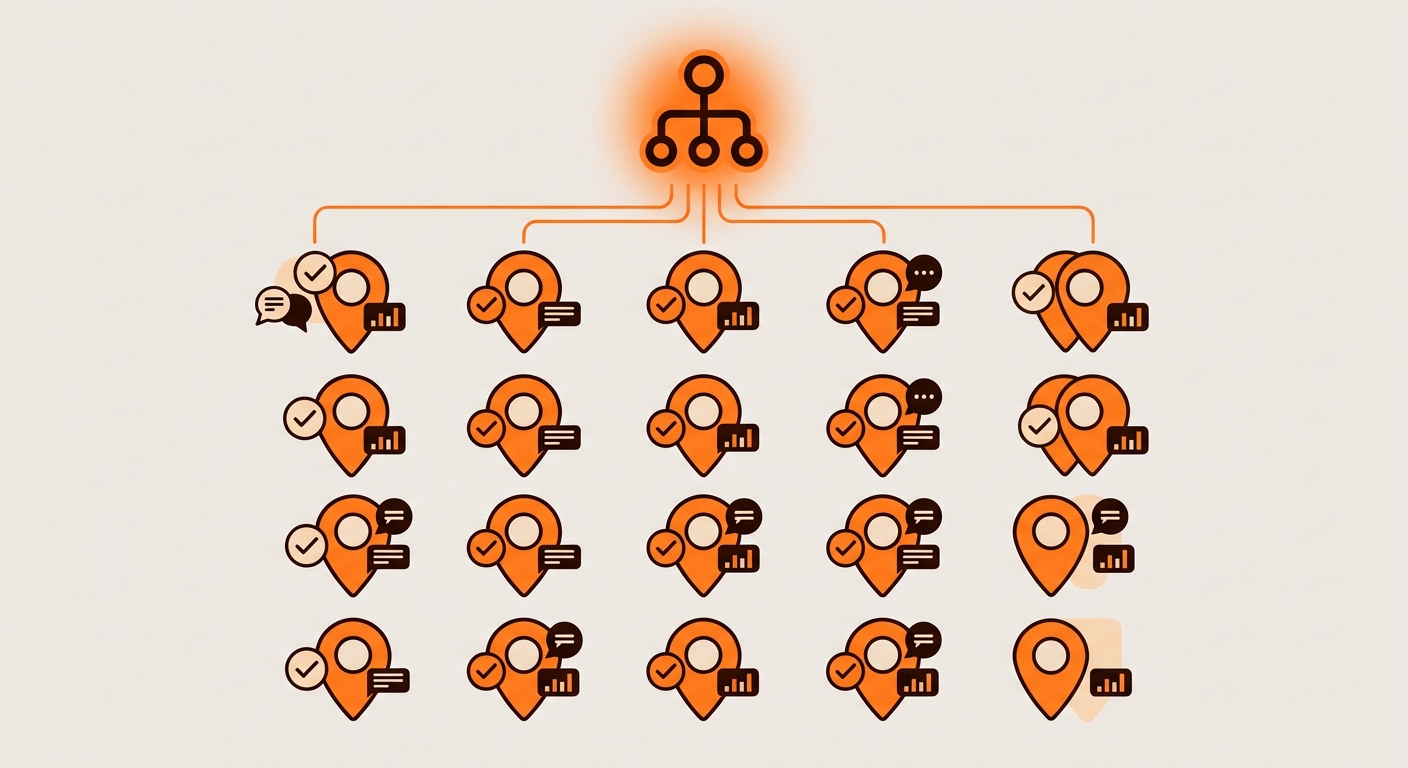
GEO for Physical Locations: Platform Requirements for Multi-Location Brands

GEO for Physical Locations: Platform Requirements for Multi-Location Brands

Multi-location brands hit governance breakpoints around 20 locations. A March 2026 analysis of 350,000+ locations found ChatGPT recommended only 1.2% of them. The platform requirements that compound visibility across the full footprint.