How to Rank in Gemini - Build a Gemini-Readable Site: Schema, Entity Pages, and Google Signal Overlap (Part 2 of 5)
GEO SEO Search

Gemini citations are the strongest argument for why SEO investment compounds into AI visibility. Zeover audits the schema and entity-page work that benefits both surfaces, then tracks Gemini and Google performance side by side. Audit your site for Gemini.
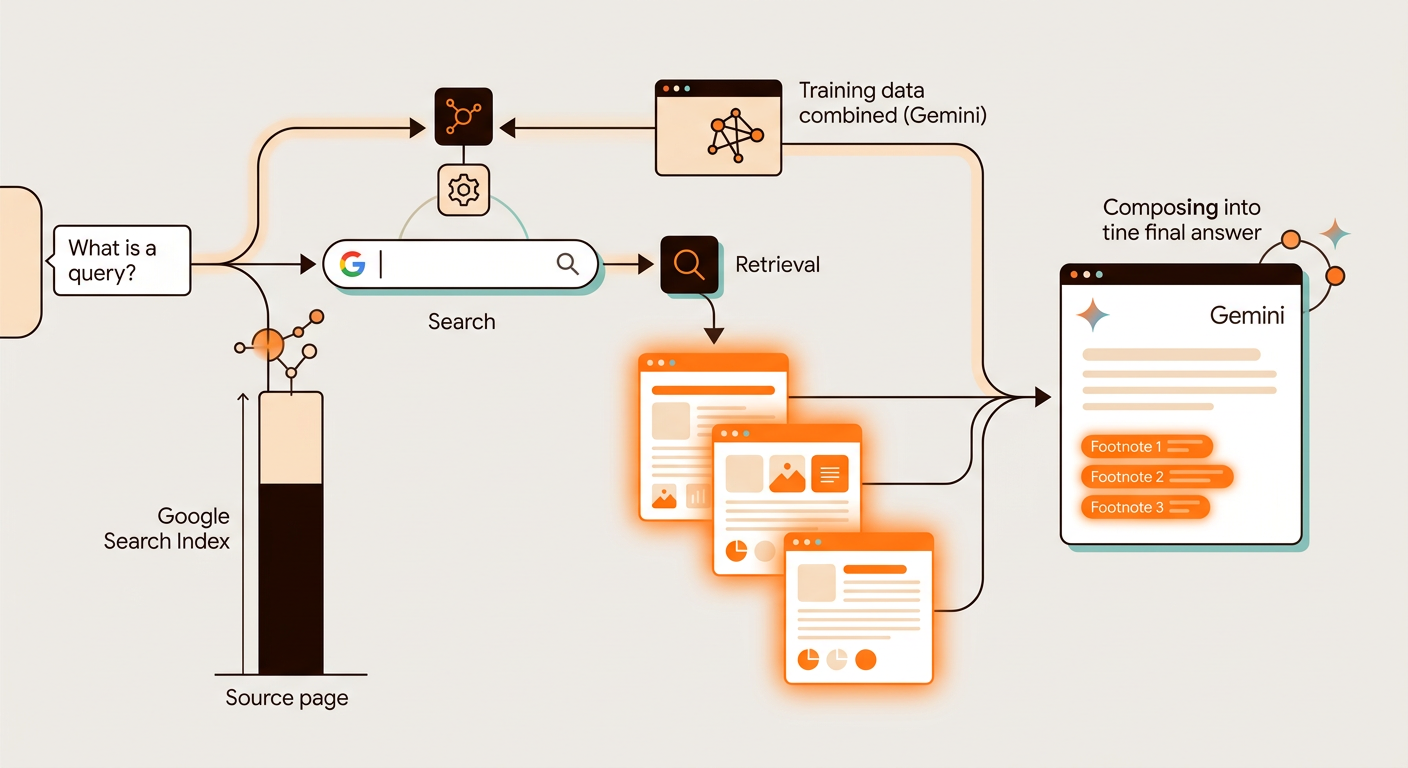
Part 1 explained what Gemini cites and why grounding ties Gemini citation rate to Google search performance. Part 2 covers the implementation work: making the site itself Gemini-readable. The work overlaps with traditional SEO by 85 to 90 percent, which is the practical reason this is the highest-impact GEO project for most operations in 2026.
TL;DR
- Gemini-readability is mostly SEO done well: clean schema, structured headings, entity pages, fast page experience, and machine-readable content. The work pays off twice.
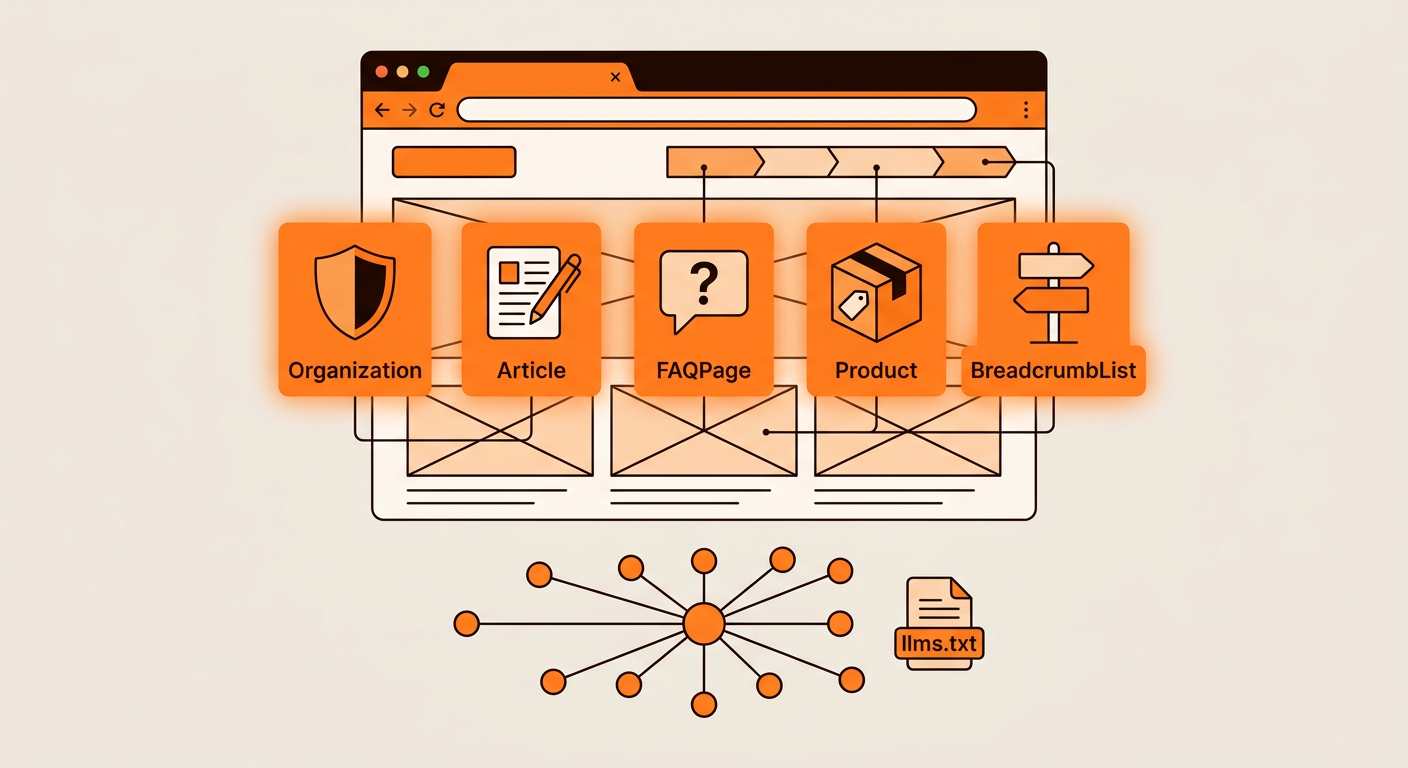
- Schema priorities for Gemini are Organization site-wide, Article on every editorial page, FAQPage on Q&A content, Product on product and comparison pages, and BreadcrumbList for navigation. Each gives Gemini typed data to extract.
- Entity pages serve as Gemini's anchor when answering "what is X." A canonical URL with Organization or Product schema, internal links from related content, and
sameAsreferences to LinkedIn, Crunchbase, and Wikipedia (where applicable) is the pattern that wins. - An llms.txt file at the domain root tells AI crawlers which canonical content to prefer. Lightweight to ship, zero downside, modest upside on Gemini specifically.
- The Google signal overlap means most of this work was already on the SEO roadmap. Reframing it as GEO+SEO compounds the budget conversation in the team's favor.
Schema That Earns Gemini Citations
Five schema types do most of the work. Google's own structured-data documentation reports strong rich-result performance gains from case studies including Rotten Tomatoes (25% CTR lift) and Nestle (82% CTR lift on pages appearing as rich results). The same typed data feeds Gemini.
Organization (site-wide). The brand entity itself. Legal name, logo URL, sameAs links to LinkedIn, Crunchbase, and Wikipedia (where applicable), contact points, founding date. Gemini uses this when answering "what is X" and when grounding any page back to the brand.
Article (every blog post and editorial page). Headline, author, datePublished, dateModified, publisher, image. The dateModified field carries the freshness signal Gemini weights heavily.
FAQPage (any page with Q&A blocks). Each Q&A pair becomes a citation candidate. Gemini extracts FAQ-marked answers at higher rates than equivalent prose, because the structure tells the model where one answer ends and the next begins.
Product (product pages and comparison pages). Name, description, sku, brand, offers, aggregateRating. Gemini uses Product schema to assemble recommendation answers for category and comparison queries.
BreadcrumbList (site navigation). Tells Gemini where each page sits in the content taxonomy. Cheap to ship, modest but consistent lift.
Pages with all five schema types where applicable hit a two to three times higher citation candidate rate than pages without. The marginal cost of adding schema to existing pages is small; the citation lift is real and durable.
Entity Pages As Gemini's Anchor
Gemini answering "what is X Inc" or "what does X do" looks for a canonical entity page. The pattern that wins:
- Single canonical URL. /about/, /company/, or similar. Not duplicated across multiple URLs that compete with each other.
- Organization or Product schema. Whichever is appropriate, fully populated.
- Clear positioning sentence in the first paragraph. Matches the governance document. Gemini extracts this sentence for "what is X" answers.
- Internal links from related content. Every blog post about X, every product page, every case study links back to the entity page. Builds the link graph Gemini uses to disambiguate.
- External
sameAsreferences. LinkedIn company page, Crunchbase entry, Wikipedia article (if eligible), other authoritative profiles. Tells Gemini "this entity is the same across all these surfaces."
A site without a clean entity page leaves Gemini synthesizing the brand from scattered content, which produces inconsistent answers and lower citation rates.
Heading Hierarchy That Helps
Gemini extracts at the section level. The heading rules that matter:
- One H1 per page. The page title.
- H2 per major section. Each H2 is a potential citation surface; the section under it should answer one sub-query cleanly.
- H3 for sub-sections under each H2. Gives finer granularity for queries that need it.
- No skipped levels. H1 jumping to H3 with no H2 in between confuses extraction.
- Front-load the answer. The first one to three sentences after each H2 should answer the implicit sub-query of the heading.
The pattern is the same one SEO has recommended for a decade. The new wrinkle is that Gemini's extraction makes the section-level structure load-bearing in a way Google's traditional ranking systems did not always require. Google's AI Mode announcement describes a "query fan-out" pattern, where one user question is broken into subtopics and issued as parallel searches. Each subtopic competes separately, which is exactly why each H2 must hold up on its own.
Page Experience Signals
Core Web Vitals and the related page experience signals affect Gemini citation candidacy because they affect Google ranking, which affects what Gemini retrieves.
The signals that matter:
- Largest Contentful Paint (LCP) under 2.5 seconds. A slow page loses both Google rank and Gemini retrieval.
- Interaction to Next Paint within Google's thresholds. Affects mobile ranking specifically, where most Gemini queries originate in 2026.
- Cumulative Layout Shift under 0.1. Layout instability hurts both human and crawler experiences.
- Mobile-friendly design. Most Gemini queries come from mobile devices.
- HTTPS only. Non-HTTPS pages don't compete in 2026.
The work is standard SEO hygiene. The reason to keep doing it is that it now also affects Gemini.
llms.txt At The Root
A markdown file at /llms.txt that lists the canonical content the brand wants AI engines to prefer. The format is small enough to maintain by hand or with a fifty-line script.
What goes in:
- A brief brand description matching the governance document's positioning sentence.
- A list of canonical pages with URLs and one-line descriptions: about, product pages, top blog posts, key case studies.
- A "do not crawl" list for pages that shouldn't be indexed (legal disclaimers, internal-only docs).
Gemini reads llms.txt when present and prefers the listed pages for citations. The lift is modest but the implementation cost is near zero, which makes it a no-regret investment.
The Internal-Linking Pattern
Gemini's grounding considers internal link structure when ranking which pages to surface. The pattern that helps:
- Hub-and-spoke. Each major topic has a hub page (long-form, thorough) with spoke pages (deep dives on sub-topics) linking back.
- Bidirectional links. Spokes link to hubs; hubs link back to spokes.
- Anchor text variation. Different anchor text for the same target, matching the natural language of different sub-queries.
- No orphan pages. Every page should have at least one inbound internal link from a related page.
Most existing sites quietly violate one or two of these rules. Fixing them is a half-day audit plus a week of cleanup, with measurable Gemini lift in the next benchmark.
What "Gemini-Readable" Looks Like End To End
A site that earns Gemini citations consistently has:
- Schema across all five major types where applicable.
- A clean entity page with internal links and external
sameAsreferences. - Heading hierarchy with no skipped levels and front-loaded answers.
- Core Web Vitals in the green.
- An llms.txt at the root.
- Internal linking structured as hub-and-spoke.
A site that does not earn Gemini citations consistently usually has one to three of these and gaps in the rest. The audit-and-fix cycle for a typical mid-market site is three to six weeks; the citation lift compounds across two to four quarters.
What's Coming In The Series
Part 3 covers a content strategy built specifically for Gemini citations: which content formats Gemini prefers, freshness signals at the editorial level, and the section-level optimization that compounds.
Part 4 covers accuracy and grounding: why Gemini punishes drift more than other engines and how to keep brand summaries factually consistent.
Part 5 closes on measurement.
The actionable starting point for the next thirty days is the schema audit. List every page type on the site. Mark which schema types are rolled out. The gaps become the next sprint.