How to Rank in Gemini - Measure, Iterate, Improve: Tracking Gemini Visibility (Part 5 of 5)
GEO Measurement Search

Gemini visibility lives or dies on whether the team measures it. Zeover tracks Gemini citation rate, summary accuracy, and competitive share of voice on a continuous cadence, alongside ChatGPT, Claude, Grok, and Perplexity. Start a Gemini benchmark.
Part 4 covered accuracy and the consistency layer. Part 5 closes the series with measurement. The 2026 Gemini measurement stack runs three signals: citation rate per prompt, summary accuracy, and AI-source pipeline attribution. Each signal has its own cadence and its own remediation playbook. Operations that measure all three close the loop on the rest of the series; operations that measure only the first track movement they can't explain.
TL;DR
- Gemini measurement runs on three signals: citation rate per prompt set, summary accuracy ("what does Gemini say is X Inc"), and AI-source pipeline attribution (sessions and conversions from Gemini referrals).
- Citation rate is the leading indicator. Summary accuracy is the trailing indicator. Pipeline attribution closes the loop on whether citations turn into revenue.
- Cadence: full benchmark monthly, weekly spot-checks on the top 5 to 10 commercial prompts, quarterly summary-accuracy review, monthly pipeline review.
- The Gemini-specific dashboard panel includes citation rate by prompt, share of voice vs. top competitors, summary accuracy score, AI-source sessions, and conversion rate per content piece.
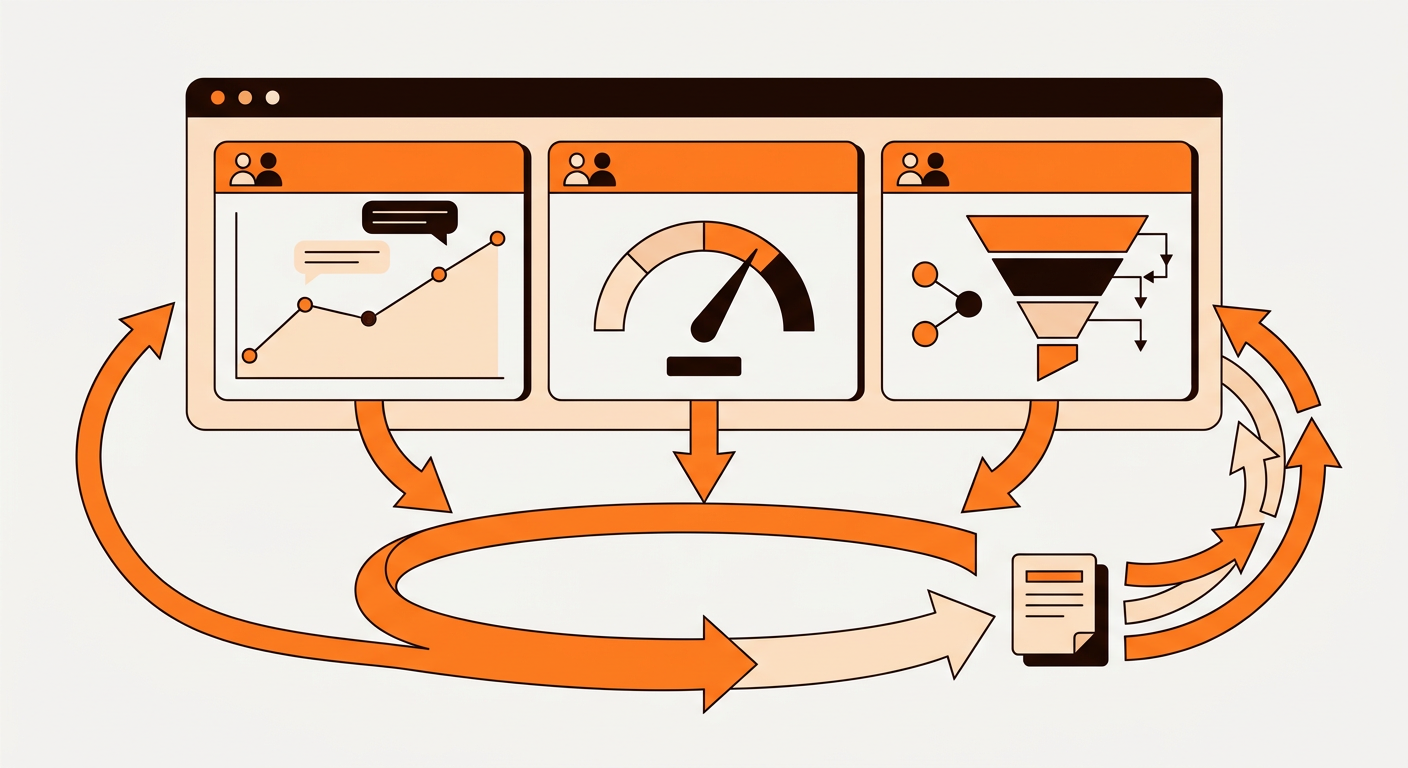
- The closing-loop pattern: monthly benchmark surfaces the prompts that lost citations or never won them. Findings produce briefs for the next content cycle. New content publishes; next benchmark measures the lift. Operations that run this loop see Gemini citation share rise quarter over quarter; operations that don't see flat or declining trends.
Signal 1: Citation Rate Per Prompt
The leading indicator. Of the prompts qualified buyers ask, how often the brand is cited.
What to measure:
- Citation rate per prompt. Whether the brand appears in Gemini's answer to a specific commercial prompt.
- Position in answer. Where the brand appears: first citation, third, last, or buried.
- Citation accuracy. Whether the citation accurately describes the brand or misattributes claims.
- Share of voice vs. competitors. For the same prompt, which competitors also appear.
The prompt set: 20 to 50 prompts qualified buyers in the category actually ask. Defined once, run consistently, refreshed quarterly. The same prompts month over month produce the trend line that drives content priorities.
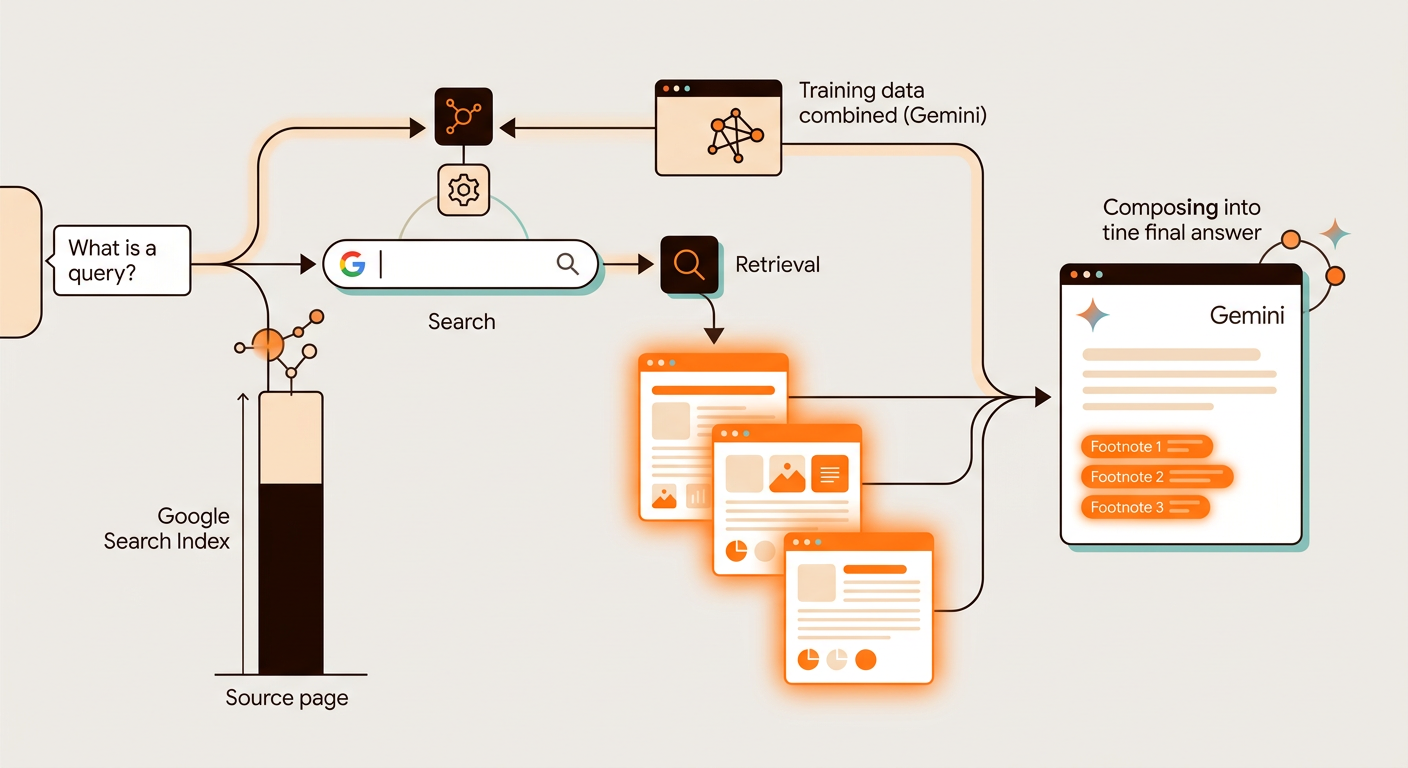
The mechanics of what Gemini returns are documented in Google's grounding reference: each grounded answer carries groundingChunks listing the source URIs and titles, and groundingSupports mapping each text segment to its source via startIndex and endIndex. The benchmark reads those fields directly to produce per-prompt citation tracking.
Cadence: full benchmark monthly. Weekly spot-checks on the top 5 to 10 high-priority prompts.
Signal 2: Summary Accuracy
The trailing indicator. When Gemini is asked "what is X Inc," what does the answer say.
What to measure:
- First-paragraph accuracy. Does the opening paragraph match the brand's positioning sentence within reasonable paraphrase tolerance.
- Numeric fact accuracy. Founding year, team size, customer count, funding round. Does Gemini's summary match the source-of-truth document.
- Customer category accuracy. Does Gemini correctly identify the target customer.
- Citation source quality. Which sources is Gemini pulling from to compose the summary. Authoritative sources (own site, Wikipedia, Crunchbase) or low-quality blog aggregators.
Cadence: quarterly. The summary changes slowly; checking weekly produces noise.
A summary that drifts is a leading indicator that the brand entity audit from Part 4 needs attention. Drift here usually traces back to contradictions Gemini found across third-party surfaces.
Signal 3: AI-Source Pipeline Attribution
The closing-the-loop signal. When Gemini cites a piece of content, does that citation produce business value.
What to measure:
- Gemini-sourced sessions per content piece. Which pieces Gemini drives traffic to.
- Conversion rate on Gemini-sourced sessions. Sign-up rate, qualified-lead rate, revenue.
- Comparison vs. ChatGPT, Claude, and Perplexity-sourced sessions. Which engine converts best for the brand.
- Comparison vs. organic search. Whether Gemini-sourced traffic beats or underperforms traditional Google traffic.
Cadence: monthly review. Weekly tracking if the team has the analytics maturity.
The signal answers the CFO's question: does Gemini citation work translate into revenue. Operations that track it can defend the investment; operations that can't end up cutting GEO budgets when other priorities surface.
The Gemini-Specific Dashboard Panel
A defensible single-screen Gemini panel:
GEMINI VISIBILITY DASHBOARD

CITATION RATE (this month vs. last month)
  Top 10 commercial prompts: 34% / 28% (+6pp)
  All tracked prompts: 21% / 18% (+3pp)
  Lost prompts (cited last month, not this month): 4
  Won prompts (cited this month, not last month): 7

SHARE OF VOICE (vs. top 3 competitors)
  Position 1 share: 12% / 9%
  Position 1-3 share: 38% / 32%

SUMMARY ACCURACY (this quarter)
  Positioning match: 95%
  Numeric fact match: 88%
  Customer category match: 100%
  Source quality (own + authoritative): 78%

PIPELINE FROM GEMINI (this month)
  Sessions: 1,240
  Sign-ups: 47
  Conversion rate: 3.8%
  Compared to organic search: +1.2pp

CONTENT-TO-CITATION MAPPING
  Top 5 cited pieces this month: <list>
  Pieces that lost citations: <list>
  Recommended interventions: <list>
The dashboard fits on one screen and supports a thirty-minute monthly review. Operations with this view make better content decisions than operations stitching together five separate dashboards across three vendors.
The Closing-The-Loop Cycle
A defensible monthly review:
- Read the benchmark report (15 min). Citation rate, share of voice, summary accuracy, pipeline.
- Identify movement (10 min). Prompts the brand lost; prompts the brand won; pieces that drove pipeline lift; pieces that didn't.
- Map interventions (15 min). New content, refreshed content, schema fix, internal link addition. One intervention per lost prompt.
- Brief production (homework). Workshop output converted into briefs for the next weekly content cycle.
- Review last month's interventions (10 min). What did the team ship; did the citations follow.
The cycle closes the loop between measurement and content. Operations that run it consistently see Gemini citation rate trend up across four to eight quarters; operations that don't see flat or declining trends.
Common Measurement Failures
Three patterns recur in Gemini measurement programs that don't work.
Tracking too many prompts. A team starts with 200 prompts; analyst time gets eaten by data review; the cycle slows; eventually the team stops measuring. The right shape is 20 to 50 prompts that actually drive pipeline.
Not tracking summary accuracy. Citation rate looks fine; the brand summary has slowly drifted to misrepresent the company. The team notices when a customer in a deal references the wrong description. A quarterly summary check catches it earlier.
Skipping the closing-the-loop step. The team measures, reads the report, files it, and produces no interventions. Three quarters later, citation rate has moved randomly because no decision drove the content calendar.
The minimization is a small prompt set, three-signal tracking, and a monthly cycle that produces concrete content interventions.
The Series Closer
This series argued that Gemini citations follow predictable patterns: SEO-grounded ranking determines candidacy, schema and structure determine extraction, freshness determines retention, consistency determines trust, and measurement determines whether any of it produced results. The five parts cover the full loop, anchored on the grounding behavior Google documents and the AI Mode query fan-out pattern that decides which sources compete for each subtopic.
Marketing leaders who run this loop quarter after quarter compound Gemini citation share faster than competitors who treat Gemini as the same problem as ChatGPT. The two engines reward different patterns; Gemini specifically rewards the work most marketing teams already do well in SEO. Reframing that work as GEO+SEO is the operational shift; the technical work is mostly the work the team already had on the roadmap.
The next thirty days: define the prompt set, run the first benchmark, and book the first monthly review. The cycle compounds from there.