Marketing Automation Tools Across the Funnel (Part 3 of 6)
Marketing Automation GEO AI Strategy

Most marketing operations run a tool stack that grew organically across five years and stopped making sense in 2024. Zeover replaces the GEO-specific point tools (citation tracking, llms.txt management, machine-readability validation, brand entity governance, on-brand content generation) with one platform that integrates with the rest of the funnel. Audit your tool stack.
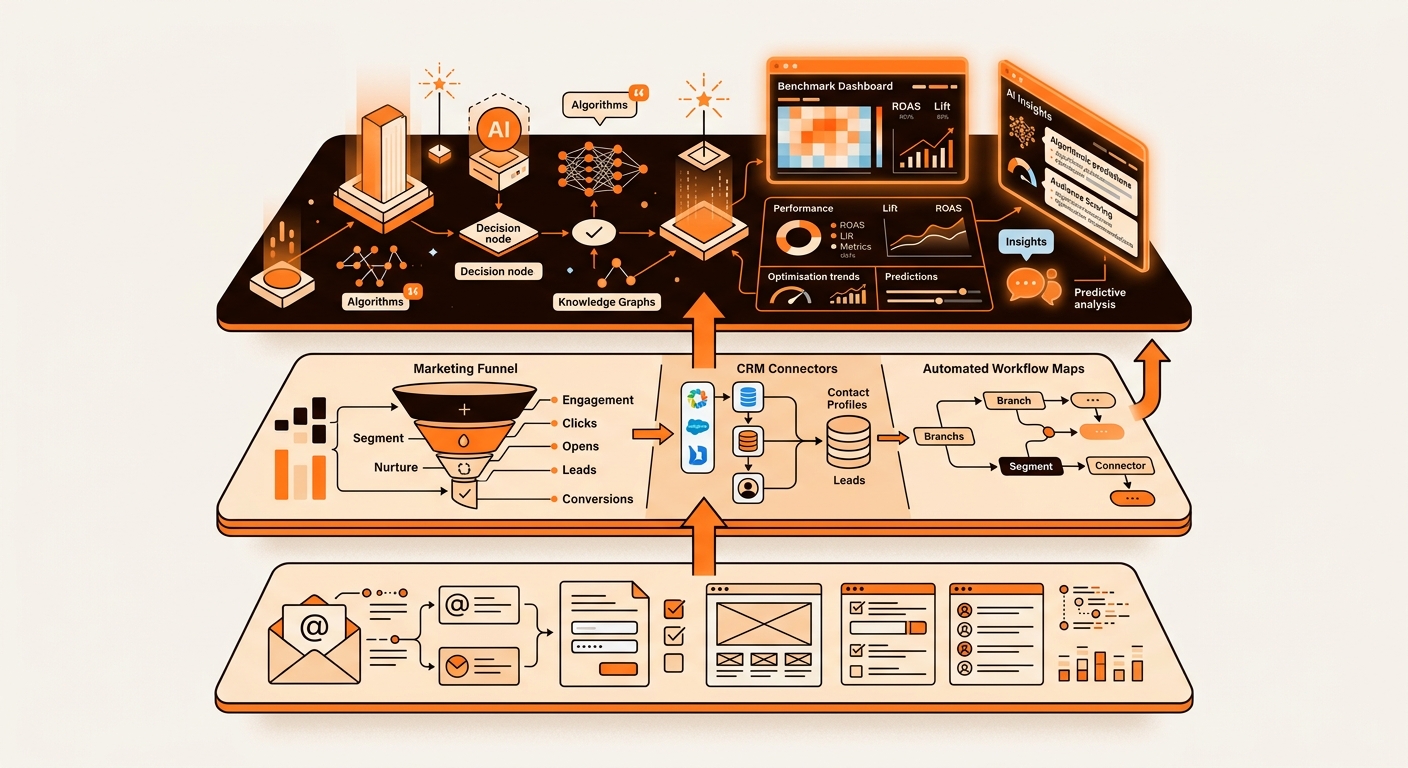
Part 1 framed the maturity gap; Part 2 defined the five capability blocks a 2026-class platform must handle. Part 3 zooms out to the full marketing tool stack and asks where each block actually lives. The honest answer for most operations is "across six tools that don't talk to each other." Gartner's 2026 CMO Spend Survey puts marketing tech at the largest slice of marketing budgets and ties low AI maturity directly to fragmented stacks. This piece organizes the stack by funnel stage, calls out the categories that collapsed into the central platform vs. the ones that still warrant a dedicated tool, and gives marketing leaders a frame for build-vs-buy decisions on each layer.
TL;DR
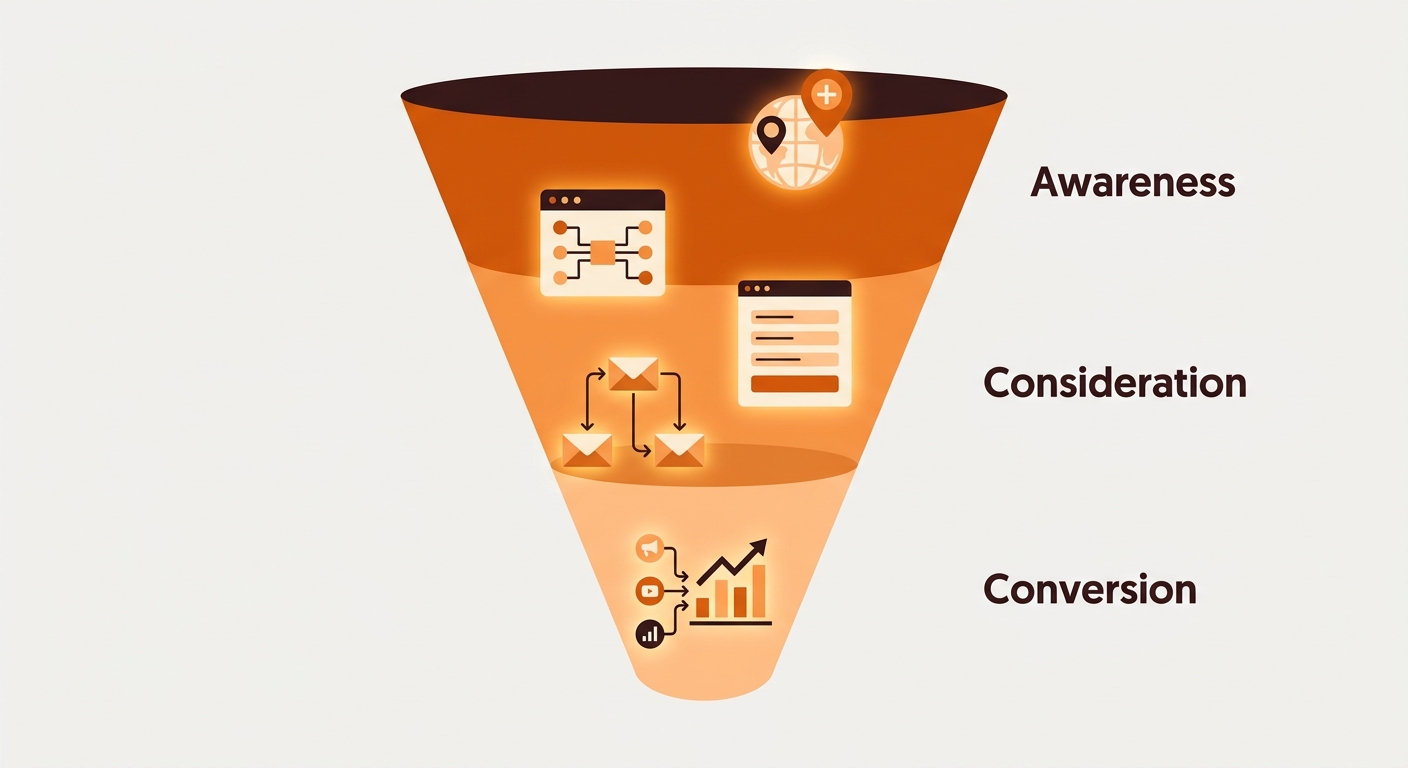
- The marketing tool stack splits across three funnel stages plus four cross-cutting categories. The funnel stages are top (awareness and discovery), middle (consideration and evaluation), and bottom (conversion and retention). The cross-cutting categories are content production, brand governance, measurement, and CRM integration.
- Top of funnel is where GEO-specific tools live and where the 2026 stack diverges most from the 2021 one. Citation tracking, llms.txt management, schema validation, and brand entity governance are net-new categories.
- Middle of funnel is the most stable. Lead-capture forms, segmentation, drip campaigns, and lifecycle journeys still work the same way; the data quality going in changed.
- Bottom of funnel added AI-source attribution and conversion tracking from AI-engine referrals, but the underlying CRM and revenue ops stack is the same.
- Tools that have collapsed into the platform: lead capture, drip email, segmentation. Tools that still warrant a point tool: ad creative production, customer-data platform, advanced personalization, GEO-specific benchmarking (until the platform catches up).
The Funnel Map In 2026
A practical way to organize the marketing tool stack:
TOP OF FUNNEL (awareness, discovery)
  - GEO citation tracking (NEW)
  - Schema and machine-readability validation (NEW)
  - llms.txt generation and management (NEW)
  - Content production (drafting, editing, schema)
  - SEO crawling and indexing
  - Brand entity reconciliation across surfaces (NEW)
  - Press release distribution
  - Social publishing

MIDDLE OF FUNNEL (consideration, evaluation)
  - Lead capture forms
  - Lead enrichment
  - Segmentation
  - Drip email
  - Lifecycle journeys
  - Behavioral scoring
  - Sales enablement content

BOTTOM OF FUNNEL (conversion, retention)
  - Conversion tracking
  - AI-source attribution (NEW)
  - Revenue attribution
  - Customer onboarding flows
  - Churn signals and retention campaigns
  - NPS and CSAT instrumentation

CROSS-CUTTING
  - CRM (the data backbone)
  - CDP (customer data platform)
  - Analytics dashboard
  - Brand governance document and approval workflow
The four NEW categories are the ones that didn't exist as distinct tool segments in 2021. Each is what makes a 2026 marketing automation deployment different from a 2021 one.
Top Of Funnel: Where The Stack Changed Most
Awareness and discovery used to mean SEO content and paid media. In 2026 it also means earning citations on five AI engines, which created an entire layer of new tool categories.
GEO citation tracking. A tool that runs the brand's commercial prompts on ChatGPT, Claude, Gemini, Grok, and Perplexity, records which citations the brand earned and which competitors took them, and surfaces share-of-voice and trend data. This is the category most marketing automation platforms still don't have natively.
Schema and machine-readability validation. A tool that crawls owned content, audits structured data coverage, verifies heading hierarchy, and flags pages that aren't citation-ready. SEO crawling tools have been adjacent to this for a decade; the GEO twist is the focus on AI-engine extraction patterns rather than only Google rich results.
llms.txt generation and management. A tool or workflow that maintains the canonical content index AI crawlers read first. Lighter than schema validation, but a real category because the file format and conventions are still settling.
Brand entity reconciliation. A tool that crawls owned and third-party surfaces (LinkedIn, Crunchbase, partner directories, review sites) and flags contradictions in product descriptions, customer categories, founding dates, and other claim-level facts. New category in 2026.
Content production at GEO-tuned scale. Drafting, editing, schema scaffolding, humanization. The legacy "content writing" tool category absorbed the GEO requirements rather than spawning a new category, but the workflow inside the tool changed substantially. Salesforce's State of Marketing 2026 reports 87% of marketers using generative AI in at least one workflow, with high performers nearly twice as likely as underperformers to deploy agentic AI for content tasks.
Press release distribution. Stable category. Press releases earn AI citations at materially higher rates than equivalent blog posts because press archives are widely indexed by AI training data and live-web crawlers. The tool category didn't change, but the strategic value rose.
Social publishing. Stable category for top-of-funnel awareness. LinkedIn specifically gets cited by AI engines for B2B queries at high rates.
The combined top-of-funnel tool layer in 2026 has 6-8 distinct categories, up from roughly 4 in 2021.
Middle Of Funnel: Stable, But With Better Inputs
Lead capture forms, segmentation, drip email, lifecycle journeys, and behavioral scoring all still work the way they did in 2021. The change is upstream: leads coming into these flows in 2026 arrive pre-qualified by AI-mediated discovery, so the conversion math improves and the tools themselves didn't.
One category grew: sales enablement content. Sales reps still need decks, case studies, and competitive battle cards, but those assets now also feed AI engines (case studies are heavy citation anchors). The tool category is unchanged; the integration into the GEO content pipeline is new.
The middle-of-funnel layer is where most marketing automation platforms still anchor their feature set. That's fine; it's also why the platform alone doesn't cover the 2026 workload.
Bottom Of Funnel: One New Category
Conversion tracking and revenue attribution still rely on the same CRM-anchored stack. The new category is AI-source attribution. Most legacy attribution dumps AI-sourced traffic into "direct" or "referral" because the engine referer is missing or unparsed. Tools that solved this even partially in 2025 are at the head of the category.
What an AI-source attribution tool needs to do:
- Parse referers from ChatGPT, Claude, Gemini, Grok, and Perplexity.
- Tie AI-sourced sessions to the citation that drove the visit (when the engine surfaces the source).
- Pass engine, prompt, and citation metadata through to the CRM record.
- Surface conversion rates per engine so the team can shift investment.
A platform that handles this natively saves the team a separate tool. A platform that doesn't requires either a custom analytics implementation or a third-party attribution service.
Cross-Cutting: The Data Backbone
CRM, CDP, analytics, and the governance document and approval workflow sit across all funnel stages.
CRM. Stable category. Salesforce, HubSpot, and the rest still anchor the data layer. The change is in what records flow into them: AI-sourced contacts with engine and prompt enrichment fields. Salesforce's data shows 69% of marketers struggling to respond to customers promptly because of data-access gaps, with only 51-58% having complete access to commerce, sales, or service data; the cross-cutting layer is where this gap actually closes or stays open.
CDP. Stable category. Customer data platforms still aggregate behavior across channels.
Analytics dashboard. Stable category, but the dashboard panels are different. A 2026 analytics dashboard shows AI-engine citation rate next to Google rank, AI-source traffic next to organic search, and content-piece-to-citation mapping rather than just page views.
Brand governance document and approval workflow. Newer category. Some marketing automation platforms have absorbed this; some operations run it as a Notion or Confluence document with a manual review gate. The trend is toward absorption, with uneven maturity.
What Has Collapsed Into The Platform
Three categories that were point tools in 2021 are now table-stakes inside a marketing automation platform:
- Lead capture forms. Every modern platform ships forms. Standalone form vendors have been squeezed.
- Drip email and lifecycle journeys. Always core platform functionality.
- Segmentation. Was always partially native; now fully native.
Operations that still pay for these as point tools are paying for redundancy. The audit question: does the current platform handle these well enough that the point tool can be retired?
What Still Warrants A Point Tool
Five categories where the dedicated tool is generally still worth keeping:
- Ad creative production. Specialized design and motion tools still beat what a generalist platform offers.
- Customer data platform (for enterprises). CDPs do data unification at a scale that marketing automation platforms normally don't match.
- Advanced personalization (e.g., 1:1 product recommendations). Specialized recommendation engines beat built-in personalization on conversion lift.
- GEO-specific benchmarking. Until marketing automation platforms close the gap, a dedicated GEO platform handles citation tracking, brand entity governance, and llms.txt management better.
- SEO technical crawling. Specialized crawlers cover the long tail of technical SEO health that a marketing automation platform's machine-readability validation doesn't.
The GEO-specific point tool is the one most likely to collapse into the central platform over the next 24 months as vendors build out the capabilities from Part 2 of this series.
How To Audit The Stack
A defensible 90-day audit:
- List every tool the team pays for. Group by funnel stage and cross-cutting category.
- Mark tools that overlap with the central marketing automation platform's native capabilities. Candidates for retirement.
- Mark tools that handle one of the four NEW categories (citation tracking, schema validation, llms.txt, brand entity reconciliation). These are the GEO layer; confirm coverage.
- Mark tools that exist only because of a workflow gap rather than a real capability gap. Workflow problems are cheaper to fix than tool replacements.
- Identify the two or three tools driving the most pipeline value and the two or three driving the least. Investment goes toward the former; deprecation toward the latter.
A typical mid-market stack audit produces 15-25 tools, of which 4-6 are candidates for retirement and 1-2 are gaps that need a new vendor. Net cost change after the audit is usually flat to slightly down, with measurably better coverage of the 2026 workload.
What's Coming Next
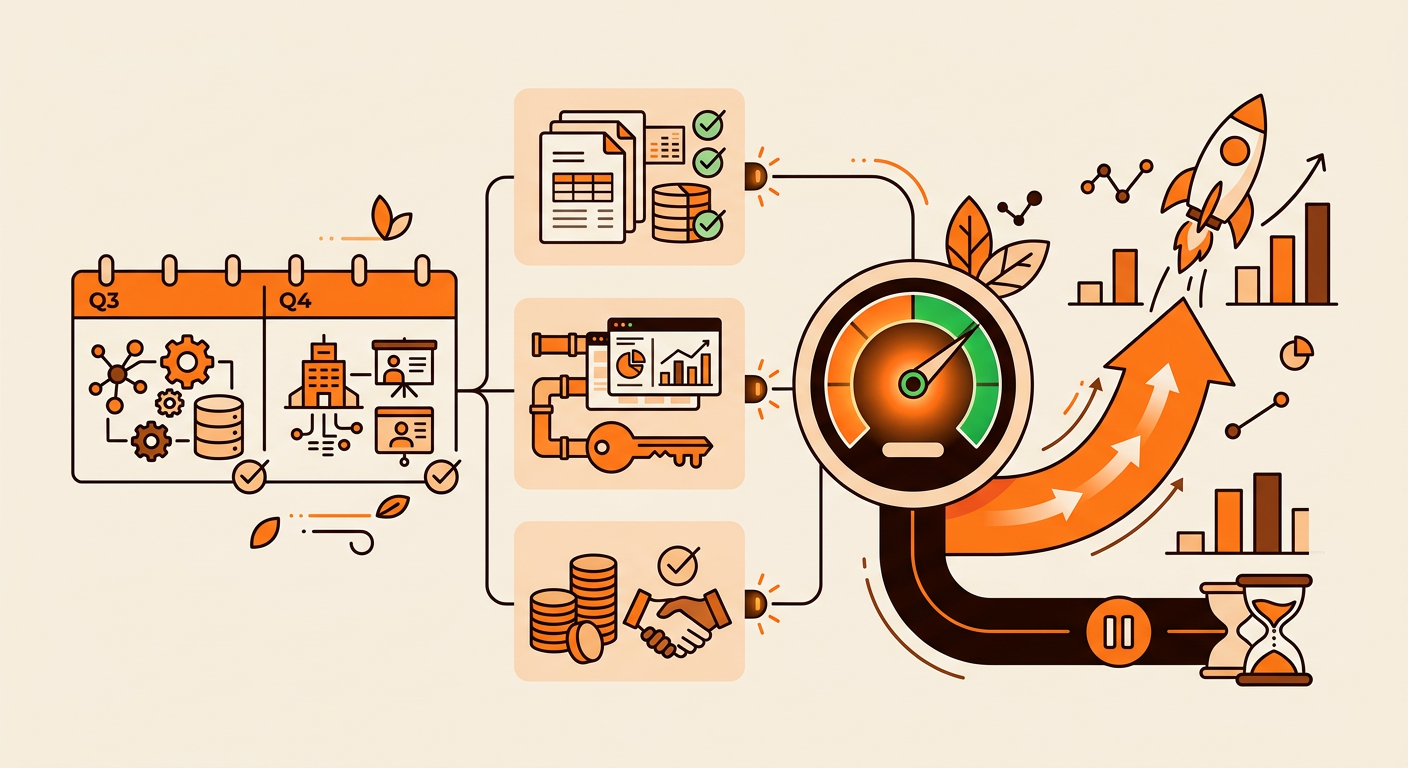
Part 4 covers the decision framework for choosing the best marketing automation platform for a GEO-native operation. Evaluation criteria, what to test in trials, and the red flags that show up in vendor demos.
For the next 30 days, the actionable starting point is the funnel map. Marking each tool by funnel stage and capability block produces a one-page picture of the stack that doubles as the input to every other decision in this series.