Marketing Skills for AI Agents: What to Install, What to Build, and Where Zeover Fits
GEO AI Strategy Marketing Automation

Installable Marketing Skills for coding agents are having a moment. Teams can now add SEO checks, content prompts, and growth workflows to Claude Code, Cursor, or Codex with a quick npx command and start testing ideas in minutes.
That speed is real. So is the confusion.
A skill can tell an agent what to do. It can't tell the agent what is true about your brand, which benchmarks matter, which claims are approved, or whether a generated page helps your AI search optimization goals. That gap matters more as more teams try to use AI Marketing workflows for production work instead of demos.
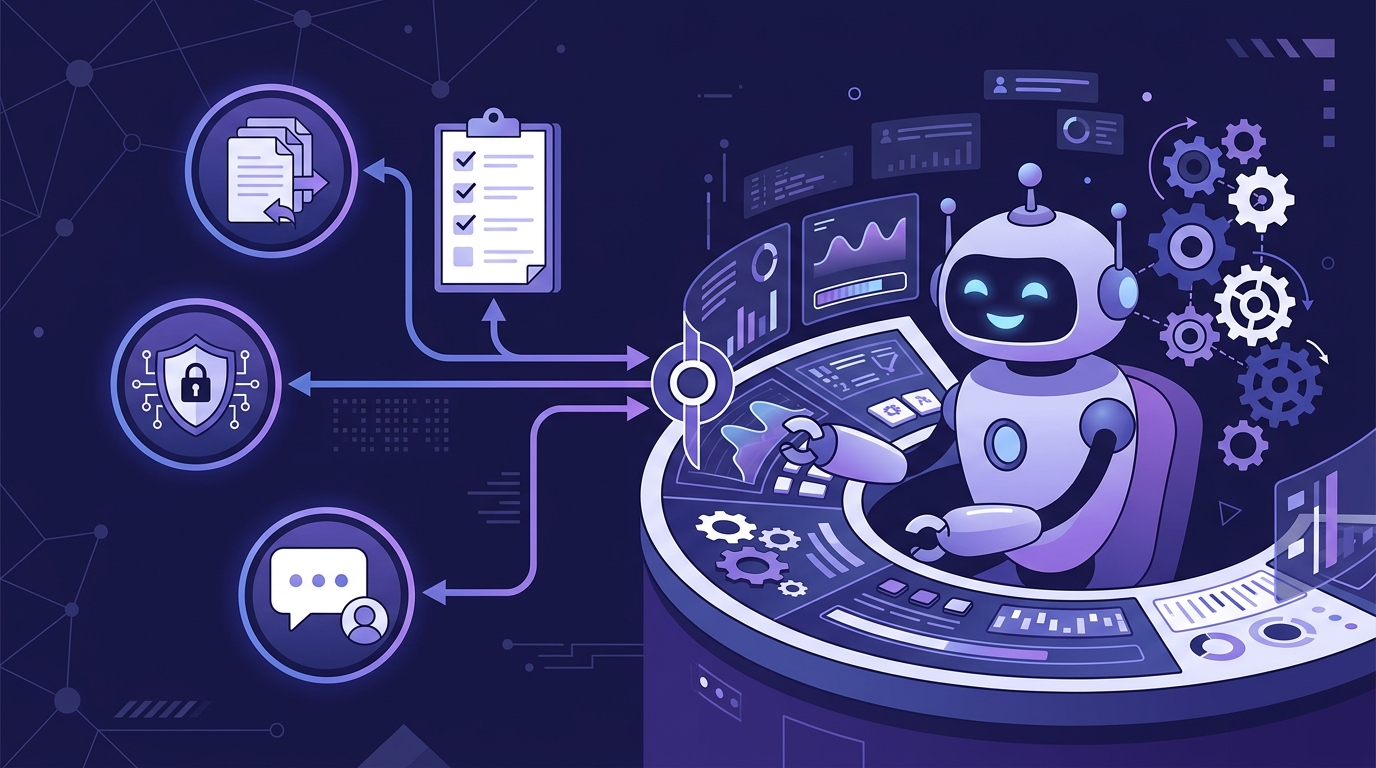
This is where the current conversation around npx marketing skills, MCP marketing, and agentic marketing starts to get interesting. Skills are becoming the portable action layer for agents. MCP is becoming the standard way those agents connect to tools and context. The harder problem is still governance, source-of-truth data, and closed-loop improvement. That's where Zeover fits.
What marketing skills actually are
In practice, marketing skills are packaged instructions, prompts, commands, or lightweight tooling that expand what an AI coding agent can do. Instead of writing every workflow from scratch, a team installs a package that gives the agent reusable marketing behavior.
That behavior might include:
- drafting GEO page outlines
- checking metadata and structured content
- generating content briefs for buyer questions
- reviewing internal links and citation gaps
- creating campaign assets for blog and social distribution
- running repeatable growth tasks inside a coding environment
For teams working in Claude Code, Cursor, and Codex, the appeal is obvious. The developer environment becomes a place to ship pages, inspect content, and run experiments without jumping between ten tools.
The idea isn't imaginary. Agent ecosystems are moving quickly toward reusable components. Anthropic's Model Context Protocol, or MCP, was introduced as an open standard for connecting AI assistants to data sources and tools. OpenAI has also pushed deeper into agent workflows through its Codex work and broader developer tooling. Cursor has built a large audience around agent-assisted software workflows that increasingly overlap with content and site operations. These projects don't create a complete marketing operating system on their own, but they do create the conditions for one.
Why they're spreading now
A few things changed at once.
First, coding agents got better at taking action, not just generating text. Second, package-based distribution is simple. If a workflow can be installed with npx, teams are far more likely to test it. Third, more marketing work now lives close to the website and the repository. GEO updates, schema changes, content templates, landing page experiments, and analytics tags often touch code, content, or both.
That makes npx marketing skills a natural format for experimentation. A marketer or growth engineer can install a package, point the agent at a repo, and ask it to review pages for SEO vs. GEO gaps, generate a draft, or prepare fixes.
There is also a practical reason. Many teams want tools for growth marketers that fit into the systems they already use. They don't want another standalone dashboard unless it helps them fix something.
Where the hype runs ahead of reality
The current pitch often sounds stronger than the product.
A lot of skills are wrappers around prompts. Some are useful wrappers, but they're still wrappers. They don't automatically solve AI search optimization, improve brand visibility in AI, or answer engine performance. They often don't know your approved positioning, current benchmark data, citation targets, legal constraints, or which pages are already underperforming in ChatGPT, Claude, Gemini, Grok, and Perplexity.
That's the break point.
If a skill tells an agent to create a GEO page for a high-intent query, the next questions are what claims can it make, what proof should it cite, what page type should it follow, and how will the team measure whether visibility changed afterward. Without those inputs, you get speed with a lot of drift.
This is why skepticism is healthy around broad AI Marketing claims. Installing a skill is easy. Building a reliable system around it isn't.
MCP marketing matters more than the prompt layer
If you want to understand where this is going, focus less on the prompt package and more on the connection model.
MCP marketing matters because it gives agents a standard way to access systems, data, and tools. A skill might define the workflow. MCP can provide the context and action path. That combination is much more useful than a static prompt.
For example, a marketing agent could:
- pull current brand facts from a locked profile
- read benchmark performance for target prompts
- inspect citation gaps across top AI answers
- check role-based approvals and compliance rules
- generate a draft against those constraints
- publish or prepare implementation tasks
- re-run benchmarks to track movement
That is closer to a real operating loop.
It also explains why standalone skills hit limits so quickly. They can suggest work, but they usually don't own the data layer, governance layer, and measurement loop required to improve AI organic results consistently.
What Zeover adds to the stack
Zeover isn't an AI rank tracker with a content button attached. It is a closed-loop GEO platform for Generative Engine Optimization, also called Organic GEO, AI search optimization, and AEO optimization in many buying conversations.
Its job is to connect four things that usually live in separate tools:
- measurement of AI visibility across major answer engines
- diagnosis of site and content issues that block understanding and citation
- brand-governed content and workflow execution
- re-benchmarking to prove whether fixes moved performance
That matters if you're trying to improve brand presence in AI instead of just watching scores move.
Zeover scans websites the way AI engines read them, identifies structural and content blockers, benchmarks real prompts across ChatGPT, Claude, Gemini, Grok, and Perplexity, and shows which competitors and sources shape the answers. Then it helps teams generate implementation-ready fixes and publish citation-ready content with governance built in.
This is also where Zeover's support for MCP and Skills becomes more than a feature checklist. Zeover can act as the source of truth the agent doesn't have on its own. Brand profile, locked boilerplate, benchmark history, approvals, compliance checks, citation analysis, and prior content performance can all guide what the agent does next.
Skills tell the agent what to do. Zeover tells it what is true.
That distinction is the practical one.
A skill can instruct an agent to produce a comparison page, rewrite a title, build a content cluster, or generate social copy. Zeover can supply the approved product language, the target query set, the benchmark deltas, the pages losing citations, and the compliance rules the content must pass.
Without that source of truth, agentic marketing workflows tend to drift in four ways:
- Brand drift. The output sounds plausible but doesn't match the company's real positioning.
- Data drift. The agent cites stale benchmarks or makes claims that no longer hold.
- Workflow drift. Teams generate drafts faster than they can review, approve, and ship them.
- Measurement drift. No one can tie the content back to improved AI visibility results or citation gains.
A good marketing agent needs more than instructions. It needs state.
What marketing teams should install
Some capabilities are good candidates for install-first.
Marketing teams should usually install skills for:
- draft generation for blogs, FAQs, and social variants
- content brief creation
- repo-level page checks
- metadata reviews
- internal linking suggestions
- repetitive formatting tasks
- campaign repackaging across channels
These are high-frequency jobs where speed matters and the downside of a rough first pass is manageable.
Teams exploring marketing with AI tools can get value quickly by starting there. This is especially true for startups, agencies, and lean growth teams that need output more than process perfection.
What marketing teams should build, or anchor in a platform
The more expensive problems should not live inside disconnected prompt packages.
Teams should build carefully, or use a platform like Zeover, for:
- brand source-of-truth management
- benchmark tracking across AI engines
- AI citation monitoring
- compliance-heavy reviews
- role-based approvals
- locked brand boilerplate for AI
- content tied to benchmark deltas
- workflows that connect scan, fix, publish, and re-measure
This is even more important for regulated industries, enterprise teams, multi-location brands, and agencies handling multiple client voices. They need AI brand boilerplate management, role-based content approvals, and evidence that a content change affected visibility.
That is hard to reproduce with a loose collection of skills.
A practical stack for agentic marketing
A sensible stack is starting to emerge.
Use skills for execution. Use MCP for connection. Use a closed-loop platform for truth, governance, and measurement.
In Zeover's model, Zoe acts as an AI marketing agent trained on each brand's audits, benchmarks, citations, and history. Skills and MCP workflows can then use that context to ship better work. Instead of asking a generic agent to guess how to optimize for AI searches, the team gives it current evidence, approved language, and a way to validate outcomes.
That approach is more useful than the common promise that one install will solve Generative Engine Optimization or answer engine visibility.
The real buying question
The question isn't whether marketing skills are useful. They are.
The question is whether your team needs faster content actions or a repeatable system for AI search optimization work. Most teams need both, but they shouldn't confuse them.
If you're testing ideas, install the skill.
If you're trying to improve AI search visibility, track brand mentions in AI, fix AI-readability issues, create brand-safe AI content, and prove movement across buyer prompts, you need a system behind the skill. That system needs source truth, governance, benchmark tracking, remediation, and content operations in one loop.
That's the role Zeover is built to play.