How to Rank in Gemini - Accuracy and Grounding: Why Gemini Punishes Drift (Part 4 of 5)
GEO Brand Governance Search


Gemini reads the brand's website, LinkedIn, Crunchbase, and a dozen partner directories before answering. Contradictions across those surfaces produce hedged or wrong answers. Zeover catches the contradictions before Gemini does. Audit your brand consistency.
Part 3 covered the editorial patterns that earn Gemini citations. Part 4 covers the consistency layer underneath. Gemini's grounding architecture cross-references multiple sources before answering. The brand that maintains consistent claims across owned and third-party surfaces gets cited cleanly. The brand that leaks inconsistent claims gets hedged answers, demoted citations, or excluded entirely. The fix is governance, not engineering.
TL;DR
- Gemini cross-references the brand's website, LinkedIn, Crunchbase, partner directories, and review sites before answering. Contradictions trigger one of three failure modes: hedging, picking the wrong claim, or excluding the brand completely.
- The drift patterns Gemini punishes are factual (different founding dates, different team sizes, different customer claims), categorical (different positioning across surfaces), and temporal (stale claims that contradict newer ones).
- The fix is brand entity governance: a source-of-truth document, regular crawls of owned and third-party surfaces, and a remediation workflow that catches contradictions before Gemini does.
- Gemini punishes drift faster than other engines because the grounding step explicitly compares retrieved sources. ChatGPT and Claude can hedge on training-data ambiguity; Gemini sees the contradiction directly in the retrieval set.
- The strongest 2026 operations run a quarterly third-party-surface audit alongside the owned-content audit. The combined review catches drift early enough to remediate before citation impact compounds.
How Gemini Sees Drift
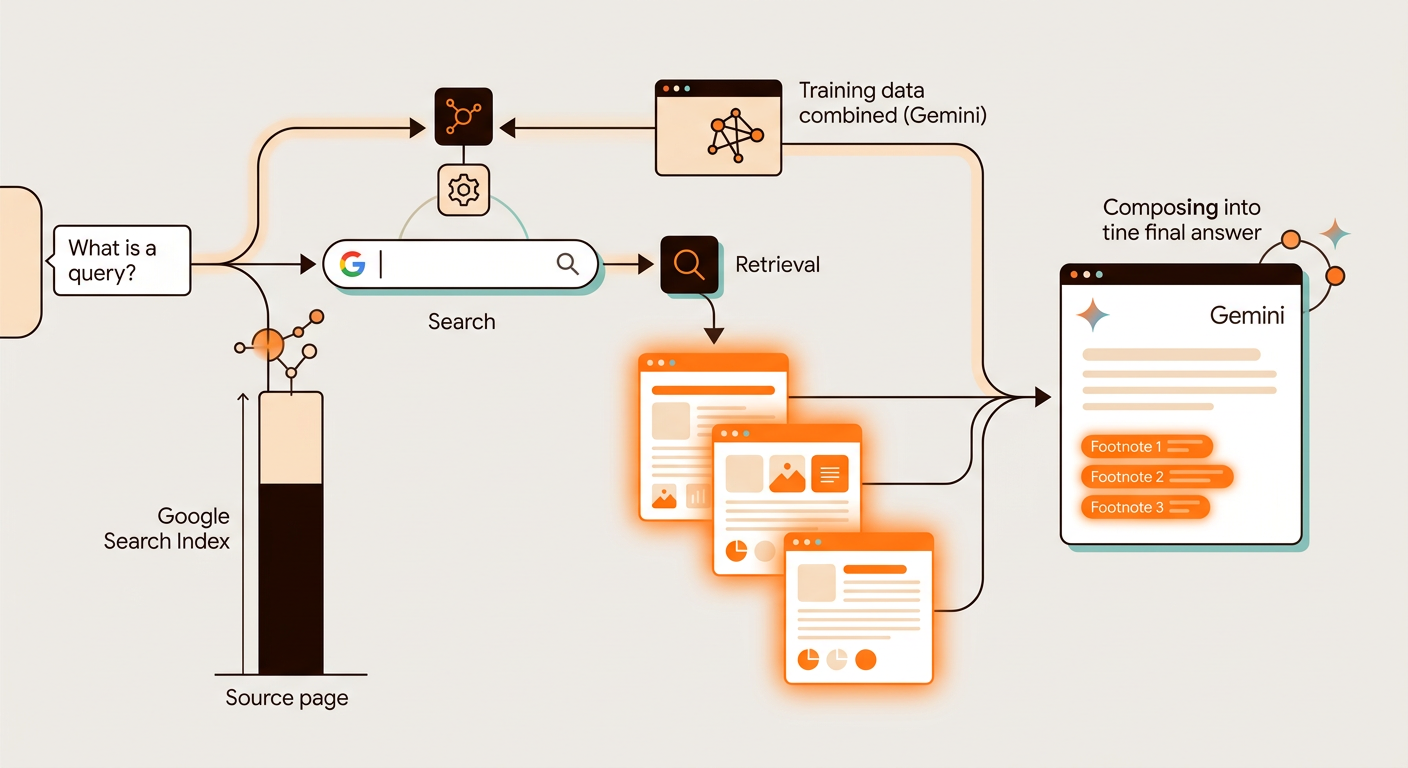
Gemini's grounded response flow includes a step where multiple sources are retrieved and compared. The behavior is documented in Google's grounding reference, which describes how the model returns groundingChunks (source URIs and titles) and groundingSupports (which text segments map to which sources). When the retrieved chunks disagree, the answer has to resolve the disagreement somehow. The consequences show up in the user-facing output.
- Consistent sources produce confident, branded answers. "X Inc, founded in 2019, serves Series A through Series C SaaS companies with..." reads as a clean citation.
- Contradictory sources produce hedged answers. "X Inc is a marketing technology company; some sources describe it as a content platform while others describe it as a benchmarking tool" is a hedge that loses the buyer.
- Contradictory enough sources produce exclusion. Gemini sometimes skips a brand completely when it can't resolve the entity confidently, recommending a competitor with cleaner sources instead.
The brand sees the citation rate decline before noticing the cause. The cause is usually drift, not algorithm change.
The Three Drift Patterns
Factual drift. Numeric facts that don't match across surfaces. Founding year on the website is 2019, on LinkedIn it's 2020, in a press release archive it's 2018. Customer count on the homepage is "over 500"; in the latest case study collection it's "100+ enterprise"; in a partner directory listing it's "1,000+." Each version is in good faith from a different vintage; the contradiction is real and visible to Gemini.
Categorical drift. Positioning that doesn't match. The website calls the brand "the AI marketing optimization platform"; the LinkedIn bio calls it "the brand monitoring tool for AI search"; the Crunchbase blurb calls it "AI-powered SEO." Three positionings, one company, an engine that hedges.
Temporal drift. Old claims still live somewhere. A 2022 blog post claims the company has 50 employees; a 2025 careers page lists 200. The 2022 claim is still indexed, still cited, and Gemini retrieves it alongside the 2025 page. The hedge follows.
Each pattern has a different remediation, but the diagnosis is the same: a brand entity governance process catches them before publish.
Why Gemini Punishes Drift Harder
Comparing across the five major AI engines:
- ChatGPT can hedge based on training-data ambiguity. Drift between sources affects the answer but doesn't fully exclude the brand because training data carries some ground-truth.
- Claude weights authoritative sources. Drift hurts but the engine's preference for primary citations gives well-cited brands a partial defense.
- Gemini explicitly retrieves and compares multiple Google Search results in real time. Drift is visible in the retrieval set; the model has nowhere to hide it.
- Grok weights time-sensitive sources. Drift between recent and old claims gets resolved for recent, which usually helps brands that updated.
- Perplexity weights source diversity. Drift produces multiple cited sources with conflicting claims, sometimes shown to the user side-by-side.
Gemini's directness makes drift a leading indicator of citation problems specifically there.
What A Brand Entity Audit Catches
A defensible quarterly audit:
Owned-surface crawl. Every public page on owned domains. Extract the brand-defining claims: positioning sentence, customer categories, numeric facts, product names, founding details. Compare against the source-of-truth document.
Third-party-surface crawl. LinkedIn company page, Crunchbase entry, partner directories, press distribution archives, review sites, Wikipedia (if applicable). Same extraction; same comparison.
Contradiction detection. Pages where extracted claims don't match the source-of-truth get flagged with the source URL and the conflicting text.
Remediation routing. Contradictions get assigned to the team responsible for the surface. PR for press archives, social for LinkedIn, partnerships for partner directories, content for owned pages.
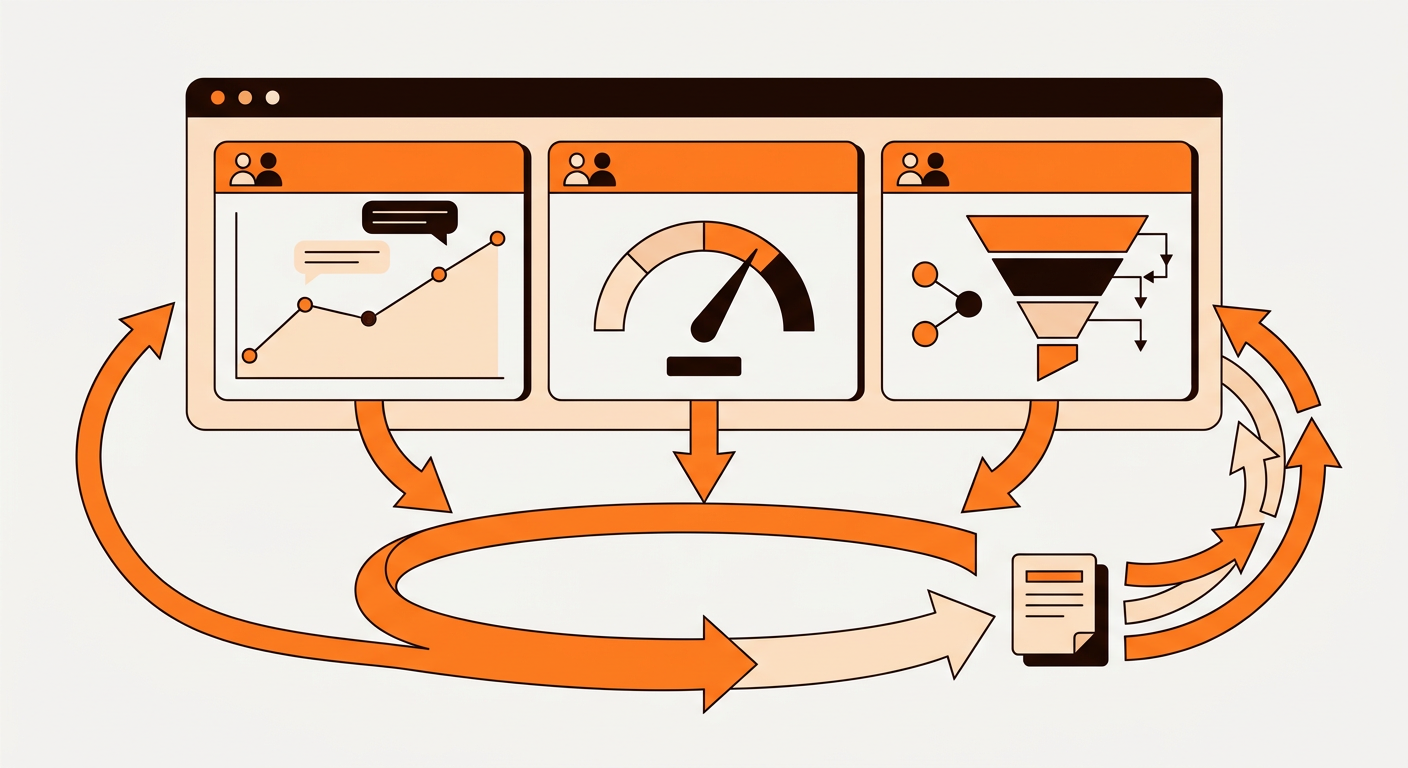
Quarterly review. The audit runs once a quarter; remediation runs continuously across. The output is a closed loop between detection and fix.
Operations that run this audit see Gemini citation share recover within one to two quarters of starting. Operations that don't see citation share decline at 3 to 5 percent per quarter against competitors who do.
The Source-Of-Truth Document For Gemini Specifically
Most brand governance documents focus on positioning and tone. A Gemini-specific document also includes:
- Numeric facts with primary-source links. Every number is anchored to where it came from.
- Approved entity descriptions for each major surface. Website "About" page version, LinkedIn version, Crunchbase version, partner directory version. Each is a slight variation tuned to the surface, but the core claims match.
- Deprecated language. Old product names, old customer category language, old founding-story versions. Listed explicitly so writers and partners avoid them.
- Update protocol. When a numeric fact changes (team size, customer count, funding round), the document specifies which surfaces to update and on what timeline.
The document is internal, versioned, and accessible to every producer. Operations that maintain it well see Gemini citation rate move with team size, funding events, and product launches in expected directions. Operations that don't see citation rate move randomly.
What Drift Costs
A worked example for context:
- A 2025 audit of a mid-market SaaS brand finds eight distinct positioning statements across owned and third-party surfaces.
- The brand's Gemini citation rate for "best {category} for {target customer}" prompts is 12 percent (cited 12 percent of the time the prompt is asked).
- After 90 days of remediation (consolidating to one positioning, updating LinkedIn, fixing partner directories, refreshing press archive descriptions), the audit shows one dominant positioning across all surfaces.
- The Gemini citation rate at the next quarterly benchmark is 19 percent.
The 7 percentage-point lift is consistent with audit-driven remediation across mid-market operations. Smaller for teams with limited third-party surface exposure; larger for teams with many partner relationships and frequent press coverage.
What's Coming Next
Part 5 closes the series on measurement: tracking Gemini citation rate, share of voice, summary accuracy, and the deltas that drive content interventions.
The actionable starting point for the next thirty days is the quick contradiction scan. Pull the website's About page text. Pull the LinkedIn company description. Pull one partner directory listing. Compare them. The contradictions surfaced on three surfaces will surprise the team; the audit at scale finds 5 to 10 times more.