Organic GEO: A 90-Minute Workshop to Find Your Next Useful Content Fix
Practical GEO

Organic GEO is the work of making your brand easier to discover, understand, and accurately include in AI-generated answers without buying the placement. A useful first project is small: find one question a customer asks, inspect the available evidence, and repair the page that should answer it.
You do not need a quarter-long strategy exercise to identify that first task. This 90-minute workshop produces a specific editorial brief, an owner, and a measurement plan. It works best with a marketer, someone who knows the product or service, and someone who can publish a website change.
Before the workshop: bring one real customer question
Choose a question from a sales call, support conversation, or customer interview. Include the constraint that makes the answer useful. “Best restaurant” is vague. “Where can a group of 12 book a quiet dinner with vegetarian options in our city?” contains several decisions a business can substantiate.
Use only public, non-sensitive information in external AI prompts. Record the exact wording, the intended audience, and what a successful answer would explain. Choose a question relevant to your actual offering; publishing around a capability you do not have creates the wrong expectations.
Minutes 0–15: Observe the answer before defending your brand
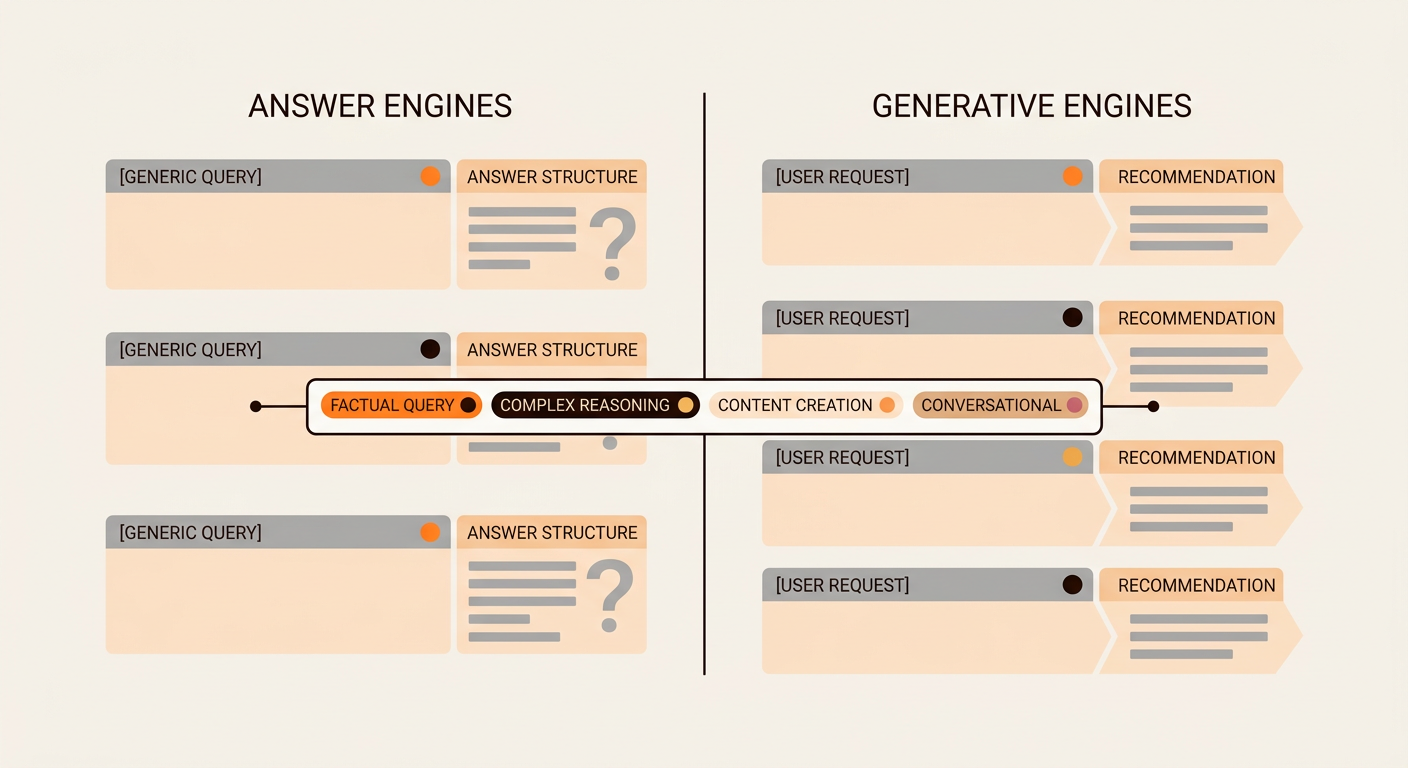
Ask the question in the AI experiences you want to understand. Record the date, engine, search mode, location settings where relevant, and response. Open the cited sources. Keep brand mentions and citations in separate columns: an answer can mention a business without citing its website.
Look for three things: which options appear, which selection criteria the answer uses, and which sources support those criteria. Repeat an observation if it looks surprising. One answer is a useful lead, not a stable market-share estimate.
Resist rewriting the prompt until your brand appears. You are testing the customer's question, not your ability to steer a chat toward a preferred answer.
Minutes 15–35: Map each buying constraint to evidence
Use this worksheet. The restaurant is an illustrative example, not a Zeover customer result.
| Customer constraint | Evidence a buyer needs | Possible source gap |
|---|---|---|
| Seating for 12 | Group booking policy and capacity | Site only says “groups welcome” |
| Quiet setting | Description of the room and its limitations | Private and shared seating are unclear |
| Vegetarian choices | Current menu with identifiable options | Menu is an old image |
| Correct city | Exact address and service area | Several branches share one generic page |
| Reservation process | Booking link, lead time, and contact | Social post is the only explanation |
The workshop's central question is: Could a reader verify the relevant fact from the page we expect an answer engine to use?
If not, identify who can verify it internally. Do not fill the gap with plausible copy. An unsupported sentence is not an improvement just because it reads clearly.
Minutes 35–50: Separate access problems from missing answers
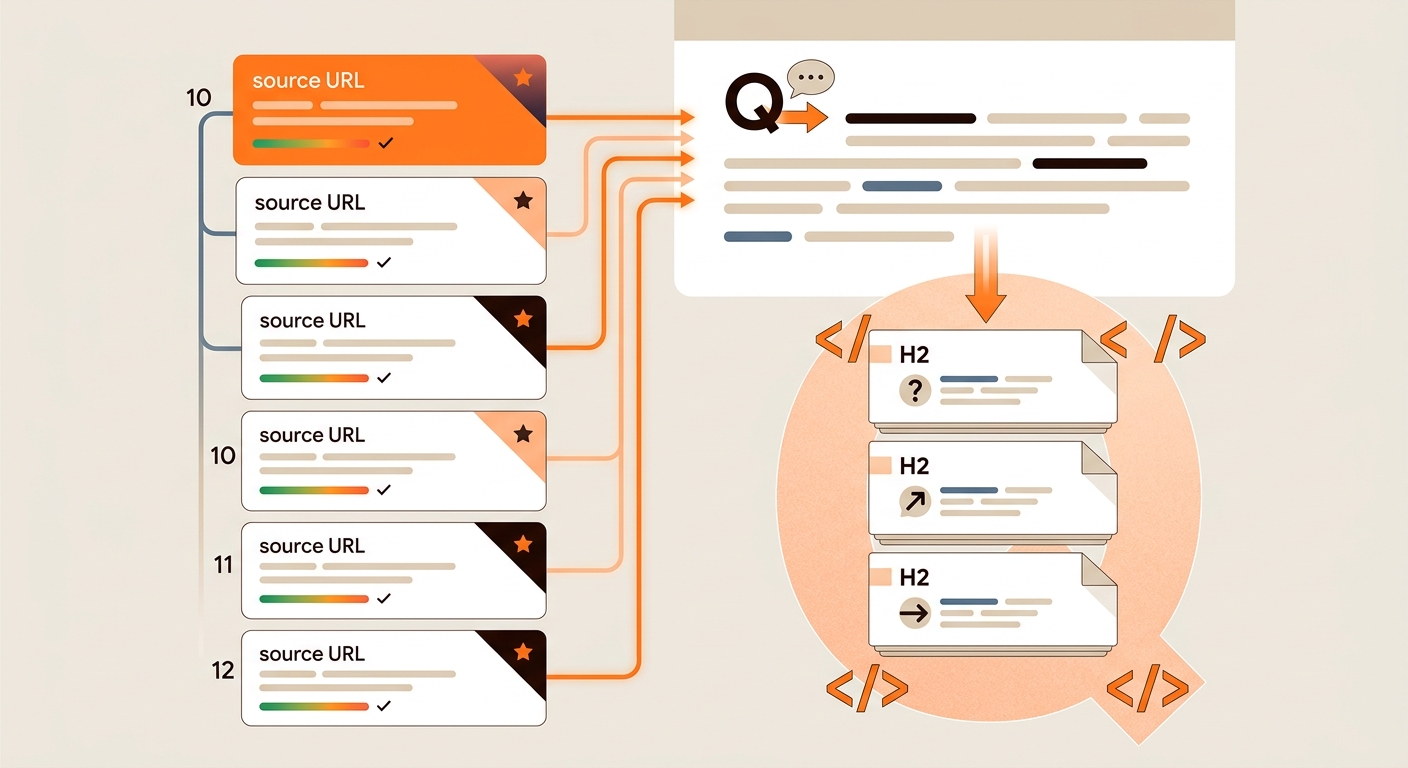
A strong page can still be hard to reach. Check its public availability, links from relevant pages, canonical URL, and whether important information is readable as text. Review crawler and hosting restrictions with the web owner.
Google's AI-feature guidance describes familiar SEO foundations rather than a special AI markup requirement. OpenAI's crawler documentation distinguishes search crawling from model-training crawling. Those are reasons to inspect the actual configuration, not to assume all bots have identical purposes.
If the correct answer already exists on a well-maintained page, updating or consolidating that page may be more useful than creating another article. If access works but the answer is missing, move to the content brief.
Minutes 50–70: Write the smallest complete brief
For the fictional restaurant, a useful task might be: “Update the group dining page to explain seating for 12, available room types, vegetarian menu options, and the reservation process. Confirm every detail with the manager.”
A complete brief includes:
- Question: the exact customer problem the page must resolve.
- Page: the existing URL to improve, or the reason a new page is necessary.
- Facts: verified capacity, restrictions, process, and relevant dates.
- Evidence: current menu, booking policy, and approved photographs where useful.
- Acceptance: a reader can answer each constraint without guessing or calling for basic information.
- Owner: who verifies, who edits, and who publishes.
Write the answer first, then add explanation. Include exceptions that affect the buying decision. If quiet seating is only available on certain nights, that qualification belongs next to the claim.
Minutes 70–90: Decide how you will judge the change
Save the original page and observations. After publication, confirm that the new version is public and readable, then revisit the same prompt under comparable conditions over time.
Track three layers separately: the source improvement you shipped, observed AI mentions or citations, and business outcomes such as qualified group inquiries. A source improvement is directly verifiable; a later inquiry may have several contributing causes.
Do not set “every engine recommends us next week” as the acceptance criterion. Your immediate deliverable is a better answer on your own website. Continued observation tells you whether answer systems start using it.
Make the workshop repeatable with Zeover
Zeover brings website analysis, AI visibility benchmarks, citation analysis, and brand-governed content into one workflow. Use it to connect a missed buyer question to a specific source gap, prepare the improvement, and return to the same query set after publication. Features and limits vary by account.
If you need help defining the measurement, start with our AI citation monitoring guide.
Leave the workshop with one approved task that makes a customer's decision easier. Repeat that process across important questions. That is a practical Organic GEO program you can operate and improve.