
What May's Citation Intelligence Data Tells Us
May's Citation Intelligence review shows Reddit as the broadest social citation surface, YouTube as the strongest explainer source, and LinkedIn as the professional-context layer.
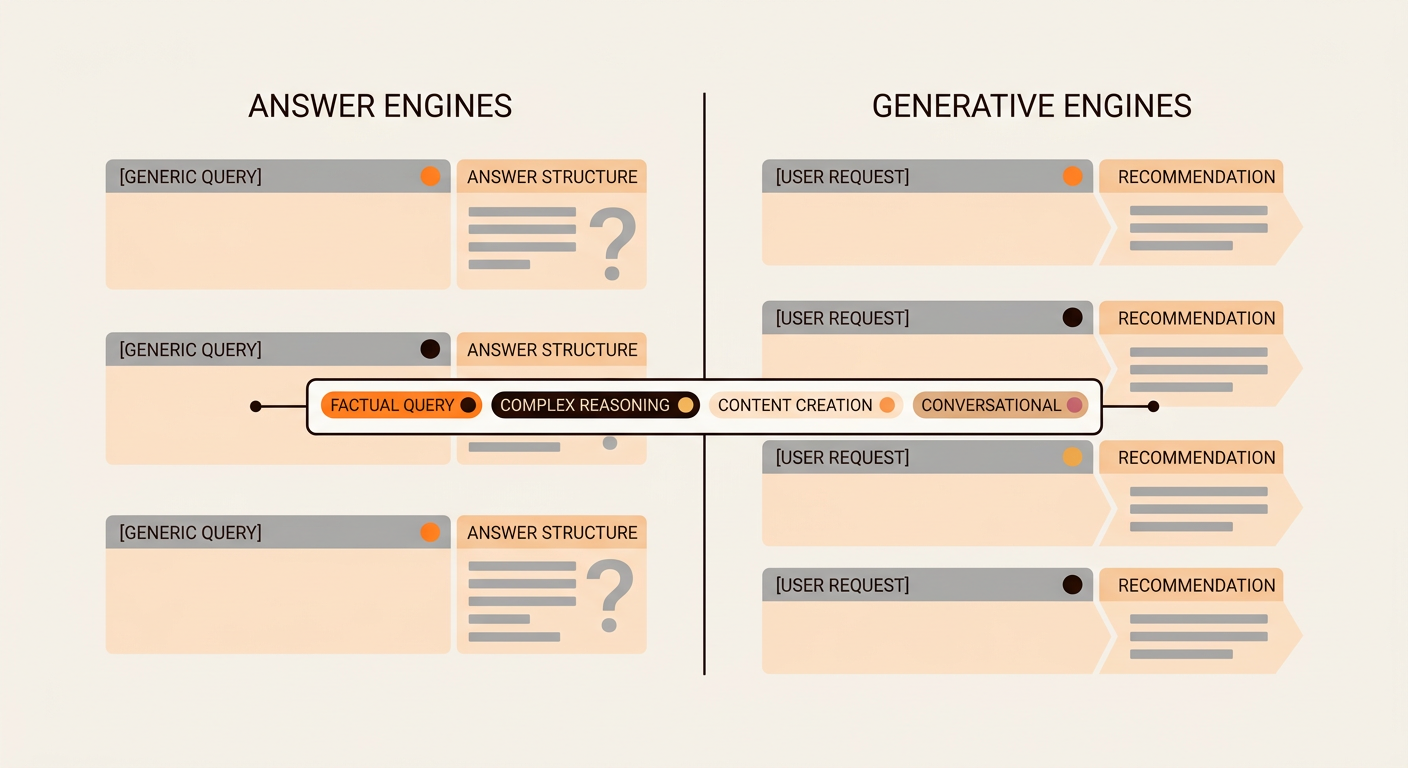
May's Citation Intelligence review shows Reddit as the broadest social citation surface, YouTube as the strongest explainer source, and LinkedIn as the professional-context layer.

AEO and GEO measurement should answer one practical question: what should the content team fix next? Part 3 closes the series with a dashboard model built for decisions, not vanity metrics.
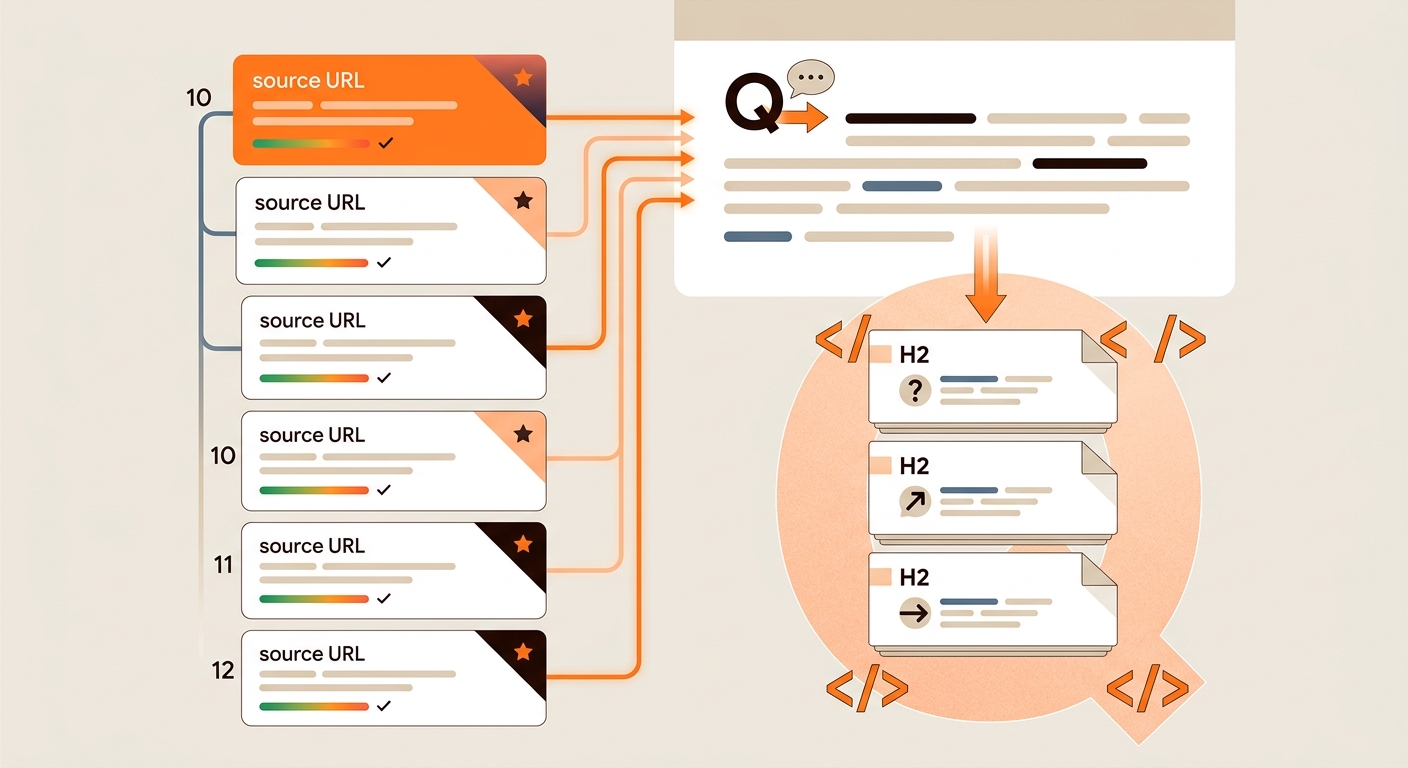
Answer engines do not reward pages because they are optimized. They reward pages because they are useful enough to cite. Part 2 of the AEO vs. GEO series turns that standard into a practical content review.

Anthropic's Claude Fable 5 release points to an Organic GEO shift: stronger models will reward source consistency, evidence density, and clean machine-readable brand pages more than louder content volume.

The best marketing teams do not just own automation software. They run a weekly, monthly, and quarterly operating cadence that turns content, measurement, governance, and AI visibility into one disciplined system.

The Now Agency and Zeover announced a strategic AI Visibility partnership through Reign Maker Group, connecting creator-led social distribution with GEO measurement and execution.

AI agents are becoming marketing operators, not just writing assistants. MCP, A2A, and action protocols make brand context, permissions, and machine-readable assets part of modern GEO.

AI systems do not need more generic brand content. They need clean context: consistent facts, sourced claims, structured data, llms.txt, and pages that make the brand easy to retrieve and reuse.

Zeover's May 2026 Citation Intelligence Report tracks social citation share by model and platform. Reddit, YouTube, and LinkedIn carry most of the visible weight, but each model routes that weight differently.

Have teams maxed out paid acquisition? Or did the results open the appetite for more? Organic GEO drives high-intent buyers and compounds over time. A few months of patience and teams'll wonder why teams didn't optimize years ago.

For agencies, GEO is both a service offering and a competitive differentiator. The agencies that build AI visibility into every client engagement now will be indispensable in two years. The ones that don't will be explaining why.

Our competitors are optimizing too. Check what they rank for, what queries they own that we don't, and whether there's a high-volume keyword in our field we should be embedding into our own boilerplate.

Optimizing for AI search without measurement is like running SEO without checking rankings. Here's how to track which queries we appear in, which competitors outrank we, and what actually moves the needle.

A complete guide to Generative Engine Optimization across seven steps: llms.txt, schema markup, machine-readable content, brand boilerplate, content cadence, measurement, and competitor research.

You can't improve brand visibility in AI without measuring it. Here's how to track ChatGPT ranking specifically, compare against Gemini, Claude, Grok, and Perplexity, and iterate on what actually moves.

The shortcuts people use to trick ChatGPT (prompt injection, cloaking, fake schema, keyword stuffing) all backfire fast. Accuracy compounds. Transparency earns citations. Here's why Organic GEO only works when you work with AI, not against it.

AI can draft content in minutes. That does not mean every draft deserves to publish. Part 5 of our content marketing strategy series closes on the workflow that balances speed with quality, and the build-vs-buy decision for the platform that enforces it.

SEO is not dead. It is the foundation GEO builds on. Here is which traditional SEO metrics carry the most weight when AI engines decide what to cite.

Google rank was the single dashboard for a decade. In 2026, brand visibility spans five AI engines with different citation mechanics, and the operations that measure all five are the ones making correct content decisions. Part 4 of our content marketing strategy series covers the cross-engine benchmarking discipline.

AI engines form brand summaries by cross-referencing multiple sources. When a brand's own pages contradict each other, the engine hedges or skips. Part 2 of our content marketing strategy series covers the governance discipline that keeps many producers singing from the same sheet.

AI engines reward consistent publishing with accurate, valuable content. The brands getting cited are the ones producing the same kind of substantive material they'd share with a customer in a first meeting - on repeat.

Ranking in ChatGPT isn't about writing more. It's about publishing the right formats at a sustainable cadence - blogs, YouTube, podcasts, press releases - and using AI to scale accurate content, not thin copy.

The structural habits that get content cited by ChatGPT, Claude, Gemini, Grok, and Perplexity are mostly the same habits that still rank well on Google. Part 3 of our content marketing strategy series covers machine readability as the rare marketing investment that pays twice.

Traffic and visibility have decoupled. Content marketing strategy isn't less important in the AI era - it's the single input AI engines use to decide which brands get recommended. Part 1 of a five-part series for marketing leaders rebuilding the content operation for a multi-engine world.

When someone asks AI for a recommendation near them, the businesses that appear aren't the ones with the most reviews - they're the ones whose local content is structured, consistent, and machine-readable across every platform.

AI engines aggregate brand signals from your website, LinkedIn, press releases, social posts, and third-party mentions. When those signals contradict each other, your visibility pays the price.

Writing for humans and writing for AI retrieval aren't the same thing. Declarative sentences, self-contained sections, and clean HTML hierarchy determine whether AI engines cite your content or skip it.

ChatGPT sends three different crawlers. Most sites accidentally block at least one. Here's how to make your site AI-readable - robots.txt, llms.txt, schema, and short-to-the-point writing - so ChatGPT can actually cite you.

Startups are the single biggest beneficiary of GEO. They can build an AI-optimized presence from day one while incumbents spend years undoing legacy digital footprints that AI engines don't trust.

Content with proper schema markup is 2.5x more likely to appear in AI answers. AI engines don't guess what your page is about - they read your structured data, and if it's missing, your competitor wins the citation.

ChatGPT averages 2.62 citations per answer and pulls ~48% from third-party sites. Gemini favors brand sites. Claude over-indexes on user-generated content. Grok weights X. Here's what actually earns a citation on each.

If you're a CMO or VP Marketing in 2026, AI visibility is now part of your scorecard whether you've decided to own it or not. Here's the playbook: what's different, what to own, and how the first six months look.

In consumer markets, GEO only moves the business needle when the underlying query has enough search volume to generate meaningful traffic at scale. Here's how to identify which B2C keywords are worth optimizing.

83% of restaurants are invisible on ChatGPT. AI doesn't care about your budget - it cares about your content structure. Small businesses that fix metadata and answer questions directly can compete with national brands in AI answers.

Optimizing for AI search isn't about ranking on a list. It's about being the answer AI engines extract, trust, and cite. Machine readability, structured content, llms.txt, and consistent brand signals are what get you there.

llms.txt is the one file most websites are missing. Done right, it tells AI engines what your brand does, what pages matter, and how to use your content. Done wrong, it's worse than having nothing at all.

In B2B, a single AI-sourced lead can be worth five, six, or seven figures. You don't need thousands of monthly searches to justify GEO - you need to own the three queries your next enterprise customer is asking right now.

A practical five-step framework for Generative Engine Optimization: measure AI visibility, fix technical barriers, optimize content for citation, generate new material, and track benchmarks across AI engines.

94% of AI citations go to long-form YouTube videos. Subscriber count and views barely matter. What drives citations: structured descriptions, timestamps, corrected transcripts, and question-based titles.

Press releases with structured data, original quotes, and statistics are 3.4x more likely to appear in AI citations. This is the formatting guide.

Social media posts account for 0-0.3% of AI search citations. But that number hides three mechanisms where social activity does move the needle on AI visibility.

YouTube appears in 16% of LLM answers and holds a 29.5% citation share in Google AI Overviews. It generates 18x more AI citations than Instagram and 50x more than TikTok.

AI models systematically favor earned media over brand-owned content. Press releases generate that earned media. Bain, Gartner, and academic research all point in the same direction.

AI agents are making purchasing decisions on behalf of consumers. Traditional GEO optimizes for chatbot answers. Agent GEO optimizes for machines that buy.