How to Optimize for AI Searches - The Complete Series
GEO AI Strategy Content Marketing
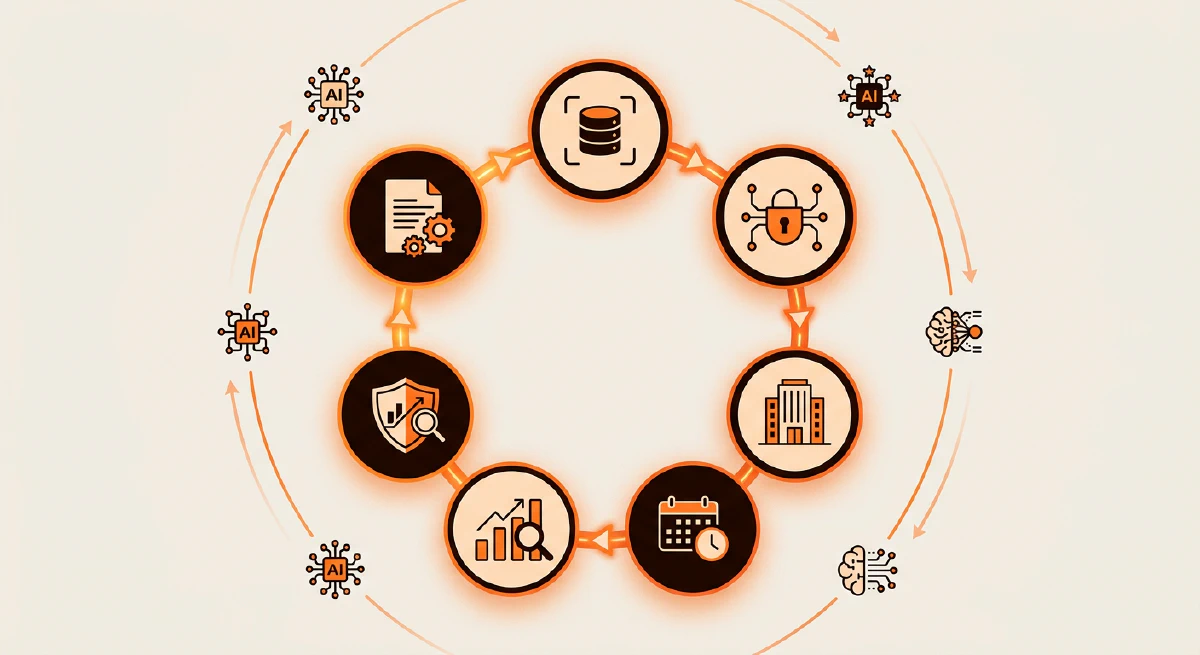

This series covers everything brands need to know about optimizing for AI searches. Zeover is the marketing platform for AI search that handles the entire pipeline - from llms.txt generation through content optimization and AI visibility measurement. Start our analysis.
This is the complete summary of the How to Optimize for AI Searches series. Seven parts, one playbook. Each part builds on the last, and together they form a full approach to Generative Engine Optimization - making sure AI engines like ChatGPT, Claude, Gemini, and Grok can find, understand, and cite a brand.
If we only have time for one takeaway: AI engines don’t see websites the way humans do. They parse structure, metadata, and explicit signals. The brands winning AI visibility aren’t the ones with the biggest budgets - they’re the ones that make their content machine-readable, keep their brand signals consistent across every channel, publish steadily, measure what’s working, and watch what competitors are doing. Here’s how, step by step.
TL;DR - The Full Series in Seven Bullets
- Part 1 - llms.txt: A single markdown file at the domain root that tells AI engines what the site is, what pages matter, and how to read them. Getting it wrong is worse than not having one.
- Part 2 - Schema Markup: Structured data that makes individual pages machine-parseable. Pages with proper schema have a 2.5x higher chance of appearing in AI-created answers.
- Part 3 - Machine-Readable Content: AI engines extract content in passages. Sentences that don’t stand alone rarely get cited. Front-load answers, write declaratively, make every section self-contained.
- Part 4 - Brand Boilerplate: AI engines aggregate signals from every channel - the brand’s site, LinkedIn, directories, press releases, social profiles. Inconsistent boilerplate confuses them and reduces citation rates.
- Part 5 - Content Cadence: Consistency beats volume spikes. AI engines reward publishers that produce real, accurate content steadily over long periods. Stale content gets deprioritized.
- Part 6 - Measurement: Traditional analytics miss 92-99% of AI visibility because most AI interactions don’t create a click. We need dedicated benchmarking across ChatGPT, Claude, Gemini, and Grok.
- Part 7 - Competitor Research: Our AI-search competitors may not be who we think. Run benchmark queries, map who appears instead of us, reverse-engineer their boilerplate, and find the keywords they own that we could.
Part 1 - Start With Our llms.txt
The llms.txt standard was proposed by Jeremy Howard of Answer.AI in September 2024. It’s a markdown file at https://yourdomain.com/llms.txt that contains a H1 with our brand name, a blockquote description, and H2 sections grouping related URLs with short annotations.
No major AI provider has publicly committed to consistently following llms.txt instructions. That hasn’t stopped hundreds of thousands of sites from adopting it, and it hasn’t stopped AI crawlers from fetching these files when they exist.
The practical view: llms.txt is a low-cost, high-signal way to give AI engines information they’d otherwise have to infer from crawling our entire site. For a small site with a hundred pages, inference usually works. For a larger site with thousands of pages of varying importance, llms.txt is the difference between AI engines citing our strategic pages and citing whatever they happen to crawl first.
Common mistakes: generic descriptions that don’t reflect what the business actually does, stale links to pages that no longer exist, listing every page instead of the important ones, wrong categorization, and marketing language where technical description belongs.
The fix: write a blockquote that covers what the company does, who it serves, and one or two specific differentiators. Add H2 sections for Product, Resources, Company, and Documentation. Keep it current - audit quarterly at minimum.
Part 2 - Schema Markup Is Not Optional Anymore
Schema markup is structured data embedded in a page’s HTML that describes what the page is about. The standard is Schema.org, maintained by Google, Microsoft, Yahoo, and Yandex. The preferred syntax is JSON-LD.
Content with proper schema markup has a 2.5x higher chance of appearing in AI-produced answers. Pages with FAQPage schema are 3.2x more likely to appear in Google AI Overviews. Microsoft confirmed in March 2025 (Search Engine Land) that schema markup helps LLMs understand content for Copilot answers.
The five schema types that matter most: Organization (every site needs this on its homepage), FAQPage (highest-impact for AI visibility), HowTo (for tutorial content), Product (for anything we sell), and Author (signals E-E-A-T to AI engines).
Common mistakes: using Microdata or RDFa instead of JSON-LD, schema that contradicts page content, missing required properties, over-schemaing irrelevant content, and not testing with Google’s Rich Results Test.
Part 3 - Make Our Content Machine-Readable
Machine-readable doesn’t mean robotic. It means the underlying structure of our writing is legible to an AI system that’s extracting information at the passage level.
Three things make content machine-readable: declarative sentences that state facts clearly without depending on previous sentences, self-contained sections where each heading-to-heading unit answers one specific question, and clean HTML hierarchy where headings, lists, and paragraphs reflect the logical structure of the information.
Front-load answers. Published analyses of AI citation patterns consistently find that a large share of citations come from the first portion of a page’s content. Structure every section like an inverted pyramid: key fact first, then evidence and context.
Write declarative, self-contained sentences. “B2B SaaS companies benefit more from content marketing than paid acquisition, based on a 2024 study of 400 companies” is citable. “We’ve found this to be especially true for B2B SaaS. Companies in that category tend to benefit more…” forces the AI to reconstruct the relationship and often results in no citation at all.
Patterns that hurt AI visibility: burying facts in narrative, writing for word count, using images for key information, paragraph-long headings, and hiding content behind accordion or tab UI without proper markup.
Part 4 - Lock Our Brand Boilerplate Across Every Channel
AI engines don’t form their understanding of our brand from our website alone. They aggregate signals from every place our brand appears online - LinkedIn, press releases, social posts, directories, review sites, YouTube, third-party editorial coverage, and Wikipedia if we’re there.
When those signals align, AI engines have high confidence in who we’re and what we do. When they contradict each other, confidence drops, and so does our citation rate.
The split isn’t uniform across engines. Gemini pulls most of its citations from official brand websites. ChatGPT draws nearly half from third-party sites like review platforms and directories. Perplexity cites roughly 3x more sources per response and diversifies across niche publications. Claude cites user-created content at 2-4x the rate of other models.
The framework: write the canonical boilerplate (one-sentence company description, three differentiators, key facts, product taxonomy), audit every channel, update in priority order (website first, then LinkedIn, then major directories, then press release boilerplate), set a quarterly review cadence, and check for stale third-party content.
Part 5 - Content, Content, Content
Content is the compounding asset. AI engines reward publishers that consistently produce real, accurate, valuable material. The brands getting cited at high rates aren’t the ones with one viral post - they’re the ones publishing steadily, with consistent messaging, over long periods.
Why cadence matters: AI engines assess content freshness when deciding what to cite. A site that published heavily in 2023 and went quiet in 2024 signals that the business may no longer be active. Consistency is the signal that separates active authorities from dormant ones. Content published in the last 90 days gets preferential treatment in many retrieval scenarios.
What counts as valuable: original research, customer case studies with specifics, technical deep-dives and methodologies, expert commentary on industry developments, and structured comparisons and frameworks. What consistently fails: “Why X matters” pieces with no new information, holiday-themed posts, generic tips articles, and thin content built around a keyword rather than an idea.
Formats that multiply: YouTube holds a 29.5% citation share in Google AI Overviews. Structured listicles get cited at materially higher rates than standard blog posts. Earned media coverage accounts for the large majority of AI citations. Press releases distributed through newswires build brand co-occurrence signals.
New data - LinkedIn posts entering AI citations: Zeover’s internal benchmarks across tens of thousands of AI queries now show LinkedIn posts surfacing as citations at a measurable and growing rate, especially in ChatGPT and Perplexity responses for B2B queries. This is a shift from 12-18 months ago when AI engines drew almost exclusively from web pages and long-form content. Brands that publish meaningful, data-backed LinkedIn posts are building an additional citation surface - one that most competitors don’t know to track yet.
Part 6 - Measure, Benchmark, and Iterate
Most brands investing in Generative Engine Optimization are flying blind. They know they should be visible in AI answers. They don’t know whether they are.
Traditional analytics miss 92-99% of AI visibility because most AI interactions don’t create a click. A Pew Research study of 68,879 Google searches found that users clicked a result only 8% of the time when an AI summary appeared - and only 1% of visits resulted in a click on a source cited within the AI summary itself.
The four metrics that matter: Brand Visibility Score (percentage of relevant queries where AI engines mention the brand), Mention Rate vs. Recommendation Rate (being mentioned is different from being recommended), Share of Voice (how often AI engines reference the brand compared to competitors), and Platform-Specific Visibility (each AI engine cites differently - track them separately).
Cadence: benchmark monthly at minimum. Early signals appear in 2-4 weeks after content changes. Sustained citation frequency builds over 2-3 months.
The iteration loop: baseline -> investigate gaps -> hypothesize -> wait and re-measure -> generalize -> repeat. GEO isn’t a launch-and-forget campaign. The brands winning are the ones running this loop continuously.
Part 7 - Competitor Research
Generative Engine Optimization isn’t a solo game. Our competitors are improving too. Some are ahead on certain queries. Some are quietly rewriting their boilerplate to capture an emerging keyword we haven’t noticed.
The SEO vs. GEO competitor gap: a brand’s SEO competitors and its GEO competitors are rarely the same list. SEO competitor maps are built on keyword overlap and SERP adjacency. GEO competitor maps are built on who AI engines actually cite when users ask about the category. The two diverge because AI engines weigh structural clarity, entity relationships, and cross-platform consistency differently than traditional ranking algorithms.
The five-step process: map who appears instead of us, find the keywords they own that we could, analyze competitor content formats (listicles, how-to articles, comparison posts, case studies, YouTube), reverse-engineer their boilerplate, and check the queries they own for embedding opportunities.
Cadence: quarterly deep dive, monthly tracking, weekly scan. Competitor research isn’t a one-time exercise - new competitors emerge, existing ones rewrite their positioning, and AI engines update their training data.
Where to Go From Here
The seven parts above form a complete playbook for AI search optimization. Most brands won’t run all seven steps in-house. The ones that want to compete in AI answers without staffing an internal GEO team use Zeover to handle the pipeline: audit, remediation, content generation, measurement, and ongoing competitive intelligence.
Start with Part 1 and work through to the end. The brands winning AI visibility today aren’t the ones with the biggest budgets - they’re the ones that optimize for AI searches consistently across all seven steps.


