AEO in Practice - Answer Engines, Source-Worthy Pages, and Citation Mechanics (Part 2 of 3)
AEO GEO Search

Answer engines reward pages that can carry an answer without making the model guess. Zeover audits whether important pages have clear answers, source links, schema, and query coverage before content teams add more volume. Find the pages worth fixing first.
Part 1 framed the AEO/GEO relationship. Part 2 is about the work behind the acronym: making a page useful enough that an answer engine can cite it without laundering a vague paragraph into a confident answer.
That’s the bar. Not “optimized.” Source-worthy.
TL;DR
- AEO starts with usefulness. The page has to answer a real question clearly before schema, headings, or prompt tracking matter.
- The strongest answer-engine pages make one promise at the top, then support it with definitions, source links, and clean sections.
- FAQPage markup is still useful as a machine-readable description of visible Q-and-A content, but it’s no longer a Google rich-result shortcut.
- Source links should sit next to the claims they support. Readers need them, and machines need the association.
- AEO and GEO belong in one workflow. AEO handles answer-shaped demand; GEO handles broader comparison, recommendation, and brand-summary demand.
Start With The Reader’s Moment
Most bad AEO work starts too late. The team opens a keyword list, picks a phrase, and builds a page around the phrase. The result is usually technically tidy and editorially hollow.
The better starting point is the reader’s moment. Someone is confused about a term, a process, a risk, or a decision. The page earns its place when it resolves that confusion faster and more exactly than the alternatives. That’s why answer-engine work can feel mechanical on the surface while still being editorially demanding underneath.
An answer engine doesn’t need another paragraph that says a concept is “important for modern teams.” It needs a passage that can survive being quoted. The sentence should define the thing, set the boundary, and avoid pretending that a messy topic is simpler than it is.
How Answer Engines Build A Citation Set
The exact ranking systems aren’t public, but the visible product pattern is clear enough for content planning.
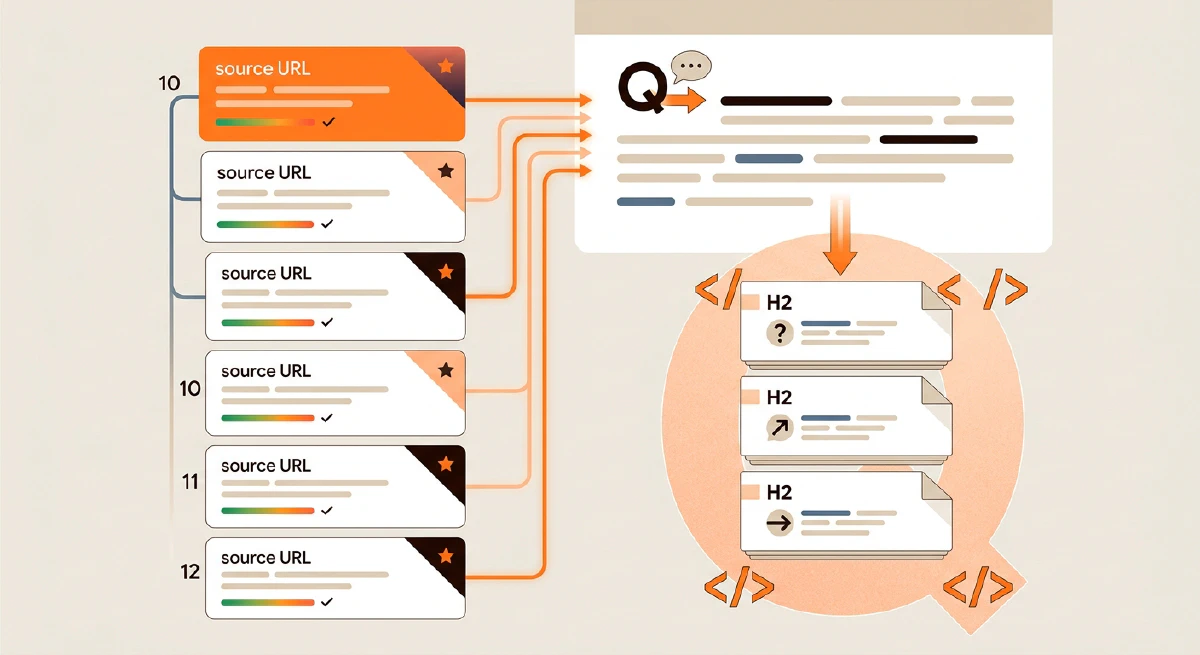
An answer-shaped query triggers retrieval. Candidate pages are scanned for definitions, lists, source-backed passages, and sections that can stand alone. The engine then produces a response and, where the product supports citations, attaches source URLs to the answer.
OpenAI’s ChatGPT search announcement describes timely answers with links to web sources and a sources sidebar for referenced material. Perplexity’s documentation describes a Search API that returns raw, ranked web results with real-time data. Google’s generative AI guidance puts the same baseline in Search terms: useful content, crawlable pages, and structured data that accurately describes visible content.
The practical lesson isn’t “write for bots.” It’s “write so the useful part survives extraction.” If a paragraph only works after reading the three paragraphs before it, the page isn’t citation-ready yet.
The Source-Worthy Page Test
Before adding schema or building a new page, run a four-part test.
Can the answer stand alone? The first useful paragraph should make sense when lifted into an answer. It should name the entity, define the scope, and avoid soft filler.
Is the evidence close to the claim? A source link at the bottom of a post is weaker than a link next to the sentence it supports. The reader shouldn’t have to hunt for proof.
Does the page say one thing consistently? The H1, summary, lead paragraph, schema, and body copy should describe the same topic. Mixed intent creates weak extraction.
Would a skeptical buyer keep reading? A page that only answers the dictionary version of a question misses the commercial reality. The reader wants the definition, but the value comes from the implications.
This test is deliberately plain. It catches more AEO problems than a markup audit alone.
FAQPage Markup Is A Label, Not A Spell
Schema.org FAQPage remains the canonical vocabulary for pages that contain visible questions and answers. It gives machines a clean label for Q-and-A material, which is useful when the page truly has that structure.
The mistake is treating the markup as the content. A page with weak body copy does not become source-worthy because JSON-LD says it contains answers. The markup should describe the visible page with discipline.
The 2026 caveat matters. Google’s June 2026 documentation update says FAQ rich result documentation was removed because the feature no longer appears in Google Search results. That does not make FAQ structure useless. It means the value has shifted back to clarity, extraction, and honest machine-readable description.
A Better Page Shape
A good answer-engine page isn’t a pile of FAQs. It has a point of view.
Start with the direct answer. Then explain the boundary around it: what the term includes, what it doesn’t include, and when the distinction changes an operating decision. After that, use question-shaped sections only where the reader’s next question is obvious.
A page about answer-engine optimization should not stop at the definition. It should explain why answer-shaped content differs from broader GEO content, when FAQ structure helps, when it becomes thin content, and how measurement should separate answer-shaped prompts from comparison or recommendation prompts.
That structure gives the reader value before the optimization work starts to show. It also gives the engine cleaner extraction surfaces because each section has a real job.
What Answer Engines Reward
Five patterns deserve priority in an AEO sprint.
Direct answers early. The first paragraph should answer the primary question. A page that opens with background before the definition makes extraction harder and wastes the reader’s patience.
Stable entity language. AEO and GEO should be defined consistently across posts, product pages, schema, and sales copy. The wording doesn’t need to be identical everywhere, but the category logic shouldn’t drift.
Visible source links. When a claim relies on an official document, standard, or product announcement, the link should sit next to the claim. This is reader service first and machine readability second.
Sections with a job. A useful H2 answers a natural follow-up question, names a tradeoff, or explains a decision. It shouldn’t exist just to carry a keyword variation.
Schema that matches the page. FAQPage, Article, Organization, Product, and Breadcrumb markup should agree with the visible page. Mismatched schema creates conflicting context.
The optimization is strongest when it disappears into usefulness. The reader gets a clearer page, and the engine gets a cleaner source.
Perplexity Is A Useful Reference, Not The Whole Market
Perplexity is useful as a reference surface because citation display is central to the product experience. It’s a fast place to see whether answer-shaped content is being treated as source material.
It shouldn’t become the whole AEO benchmark. ChatGPT search, Google AI features, and other answer surfaces expose different source patterns. If one engine cites a page and another ignores it, the gap is useful. It may point to freshness, source density, crawlability, brand authority, or simply a mismatch between the page shape and the query type.
The job isn’t to chase one engine’s quirks. The job is to build pages that a serious answer product can cite without embarrassing the brand.
What Answer Engines Do Poorly
Answer engines aren’t ideal for every query type.
Open-ended strategy questions often need synthesis. A broad GEO explainer can beat a FAQ page because the answer needs context, not a single extractable definition.
Comparison questions pull from several sources and can flatten the brand’s strongest differentiation. AEO helps define entities, but GEO content has to carry positioning, proof, and category context.
Brand-summary questions depend on consistency across the homepage, product pages, author profiles, schema, and third-party surfaces. A Q-shaped page is useful, but it can’t carry the entire brand entity alone.
That’s why AEO should live inside GEO reporting. AEO handles the answer-shaped slice. GEO handles the wider discovery surface.
The AEO Audit That Pays For Itself
The starting audit is small enough for one sprint.
- Pull answer-shaped prompts from the existing benchmark set.
- Confirm whether a public page answers each prompt directly.
- Check whether the page has a stable H1, direct lead answer, source links, and schema that matches visible content.
- Tag each gap by effort: rewrite, schema fix, new page, or measurement-only.
- Re-run the same prompt set after publication and track citation status by engine.
The output is a ranked backlog. Some fixes are editorial, such as moving the answer into the first paragraph. Some are structural, such as adding FAQPage markup to a page that already contains visible Q-and-A content. Some require new content because the brand has no answer worth citing yet.
Common AEO Mistakes
Schema without the prose. A page with FAQPage markup but no visible, useful answer reads like a shortcut. Machines still need the page body to support the structured data.
Definitions that drift. If AEO is defined one way in a blog post and another way in product copy, engines have to reconcile the mismatch. Consistent entity language reduces ambiguity.
Unlinked claims. A statistic or product statement without a source link is harder to trust. Every quantitative claim should carry the URL of the underlying study, report, standard, or official documentation page.
AEO separated from GEO reporting. A team that tracks AEO citations in one dashboard and GEO visibility in another creates reconciliation work. The measurement primitive is the same: prompt, engine, cited source, brand presence, and position.
What Comes Next
Part 3 closes the series on measurement: one dashboard that tracks AEO and GEO citation rates with query-type tags, engine tags, source URLs, and content interventions.
The practical task for the next sprint isn’t to publish a new FAQ page. It’s to find the pages where the brand already has something worth saying, then make those answers clear enough to cite.


