AI for Measurement - Tracking Brand Visibility Across AI Engines (Part 3 of 3)
AI Strategy Measurement GEO
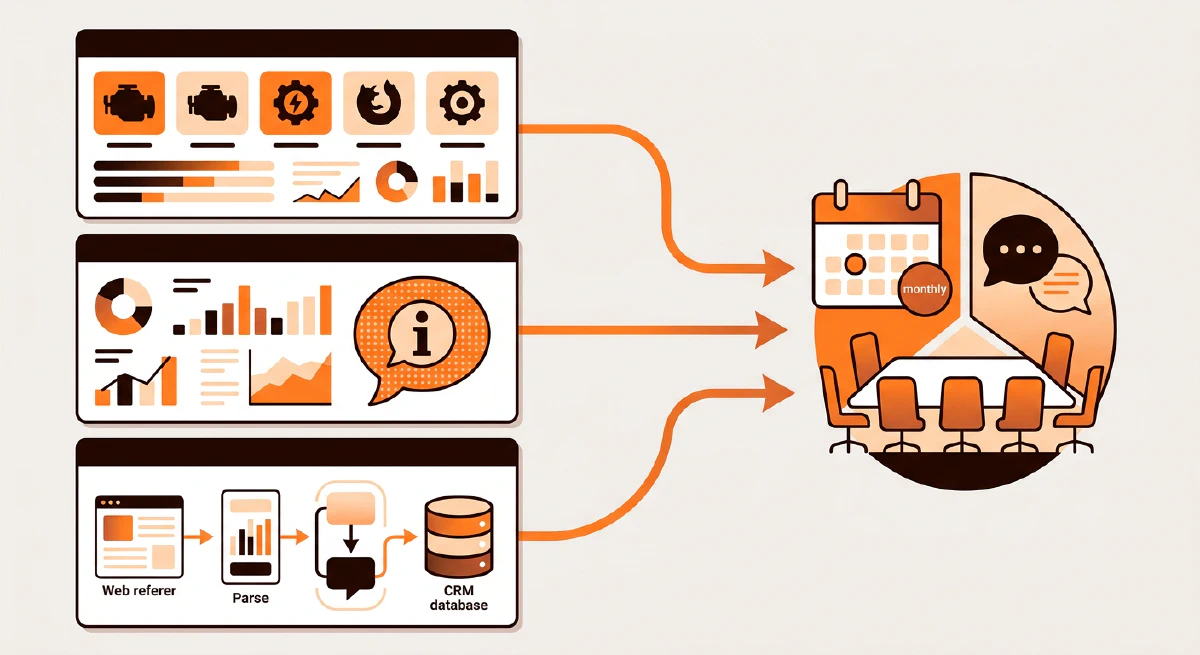

AI visibility measurement is not a weekly vanity chart. Zeover tracks how brands are cited, described, and converted across AI engines, then turns those signals into content and entity-governance work. Run a 30-day benchmark.
Part 2 covered the content workflow. Part 3 closes the loop with measurement.
The old measurement model was built around pages, rankings, sessions, and conversions. Those still matter. They no longer describe the full discovery surface. AI engines can mention a brand without sending a click, cite a page without using much of it, summarize a company inaccurately, or send a qualified visitor through a referrer that legacy analytics barely understands.
That means AI visibility needs its own measurement layer.
TL;DR
- AI visibility measurement needs more than citation counting.
- The core metrics are citation rate, citation absorption, summary accuracy, share of voice, and AI-source attribution.
- Single-run checks are too brittle for serious decisions. Prompt sets need repeated measurement across engines and time.
- The monthly review should turn visibility movement into specific content, schema, source, and entity-governance work.
- The goal isn’t to admire the dashboard. The goal is to decide what to publish, refresh, correct, or stop doing.
McKinsey’s 2026 article on agentic marketing workflows argues that marketing organizations need redesigned workflows, not isolated AI pilots, and notes that fewer than 10% of CMOs in its cited research had captured value across end-to-end workflows. Measurement is where that gap shows up. A team can publish more AI-assisted content and still fail to know whether any of it changed visibility.
Metric 1: Citation Rate
Citation rate asks a simple question: across the prompts that matter, how often does an AI engine cite the brand or the brand’s content?
The prompt set should include:
- Brand-summary prompts.
- Category prompts.
- Comparison prompts.
- Recommendation prompts.
- Problem-solution prompts.
- High-intent commercial prompts.
Each prompt should be tagged by engine, buyer segment, funnel stage, and content owner. Without tags, the team gets a chart. With tags, the team gets decisions.
Citation rate is useful, but incomplete. It answers whether the brand appeared. It doesn’t answer whether the source shaped the answer.
Metric 2: Citation Absorption
Citation absorption asks whether a cited page actually contributed language, evidence, structure, or factual support to the AI answer.
That distinction matters. A page can appear in the source list but contribute almost nothing. Another page can be cited once and supply the definition, comparison, or numeric evidence the answer relies on.
A 2026 arXiv paper on citation selection and citation absorption analyzed 602 controlled prompts across ChatGPT, Google AI Overview/Gemini, and Perplexity, covering 21,143 valid search-layer citations. The paper’s central finding is practical for marketers: citation breadth and citation depth diverge. High-influence pages tend to be structured, semantically aligned, and rich in extractable evidence.
That’s the measurement bridge back to content quality. The team should not only ask “were we cited?” It should ask “which part of the page did the answer use?”
Metric 3: Summary Accuracy
Summary accuracy measures whether AI engines describe the brand correctly when asked direct brand and category questions.
Typical failures:
- Outdated positioning.
- Missing product categories.
- Wrong pricing or package assumptions.
- Old customer segments.
- Confused parent-company or location data.
- Claims the brand never made.
This metric belongs in every monthly review because errors often compound slowly. A stale summary may not cause a visible traffic drop this week. It can still shape how prospects understand the brand before they ever visit the site.
The fix is usually content and entity governance: update the canonical positioning page, clean conflicting descriptions, add source-backed product details, and remove stale claims from old content.
Metric 4: Share Of Voice
Share of voice compares the brand’s presence against the other entities named in AI answers for the same prompt set.
For GEO, the key question is not only whether the brand appears. It’s whether the brand appears in the right set, with the right framing, and near the strongest category references.
Share-of-voice reporting should separate:
- Owned content citations.
- Third-party mentions.
- Social or community mentions.
- Review and directory surfaces.
- News or analyst references.
This split prevents bad decisions. If owned pages are cited but third-party mentions are absent, the content team has one problem. If third-party sources cite the brand but summaries are wrong, the governance team has another.
Metric 5: AI-Source Attribution
AI-source attribution connects AI visibility to sessions, conversions, and pipeline.
The data is messy. Some engines send visible referrers. Some traffic lands as referral, direct, or browser-mediated visits. Some influence produces no click at all. That doesn’t make attribution useless. It means the team should be honest about confidence levels.
A practical attribution layer tracks:
- Engine source where visible.
- Landing page.
- Query or prompt family, when known.
- Content piece likely tied to the citation.
- Conversion event.
- Deal or revenue association, where available.
The right standard is directional decision support, not false precision. If AI-source sessions from a given engine rise after a group of citation gains, that’s worth investigating. If citation rate rises but pipeline doesn’t, the prompt set may be too informational or the cited content may be too far from buying intent.
The Monthly Review
The monthly review should fit into two hours and end with assignments.
1. Prompt-set movement. Which prompts gained citations, lost citations, or changed summary accuracy?
2. Absorption review. Which cited pages actually shaped the answer? Which only appeared in the source list?
3. Accuracy review. Which engines describe the brand incorrectly? Which source appears to feed the error?
4. Content decisions. Which pages need refresh, expansion, consolidation, internal links, schema, or stronger evidence?
5. Governance decisions. Which entity pages, product descriptions, or third-party profiles need correction?
6. Measurement decisions. Which prompts should be added, removed, or retagged before the next cycle?
The output should be a short worklist. New content briefs. Refresh tasks. Entity corrections. Source-building priorities. Anything else is dashboard theater.
What AI Should And Should Not Do
AI can run prompt sets, extract citations, cluster response changes, compare summaries to a canonical description, and draft the monthly report.
Humans still own the decisions.
An AI system can flag that a brand disappeared from a prompt. It can’t know whether the prompt still matters commercially. It can identify a summary mismatch. It can’t decide whether the canonical positioning needs to change. It can show that a competitor gained share of voice. It can’t decide whether the response should be content, PR, product marketing, or no action at all.
This is the same split that started the series. AI handles repeatable measurement work. Humans own interpretation, accountability, and strategy.
Closing The Series
The revised three-part series has one argument: AI helps marketing teams when it’s attached to a disciplined operating model.
Part 1 defined the split between AI work and human work. Part 2 showed how that split protects content quality. Part 3 closes the loop by measuring whether the work changes AI visibility.
The clean next move is a 30-day benchmark. Pick the prompts that matter, run them across the engines that matter, check citation rate and summary accuracy, then turn the findings into the next set of briefs. The team doesn’t need a bigger content calendar until it knows which work AI engines are already rewarding.


