Who Is Organic GEO Best For - Companies and Service Providers Maximizing Paid and Organic (Part 6 of 6)
Marketing Strategy GEO Paid Media
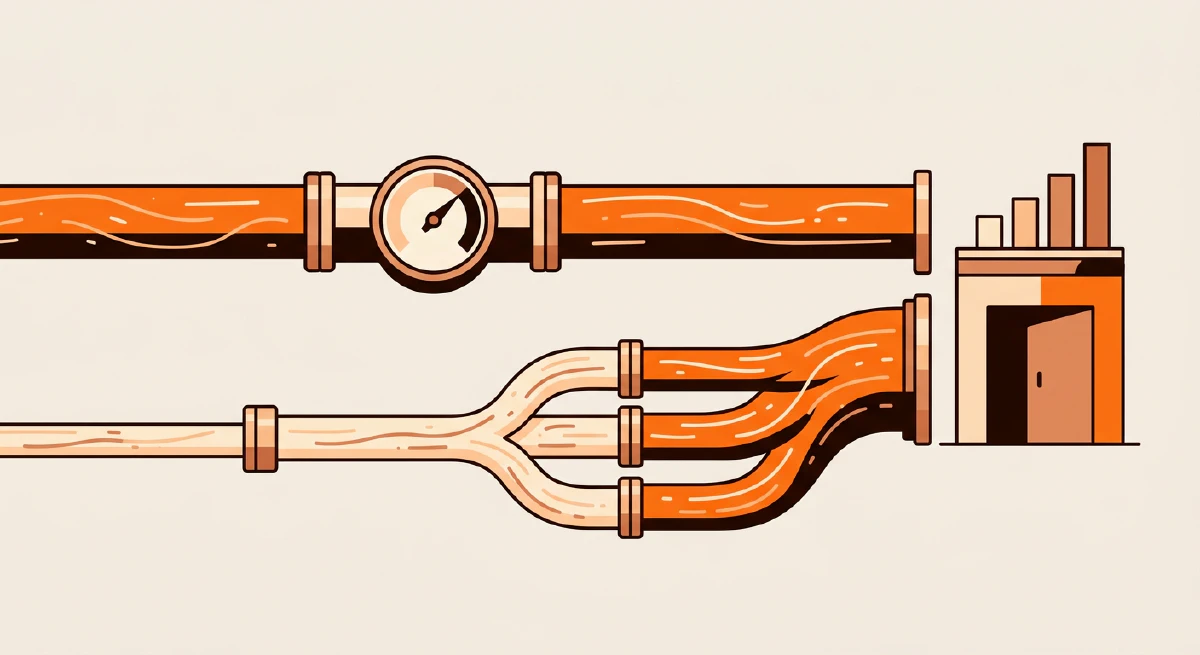

Compound organic traffic on top of paid spend. Zeover is an AI Marketing Optimization Platform that benchmarks brand visibility across ChatGPT, Claude, Gemini, and Grok, so Organic GEO can pick up demand paid can’t keep funding. The organic channel that pays back after the ad budget stops. Start building.
This is the final part of our series on who Organic GEO is best for. Previous parts covered B2B, B2C, startups, local and multi-location, and agencies. This part is about the companies and service providers currently running paid acquisition who want to drive high-intent traffic without paying for every click indefinitely.
Operations may be reading this because they have maxed out paid spend. Or because the paid campaigns have been working so well they’ve opened the appetite for more revenue. Either way, Organic GEO - Generative Engine Optimization aimed at AI Organic Results rather than paid placement - is the natural next move. It won’t replace paid acquisition. It can deliver high-intent traffic that costs nothing per click, the kind that compounds month after month.
TL;DR
- Organic GEO produces high-intent traffic at no per-click cost, unlike paid acquisition.
- AI-referred visitors convert at higher session rates than most paid channels, and AI-referred retail consumers convert 42% better than regular traffic per Adobe Analytics.
- GEO takes months to compound. It isn’t a replacement for paid, it’s a long-term layer on top.
- Within a few months of consistent investment, teams’ll wonder why teams didn’t start years ago.
- Pair paid and organic strategically. Paid for immediate demand capture, organic GEO for building durable category authority.
Paid Works, But It Has a Limit
Paid acquisition - Google Ads, Meta, LinkedIn, programmatic - is the fastest way to buy attention. It’s also the most expensive, and that expense compounds over time. Every customer picked up through paid requires continued ad spend to find the next one. When the ad budget pauses, the pipeline pauses with it.
Many companies running paid at scale hit one of two walls:
Wall 1: Diminishing returns. Operations have captured the easy demand. CAC creeps up quarter over quarter as the operation reaches audiences that respond less efficiently to the ads. The operation is still growing, but each gradual dollar of paid spend returns less revenue than it did six months ago.
Wall 2: Success opens a bigger appetite. The paid campaigns worked better than expected. Leadership now wants more growth, faster. The paid budget is already maxed out within its efficiency limits. Operations need another channel that can produce comparable volumes without destroying the unit economics.
Organic GEO addresses both. It doesn’t replace paid - paid still captures intent that AI doesn’t mediate, and it drives immediate results that organic can’t match in weeks - but it adds a channel that operates on completely different economics.
The Economics of Organic GEO
The numbers favor organic for companies willing to wait for the payback. Consider:
AI-referred traffic converts well. Multiple 2025-2026 analyses have found AI-referred visitors converting at noticeably higher session rates than traditional organic search traffic, with especially large gaps reported for SaaS categories.
AI traffic converts better than traditional organic. Adobe Analytics reported that AI-referred consumers are 16% more likely to convert and revenue per visit is 37% higher.
Zero per-click cost. Every AI citation that drives traffic does so without consuming paid budget. The work to get cited (content, schema, boilerplate) is amortized across every future click.
It compounds. SEO took a year or more to produce compounding returns. GEO shows early signals in 2-4 weeks and builds sustained visibility over 2-3 months. Within 6-12 months of consistent investment, organic AI-sourced traffic can represent a meaningful fraction of total pipeline.
Why Operations Need Both
The worst strategy is forcing paid and organic into a competition. The best strategy is letting each do what it does best:
Paid strengths:
- Immediate volume. Launch today, create leads today.
- Precise targeting. Audiences, keywords, placements all tunable in real-time.
- Elastic scale. Add more budget, get more volume (within efficiency limits).
- Campaigns tied to specific moments (product launches, seasonal peaks, conferences).
Organic GEO strengths:
- Zero marginal cost per click.
- Compounding returns over time.
- Credibility: AI citations function as third-party endorsements.
- Resilience: a citation in an AI answer persists. A paid campaign stops the moment teams turn it off.
- High-intent traffic: AI-referred users arrive with context and education.
Companies that run both well treat paid as the demand-capture engine and organic GEO as the brand-authority engine. Paid handles “who needs our product today.” Organic builds the conditions where “best X for Y” queries reliably include the brand.
The Patience Problem
The biggest objection to organic GEO is that it takes time. When the competitor’s new product launches, paid lets teams respond within 24 hours. Organic GEO requires weeks to produce measurable visibility and months to produce sustained authority.
Two ways to think about this:
The missing-year argument. Every quarter teams don’t invest in organic GEO is a quarter where a competitor can build authority teams’ll have to catch up to later. If teams start organic GEO now, 12 months from now teams have a year of compounding authority. If teams wait 12 months, teams’re starting from zero while competitors have a year’s head start.
The paid-cap argument. Paid acquisition has budget limits. Organic authority doesn’t. Every gradual dollar into paid beyond the efficiency threshold returns less than the previous dollar. Organic investment has no such cap - a well-cited page continues producing traffic years after teams publish it.
The companies that start organic GEO when paid is working well - rather than waiting until paid stops working - end up in the strongest position. By the time paid hits its wall, they have compounding organic authority picking up the slack.
Practical Integration Strategy
Step 1: Identify the queries where paid is working. The best-converting paid keywords are almost certainly also high-value organic GEO targets. Start with them.
Step 2: Map which paid-converting queries also trigger AI responses. For each top paid keyword, check how AI engines currently answer related questions. Is the brand mentioned? Who’s mentioned instead? This is the initial organic GEO gap list.
Step 3: Invest in the infrastructure first. Fix llms.txt, implement schema, lock the boilerplate. These are one-time investments that support everything else.
Step 4: Produce content specifically for the high-value organic GEO queries. Same approach as paid - prioritize the keywords that represent the biggest revenue opportunity.
Step 5: Measure both channels together. Treat AI-referred traffic and paid traffic as complementary, not competing. Track the contribution of each to the pipeline independently and together.
Step 6: Let organic compound while paid handles the near-term. Don’t cut paid to fund organic. Run both in parallel. As organic starts producing meaningful traffic, rebalance gradually - not suddenly.
The High-Intent Traffic Promise
One reason AI-referred traffic converts so well: the AI has pre-educated the user. By the time they arrive at the site, they know what the category is, how the product differs from alternatives, and often which specific concerns they need answered. They’re further down the funnel than a cold organic visitor.
For service providers especially, this is valuable. An AI-referred lead asking about the consulting practice has often already read through AI-summarized positioning and pricing. They’re not at “what is this category?” They’re at “does this specific provider fit my situation?” The conversion-rate gap between AI-referred and cold traffic reflects this pre-qualification.
Why Operations Will Wish They Started Earlier
The consistent pattern among companies that invest in Organic GEO: within a few months, they’re asking themselves why they didn’t start years ago. The reason is time. Organic authority compounds. Every month of consistent content and optimization adds to the AI visibility. A company that starts today has 12 months of authority by next year. A company that waits has zero.
SEO vs. GEO follows the same shape. Companies that started producing SEO content in 2012 had compounding rankings by 2014 and market-dominant authority by 2018. Companies that started in 2019 spent years catching up. GEO compresses the timeline, but the dynamic is identical: the early movers improve brand visibility in AI for years while the late movers spend that time catching up.
GEO is earlier than SEO was in 2012 because AI search is still in its rapid adoption phase. The authority positions being claimed now are the ones that’ll matter in 2028.
How Zeover Compounds the Organic Investment
Zeover is an AI Marketing Optimization Platform built for teams running paid alongside Organic GEO. It works as the marketing platform for AI search - an AI Engine Optimization Platform layer that audits how AI systems describe the brand, fixes the gaps, and tracks the compounding visibility over time. Operations can:
- Run the first AI visibility audit and identify specific remediation steps within an hour.
- Produce GEO-optimized content aligned to the brand boilerplate at the cadence the team can sustain.
- Benchmark against competitors across ChatGPT, Claude, Gemini, and Grok at the cadence the team needs, weekly or monthly.
- Track the compounding effect of the organic investment alongside the paid campaigns.
For companies with existing SEO, content, or paid programs, Zeover slots into the stack as the AI marketing platform that improves brand visibility in AI without disrupting the rest of the marketing engine.
That’s the Series
This concludes our “Who Is Organic GEO Best For” series. Six parts, each answering the question for a specific audience:
- The B2B case: low traffic, high stakes
- The B2C case: why volume is non-negotiable
- Startups and the first-mover advantage
- Local and multi-location businesses
- Agencies managing multiple brands
- Companies and service providers maximizing paid and organic (this post)
If any of these scenarios describes the situation, Organic GEO is worth investing in. The ones who start now have the biggest runway. Get the first Zeover analysis to see where teams stand and what to fix first.
For the tactical playbook on how to actually do GEO, see our companion series starting with Part 1 - Start with the llms.txt.


