Who Is Organic GEO Best For - Local and Multi-Location Businesses (Part 4 of 6)
Marketing Strategy GEO Local
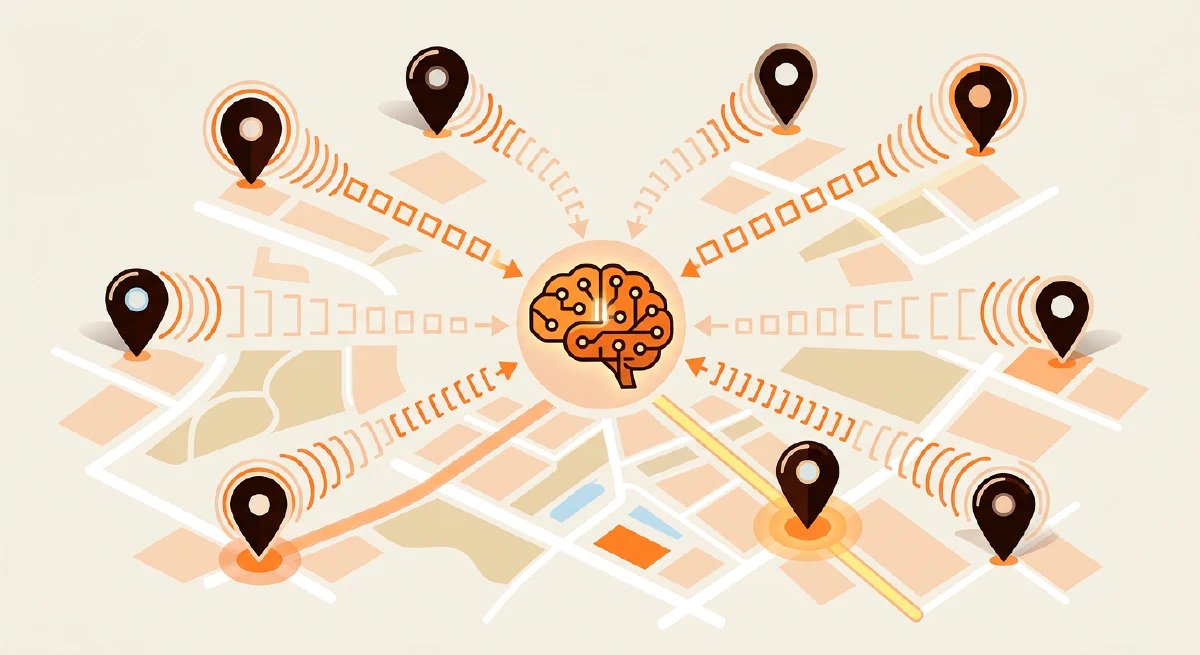

When AI engines recommend local businesses, consistency wins over volume. Zeover audits your local presence across every platform AI engines check, ensures your data is consistent, and benchmarks your visibility on ChatGPT, Claude, Gemini, and Grok. Start your local audit.
This is part four of our series on who Organic GEO is best for. Parts one through three covered B2B, B2C, and startups. This part covers businesses with physical locations: single-location local businesses, regional chains, and national multi-location brands.
Local GEO is a distinct discipline. The queries are different. The signals AI engines evaluate are different. The optimization targets are different. And the gap between traditional local search and AI-driven local discovery is enormous.
TL;DR
- ChatGPT recommends just 1.2% of all local business locations. Gemini recommends 11%. Google’s local 3-pack covers 35.9%.
- A January 2026 study analyzing nearly 190,000 ChatGPT restaurant results found that roughly 83% of restaurants are invisible on ChatGPT despite being findable on Google.
- Roughly 45% of U.S. consumers now use AI tools for local business recommendations, up from about 6% in 2025 based on a 2026 consumer survey of over 1,000 adults.
- The winning local businesses have consistent structured data across Google Business Profile, Yelp, Apple Maps, and their own site.
- Multi-location brands win by making each location discoverable as a distinct entity with consistent parent-brand signals.
The Local AI Visibility Gap
AI local discovery is fundamentally different from traditional local search. Google Maps and local SERPs surface businesses based on proximity, relevance, and prominence signals that have been well-understood for a decade. AI engines pull local recommendations from a narrower, more opinionated set of sources and apply different weighting.
A February 2026 analysis of 350,000+ locations found that ChatGPT recommends just 1.2% of local business locations. Gemini recommends 11%. Perplexity recommends 7.4%. By comparison, Google’s traditional local 3-pack gives visibility to 35.9% of businesses.
The overlap between the two groups is lower than most local marketers expect. Only 45% of the top-20 retail brands in traditional local search also appeared among the most visible brands in AI recommendations. Being excellent at local SEO doesn’t automatically make you excellent at local GEO.
The restaurant data is even starker. A January 2026 study analyzing nearly 190,000 ChatGPT results found that 83% of restaurants are completely invisible in ChatGPT, versus just 14% invisible on Google. Independent restaurants appear in fewer than 3% of AI dining recommendations in published industry analyses despite representing over 60% of U.S. restaurant locations.
Why Local Is a Different Game
Several structural reasons local GEO operates differently:
AI engines pull from a narrower source set
For local queries, AI engines frequently synthesize from: Google Business Profile, Yelp, Apple Maps, Bing Places, TripAdvisor, industry-specific directories, and the business’s own website. That’s often 4-7 sources per query, compared to 15-30 for general web queries.
If your data is inconsistent across those sources, AI engines have contradictory information about you. They default to uncertainty, and uncertain local sources don’t get recommended.
Review volume matters more
AI-recommended restaurants average 3,424 Google reviews compared to 955 for non-recommended ones - a 3.6x difference. The 2,000-review threshold appears to be a rough inflection point below which restaurants rarely appear in AI suggestions regardless of food quality. Similar patterns exist for other local business categories.
This is the factor most under business owners’ control. Actively soliciting reviews, responding to them promptly, and maintaining high ratings directly affects AI local visibility.
Structured local data is often missing
Many local businesses still have PDFs for menus, inconsistent hours listed across platforms, minimal schema markup, and basic contact information buried inside unparseable images. AI engines can’t work with data they can’t extract.
Proximity and accuracy matter equally
AI engines weight proximity heavily for local queries, but they also weight data accuracy. A business 0.5 miles from the user with wrong hours listed may get skipped in favor of a business 1.2 miles away with correct hours. Accuracy is the tiebreaker.
The Winning Playbook for Local
1. Lock Google Business Profile down
Google’s AI Overviews and Gemini pull directly from Google Business Profile. Complete every field, add photos weekly, respond to reviews within 24-48 hours, and post updates regularly. Businesses with photos on GBP see materially higher engagement than those without based on Google’s own reporting.
2. Claim and verify every major directory
Yelp, Apple Maps, Bing Places, TripAdvisor (for hospitality), Healthgrades (for healthcare), Avvo (for legal), and industry-specific directories relevant to your category. Ensure identical NAP (name, address, phone) data across every listing.
One inconsistent listing is the difference between being confidently recommended and being ambiguously skipped.
3. Fix your menu, services, or product data
Convert PDFs to machine-readable HTML. Add structured data (LocalBusiness, Menu, Product, or Service schema as appropriate). Include dietary labels, pricing, and availability as text, not icons. Make every piece of data an AI crawler could want to cite extractable.
4. Actively generate reviews
Set up an automated review request system for every satisfied customer. Respond to every review (positive and negative) promptly. Encourage reviews across multiple platforms, not just Google - Yelp, Tripadvisor, and industry-specific platforms all contribute to AI visibility in their respective categories.
5. Publish locally-relevant content
For single-location businesses, a blog with substantive local content - “best farmers markets near [your neighborhood],” “what to do on a rainy afternoon in [your city]” - builds locally-relevant authority. AI engines looking for authoritative local sources find this kind of content citable.
6. Monitor AI visibility by location
For multi-location businesses, visibility varies dramatically by location. A regional chain may be prominent in AI responses for queries in its headquarters city and invisible elsewhere. Measure each location independently.
The Multi-Location Challenge
Multi-location businesses face a compound problem: each location needs to be discoverable as a distinct entity, but the parent brand needs to be consistent across them.
Two failure modes:
Identical location pages that AI engines can’t differentiate. If all 50 of your locations have the same content with just the city name changed, AI engines treat them as duplicate content and cite none of them.
Location pages that contradict each other. If each location’s content is written independently, they can drift into inconsistent descriptions of what the brand does. AI engines aggregating across locations see conflicting brand signals.
The fix: each location page should have unique local content (neighborhood details, local testimonials, specific staff) combined with consistent parent-brand boilerplate. Schema markup should declare the location as a LocalBusiness that’s part of a larger Organization.
For chains with hundreds of locations, this is operationally challenging. The brands doing it well have tooling that generates consistent parent-brand content while allowing location-specific customization. Those without such tooling end up with either identical pages (bad) or inconsistent pages (worse).
How Zeover Supports Local GEO
Zeover crawls your website and identifies local-specific issues: missing schema, inconsistent NAP data, PDF-only menus, thin location pages, and stale Google Business Profile connections. For multi-location brands, Zeover can audit each location’s visibility independently and identify which locations are being recommended by AI and which are invisible.
The content generation tools produce location-specific content that maintains brand consistency - useful for chains that need to scale content across dozens or hundreds of location pages without sacrificing differentiation.
Where This Fits in the Series
Individual businesses typically operate one brand. Agencies operate dozens or hundreds of client brands simultaneously. Later parts of this series cover agencies as a category and companies pairing paid with organic acquisition.
Previously in this series:


