Who Is Organic GEO Best For - Startups and the First-Mover Advantage (Part 3 of 6)
Strategy GEO Startups

Building a startup? Do your GEO right from day one. Zeover sets up your AI visibility infrastructure - llms.txt, schema markup, consistent brand boilerplate, and benchmarking across ChatGPT, Claude, Gemini, and Grok - from the start. Start with a clean foundation.
This is part three of our series on who Organic GEO is best for. Part one covered the B2B case. Part two covered B2C. This part covers the single segment with the most asymmetric advantage: startups.
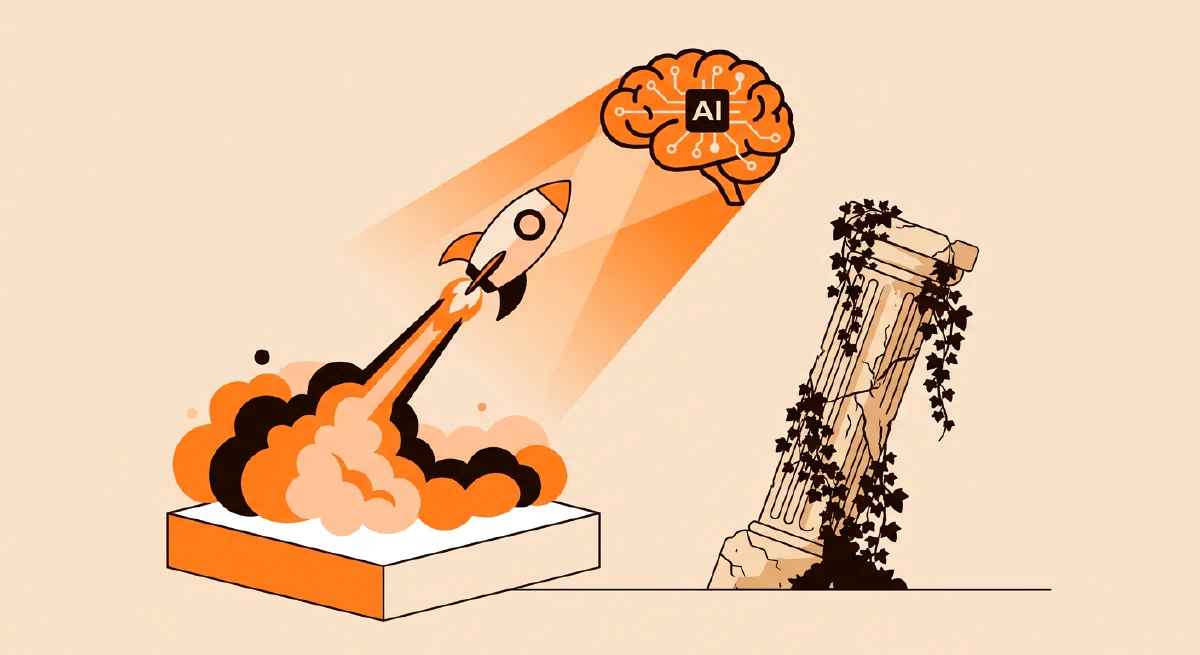
Startups don’t win AI visibility by spending more than incumbents. They win because they can build correctly from day one, while incumbents are years into a digital footprint that AI engines distrust and can’t easily unwind. The companies founded in the last three years have a once-in-a-generation opportunity to outrank enterprises that were born in 2005 but are still showing up in AI answers with outdated positioning, stale content, and inconsistent brand signals.
TL;DR
- Startups can implement llms.txt, schema markup, and consistent boilerplate from day one without undoing legacy decisions.
- Incumbents carry years of stale content, outdated product descriptions, and inconsistent cross-channel signals. AI engines penalize inconsistency.
- For lower-ranked websites, GEO techniques boost visibility by 115% according to the Princeton GEO study - which is exactly where startups start.
- Small channels with strong metadata compete directly with established brands in AI citations. In a 2026 study of over 100 million AI citations across six AI search platforms, roughly 40% of cited YouTube videos came from sources with very low view counts.
- The startups who build GEO into their foundation now will be visible in AI for years. The ones who wait will spend years catching up.
Why Incumbents Struggle With GEO
Established companies have accumulated digital assets for a decade or more. Those assets weren’t built with AI visibility in mind because AI engines didn’t exist when they were created. Now they’re liabilities:
Legacy content that contradicts current positioning. A 2018 blog post describing the product one way and a 2026 homepage describing it another. AI engines read both and see inconsistency.
Stale product pages. Features that no longer exist. Pricing from three years ago. Team members who left. Every one of these is a signal to AI engines that the source isn’t current.
Inconsistent brand boilerplate across channels. The company description on LinkedIn says one thing. The About page says another. Press release boilerplate says a third. AI engines aggregating these sources have conflicting data.
Poor technical hygiene accumulated over time. Missing schema markup on older pages. Blocked AI crawlers in robots.txt that someone added years ago and nobody remembers why. URL structures that changed without redirects. These issues don’t fix themselves.
Content written for human SEO, not AI retrieval. Long narrative blog posts optimized for keyword density, not answer extraction. H1 tags used for decorative styling. Key facts buried in paragraphs instead of front-loaded.
Undoing this takes years of content remediation, technical fixes, and cross-team alignment. A 2,000-page corporate site doesn’t get rewritten over a weekend.
Why Startups Have the Advantage
A startup with a 20-page site, a fresh LinkedIn presence, and a content library that started last quarter has none of these problems. Every piece of content can be built from day one with:
- Schema markup correctly implemented
- Machine-readable writing structure
- Consistent boilerplate across every channel
- Clean URL architecture
- Proper llms.txt from launch
- Active AI crawler access
This isn’t about outspending anyone. It’s about not having years of accumulated cruft to work through. The startup builds clean. The incumbent is stuck refactoring.
The Princeton GEO study found that for lower-ranked content specifically, GEO techniques boosted visibility by up to 115%. Startups are lower-ranked by default - they haven’t accumulated traditional SEO authority. That means GEO optimization produces outsized gains for them. The same techniques applied to an established site produce smaller percentage gains because the baseline is higher.
Why AI Engines Don’t Automatically Favor Big Brands
Against the conventional wisdom that “big brands always win,” AI citation data suggests otherwise. A March 2026 study of over 100 million AI citation instances found that roughly 41% of AI-cited YouTube videos had fewer than 1,000 views. Channel subscriber count showed a near-zero correlation (r = -0.03) with citation frequency.
In other words: audience size barely matters to AI engines. What matters is content quality, structural clarity, and topical relevance to the query being answered. A well-structured, authoritative piece of content from a 6-month-old startup can outrank a poorly structured piece from a decade-old Fortune 500.
For startups, this is the central opportunity. AI engines don’t know your brand is smaller. They just know whether your content is citable.
What Startups Should Do From Day One
1. Set up the infrastructure before launch
Before you publish your first blog post or press release, have these in place:
- Proper schema markup on every page (Organization, Product if applicable, FAQPage, Author)
- llms.txt file at your domain root
- Open AI crawler access in robots.txt (unless you have a specific licensing reason otherwise)
- Canonical brand boilerplate document, with versions for your website, LinkedIn, press releases, and social profiles
This infrastructure takes an afternoon to implement at a startup. Retrofitting it into an established site takes months.
2. Claim your brand across channels before launch
Register your LinkedIn company page, social profiles, Google Business Profile, and relevant industry directories before you go live publicly. Use identical brand boilerplate on every profile.
Claiming early matters because squatters and name collisions happen. By the time you realize someone else owns the LinkedIn URL you wanted, it’s a mess to unwind. Book the real estate before you need it.
3. Publish substantive content from the start
The biggest mistake early-stage startups make is waiting to launch their blog until they have a content team. AI visibility compounds over time. A startup publishing one substantive piece per month starting at month one has significantly more AI footprint by year two than a startup that waited 12 months to launch its blog and then scaled up aggressively.
Substance matters more than volume. Earned media accounts for the large majority of AI citations, so early coverage in trade publications, industry newsletters, and niche media is disproportionately valuable. Pitch proactively.
4. Build the press release habit early
Every milestone worth announcing (funding rounds, product launches, major hires, customer wins, partnerships) should be distributed through a newswire. Press releases build brand co-occurrence signals across hundreds of syndication endpoints. Each one is a data point that teaches AI engines who you are and what you do.
5. Use YouTube from day one
YouTube holds a 29.5% citation share in Google AI Overviews. For a startup, establishing a YouTube presence early is one of the highest-leverage AI visibility plays available. Even modest output - one substantive long-form video per month with correct metadata, transcripts, and timestamps - builds citation footprint.
6. Measure from day one
Set up AI visibility tracking immediately. Even with low initial visibility, measuring gives you a baseline. When your numbers move (either direction), you know what caused it. Without measurement, every content change is a guess.
How Zeover Helps Startups
Zeover is particularly useful for startups because it compresses months of work into automated workflows. A two-person startup can:
- Generate a complete llms.txt from their site structure in minutes
- Get a site audit against 100+ GEO metrics with specific remediation steps
- Generate GEO-optimized blog posts, press releases, and LinkedIn content at scale
- Benchmark brand visibility across ChatGPT, Claude, Gemini, and Grok
- Track competitors as they emerge
The alternative - hiring a GEO specialist, implementing schema manually, maintaining content output on four channels - is unrealistic for most early-stage companies. Zeover removes the staffing constraint.
Why Timing Matters
GEO is a trend that currently favors early movers. AI engines are still learning which sources to trust, citation patterns are still forming, and the brands establishing authority now will be harder to displace in 24 months. Wait three years and the landscape will look more like SEO does today - dominated by established players who built authority over a decade.
The startups building AI visibility foundations in 2026 are claiming positions that will compound for years. The ones that wait will eventually catch up, but they’ll do it against competitors who already own the category queries.
Where This Fits in the Series
Startups and incumbents both face decisions about how much GEO effort to invest and where to concentrate it. Later parts of this series cover local and multi-location businesses, agencies managing multiple brands, and companies pairing paid and organic acquisition.
Previously in this series:


