SEO vs GEO: What's the Difference and Why It Matters in 2026
Strategy GEO
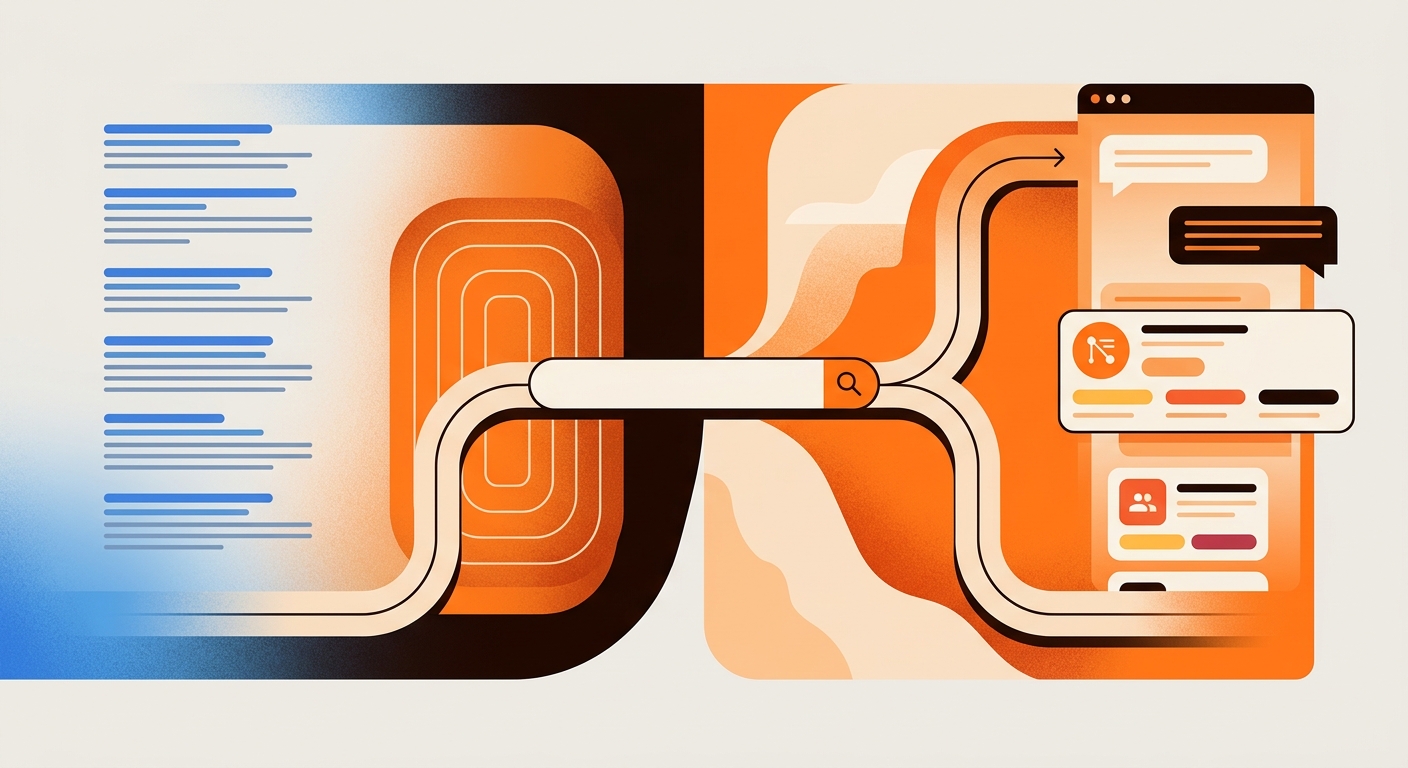

Is your brand showing up when customers ask AI for recommendations? Zeover monitors your visibility across ChatGPT, Claude, Gemini, and Grok, analyzes your site against 100+ GEO metrics, and generates optimized content to close the gaps. See how AI sees your brand.
Three in four Americans now search with AI weekly. Google AI Overviews appear on 48% of tracked queries, up from 31% a year earlier. ChatGPT passed 900 million weekly active users in early 2026. The question isn’t whether AI is changing search. It’s whether your optimization strategy has caught up.
SEO and GEO aren’t competitors. They solve different problems in the same customer journey. But the balance of investment between them is shifting fast, and most brands haven’t adjusted.
TL;DR
- SEO optimizes for search engine rankings and clicks. GEO optimizes for getting cited in AI-generated answers.
- Google still handles 90% of search traffic, but AI Overviews cut organic CTR by up to 61% on informational queries.
- Brand mentions correlate with AI citations at 0.664, roughly 3x higher than backlinks at 0.218.
- AI-referred visitors convert at 54% of sessions vs. 45% for organic search and spend 37% more per visit.
- You need both strategies, but GEO is where growth is concentrated.
What SEO Does (and Still Does Well)
SEO isn’t dead. That needs saying because “SEO is dead” surfaces as a headline every time a new technology shifts the search market.
A joint analysis of 40,000+ major U.S. websites published in early 2026 found that organic search traffic declined by only 2.5% year-over-year. The top ten largest sites actually grew 1.6%. Google still commands 90% of worldwide search traffic, and roughly 53% of all website traffic still originates from organic search.
SEO works. It’s a proven system for driving clicks through keyword targeting, link building, technical optimization, and content relevance. For transactional queries where people want to buy, compare, or navigate to a specific page, SEO remains essential. What’s changed is the type of query where SEO alone no longer captures the full opportunity.
What GEO Does Differently
GEO - Generative Engine Optimization - is the practice of making your brand’s content visible and citable in AI-generated answers. When someone asks ChatGPT “what’s the best project management tool for remote teams” or asks Gemini “how do I improve my website’s security,” the AI constructs a response by evaluating and citing sources. GEO determines whether your brand is among them.
The foundational GEO study, published at KDD 2024 by researchers from Princeton, Georgia Tech, and IIT Delhi, tested optimization techniques across 10,000 queries. Adding quotations to content improved AI visibility by 41%. Statistics improved it by 33%. Citing external sources boosted visibility by 28%, and for lower-ranked content specifically, that number jumped to 115%.
The signals that matter are different from SEO. Brand mentions across the web correlate with AI citations at 0.664, compared to just 0.218 for backlinks. Structured data, content freshness, and statistical evidence all carry more weight than traditional domain authority. Being talked about matters roughly three times as much as being linked to.
Where the Traffic Is Going
AI platforms generated 1.1 billion referral visits in June 2025, a 357% year-over-year increase. AI traffic to U.S. retailers rose 393% in Q1 2026 according to Adobe Analytics. Google Gemini reached 750 million monthly active users by the end of Q4 2025. Perplexity processes over 780 million queries per month.
AI referral traffic is still small in absolute terms - roughly 1% of total web traffic across major industries. But it converts better. A study covering January 2024 through December 2025 found that AI visitors convert at a 54.15% session rate vs. 45.23% for organic search. Adobe Analytics confirmed the pattern separately: AI-referred consumers are 16% more likely to convert once on site, and revenue per visit is 37% higher.
Meanwhile, traditional organic is losing ground. Pew Research tracked 68,879 Google searches from 900 U.S. adults and found that users clicked a result only 8% of the time when an AI summary appeared, versus 15% without one. A separate analysis of 25.1 million impressions across 42 organizations found that organic CTR dropped 61% on informational queries with AI Overviews.
The silver lining: brands cited within AI Overviews saw 35% higher organic CTR and 91% higher paid CTR than brands that weren’t cited. Getting into the AI answer doesn’t just capture AI traffic. It protects your traditional search performance too.
Side-by-Side: SEO vs GEO
| SEO | GEO | |
|---|---|---|
| Goal | Rank on search results pages | Get cited in AI-generated answers |
| Key signals | Backlinks, keywords, domain authority | Brand mentions, structured data, citations |
| Content format | Keyword-optimized pages | Answer-ready, statistic-rich, cited content |
| Measurement | Rankings, impressions, CTR | Brand visibility score, mention rate, share of voice |
| Time to results | 3-6 months | 2-4 weeks for early signals |
| Primary platforms | Google, Bing | ChatGPT, Gemini, Perplexity, Claude, Grok, AI Overviews |
Why You Need Both
Abandoning SEO for GEO would be premature. Google still processes billions of queries daily. Transactional and navigational searches still drive direct revenue through organic clicks. Your SEO infrastructure - site speed, crawlability, content depth, internal linking - also supports GEO because AI engines read the same underlying content.
But relying on SEO alone means accepting a shrinking share of discovery. The Forrester 2026 Buyer Insights report found that 89% of B2B buyers have adopted generative AI in less than two years, naming it among the top sources of self-guided information across every phase of buying. Gartner projects that by 2028, 90% of B2B buying will be AI-agent intermediated, pushing over $15 trillion in annual spend through AI exchanges.
The brands maintaining both strategies capture an estimated 60-70% of available search visibility. The ones relying exclusively on SEO are losing ground in the channel that’s growing fastest.
What “Organic GEO” Actually Means
In traditional search, “organic” means unpaid visibility earned through content quality and technical merit. The same concept applies to GEO. Organic GEO is the practice of earning citations in AI-generated answers through content quality rather than paid placement.
AI engines don’t sell ad space inside their answers (yet). Every citation in a ChatGPT or Perplexity response is earned. The brands investing in content that AI models find authoritative, accurate, and well-structured - the approaches we’ve been covering across our GEO series on press releases, social media, YouTube, and AI agents - are building a durable competitive advantage while citations are still unmonetized.
How Zeover Bridges the Gap
Zeover is built for this transition. The platform crawls your website and analyzes it against 100+ GEO metrics, benchmarks your brand’s visibility across ChatGPT, Claude, Gemini, and Grok, and generates optimized content designed to earn AI citations.
Where traditional SEO tools tell you how you rank on Google, Zeover shows you how AI engines see your brand. It identifies which queries you’re absent from, which competitors AI recommends instead of you, and what specific content changes will close the gap. The combination of AI-powered analysis and content generation means you don’t need a dedicated GEO team to start competing in AI answers.
What’s often overlooked is that the issues Zeover finds and fixes improve SEO performance too. Structured data, clean heading hierarchies, schema markup, machine-readable content, proper metadata - these are the same signals that help Googlebot understand and index your pages. When Zeover makes your site more readable to AI engines, it’s making it more readable to every crawler, including Google’s. The fixes compound across both channels. Brands using Zeover consistently report improvements in traditional organic rankings alongside their GEO gains, because the underlying work is the same: making content that machines can parse, understand, and trust.
SEO got your brand in front of people who typed queries into Google. GEO gets your brand in front of people who ask AI for answers. In 2026, the brands winning are the ones doing both - and the fastest path to getting started is measuring where you stand today.