Social Media and GEO: What the Research Actually Shows
Strategy GEO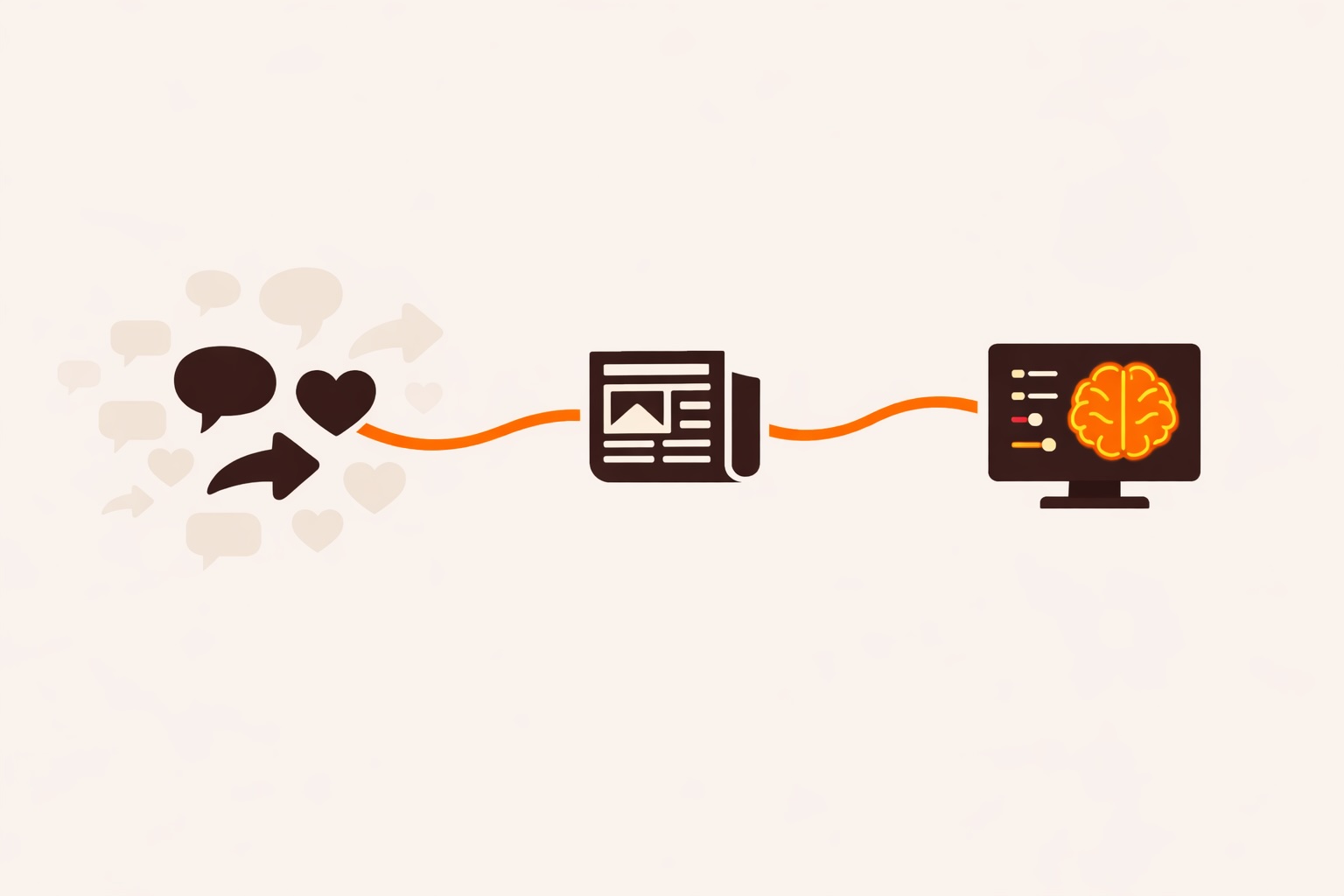

Social media alone won’t get your brand into AI recommendations. Zeover tracks your brand’s visibility across ChatGPT, Claude, Gemini, and Grok, identifies where you’re missing from AI answers, and generates optimized content to close the gap. See how AI sees your brand.
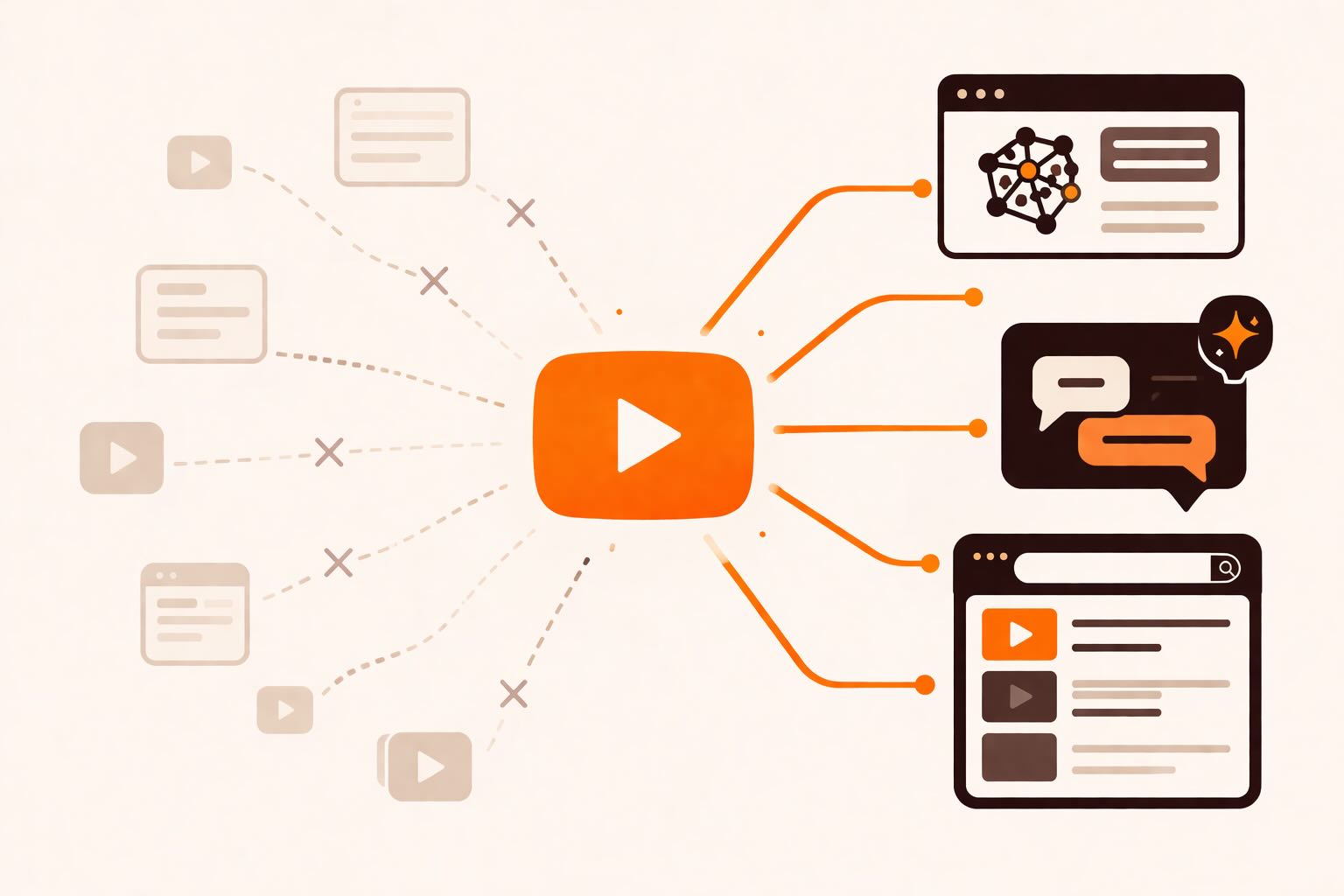
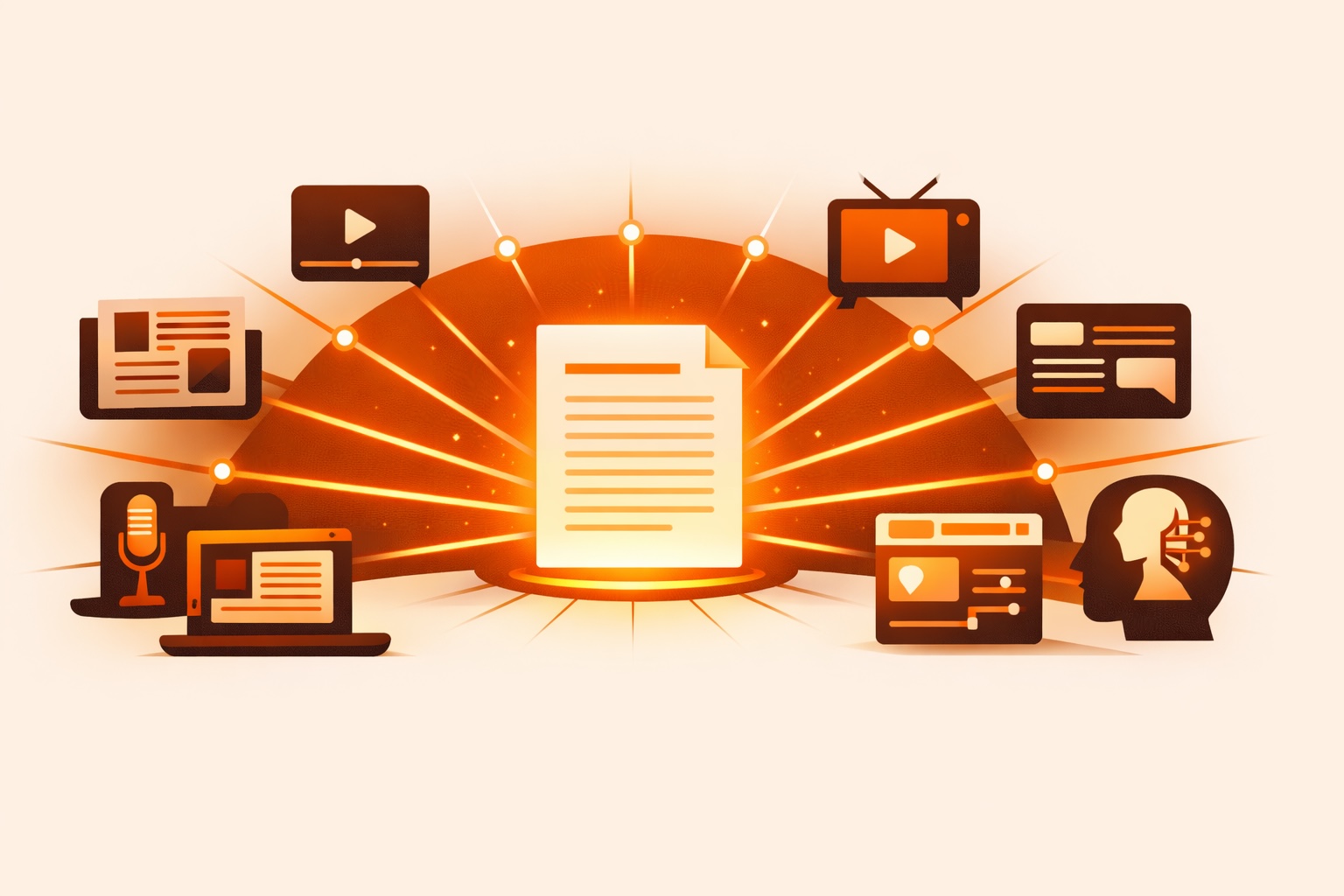
A September 2025 study from researchers at the University of Toronto analyzed how generative AI search engines select and cite sources across 10 product categories. Social content - including Reddit, YouTube, and traditional social platforms - accounted for 0% to 0.3% of all AI search citations. Earned media from third-party publications dominated at 69-92%.
That finding could lead you to conclude that social media is irrelevant to GEO. Many growth marketers have drawn exactly that conclusion. They’re mostly right, but they’re missing three specific mechanisms where social media activity does influence AI visibility, and one platform where it matters far more than anywhere else.
The Direct Impact: Near Zero for GEO, Zero for Google SEO
The academic evidence is consistent. Social media posts don’t directly influence what AI models recommend, and they don’t directly affect Google search rankings.
On GEO: Chen et al.’s University of Toronto study tested GPT-4o, Perplexity, Claude 3.5 Sonnet, and Gemini 2.5 Flash across 1,000 consumer ranking prompts. The researchers described a “near-total absence of Social sources” across all categories. When they compared this to Google’s traditional search results for the same queries, social content represented 22-23% of Google results. AI search engines simply don’t value social media the way traditional search does.
Bain & Company’s research on LLM source preferences reinforces this. Analyzing approximately 500 million AI citations through ScrunchAI, Bain found that 89% of unbranded search prompts are fulfilled by third-party sources. Their conclusion: “The sources LLMs trust look more like a strong public relations and earned media strategy than a performance marketing dashboard.” Social media didn’t make their list of five characteristics LLMs prioritize when selecting content.
On Google SEO: Google’s own representatives have been explicit for over a decade. Matt Cutts stated in 2014 that social signals aren’t direct ranking factors. Gary Illyes repeated this at Pubcon 2016, adding that building ranking signals on unreliable data sources (platforms that restrict crawling, revoke API access, and gate content behind authentication) would be poor engineering. John Mueller has reiterated across multiple Google Search Central sessions that likes, shares, and follower counts don’t feed into Google’s ranking algorithm.
The one exception: Bing confirmed through representatives Duane Forrester and Christi Olson that social signals are part of Bing’s ranking algorithm, including the authority of sharing profiles. But Bing holds roughly 7-9% of US search market share, limiting the practical impact.
Why the disconnect? An ACM FAccT analysis of Common Crawl - the web archive that supplied 80%+ of GPT-3’s training tokens - provides a structural explanation. Facebook actively blocks Common Crawl’s crawler via robots.txt. X blocks all AI training crawlers. Instagram content sits behind authentication. Most social media content simply never enters the training data that powers AI models. The platforms have walled themselves off from the AI training pipeline, and the AI models reflect that exclusion.
Mechanism 1: The Influencer-to-Earned-Media Pipeline
Social media’s real GEO value doesn’t come from posts themselves. It comes from what those posts trigger when the right people share them.
Reuters Institute research documents that 56% of journalists use social media “regularly” or “always” for story discovery. Cision’s 2024 Global State of the Media Report found an even higher figure: 68% of journalists say social media is their primary tool for identifying story ideas. When an influencer with domain expertise posts about your product, journalists notice.
The academic literature maps this pipeline precisely. Molyneux and McGregor’s research in Digital Journalism found that when journalists embed or cite social media posts in news articles, they transfer institutional credibility to the original poster. McGregor and Molyneux’s separate study in Journalism showed that journalists who use social media heavily are more likely to perceive trending topics as newsworthy. A Pew Research Center analysis found roughly 1 in 4 news stories in major US outlets contained at least one embedded social media post.
This is where the chain connects to GEO. The Princeton GEO study (ACM KDD 2024) demonstrated that authoritative citations in content increase AI visibility by up to 115%. Journalists citing influencer posts creates the authoritative third-party content that AI models trust and cite. The influencer’s post doesn’t appear in the AI response. The TechCrunch article that the post inspired does.
Consider the pattern: Marques Brownlee’s January 2024 YouTube review of the Fisker Ocean generated earned coverage in The Verge, Engadget, Business Insider, and Reuters. Dr. Eric Topol’s Twitter threads synthesizing vaccine research were regularly cited in The New York Times, The Atlantic, and The Washington Post. In both cases, social media content became the catalyst for authoritative journalism that entered AI training corpora.
Edelman’s 2024 Trust Barometer found that “expert creators” - influencers with demonstrated domain expertise - were trusted at rates comparable to journalists in their specific verticals. Sixty-three percent of 18-34 year olds said they trust an influencer’s opinion about a product more than what the brand says about itself. That trust translates into journalist attention, which translates into earned media, which translates into AI citations.
The practical question for social media managers: how do you access this pipeline?
Two paths work. If your brand already has relationships with influential accounts in your space - people whose posts journalists follow and cite - investing in those relationships generates earned media at the speed of social. If you don’t have those connections, creator marketplaces like The Now Agency match brands with creators who have the audience reach and topical authority to trigger that journalist-to-AI citation chain. Either way, the goal isn’t social engagement metrics. It’s earned media generation.
Mechanism 2: The Grok Exception
Every other AI model is blind to X/Twitter data. Grok isn’t.
When xAI acquired X Corp in March 2025 in an all-stock transaction (X valued at $33 billion), it eliminated any ambiguity about data access. Grok processes X’s real-time firehose of public posts, giving it a dataset no competitor can replicate. X’s robots.txt blocks every AI training crawler except search engine bots. The data flows exclusively to Grok.
This matters because Grok’s market share is growing fast. Apptopia data reported by Reuters shows Grok reached 17.8% of the US chatbot market in January 2026, up from 1.9% a year earlier. It’s now the third most-used chatbot in the US behind ChatGPT (52.9%) and Gemini (29.4%).
Grok doesn’t just train on X data. It actively searches and cites X posts in real-time responses. When a user asks Grok about a product, brand, or trend, it can pull specific posts, surface sentiment from public conversations, and incorporate perspectives from influential X accounts. Brands with active, high-engagement X presences generate stronger signals in Grok’s recommendations. Brands absent from X are structurally less visible to a chatbot that nearly one in five US users now consult.
X also updated its privacy policy in October 2024 to allow user data sharing with xAI for training, with a default-on setting. The EU’s Data Protection Commission intervened for European users, but the policy remains active globally outside the EU.
The Meta parallel: Meta uses public Facebook and Instagram posts to train its Llama models. Llama 3 (April 2024) confirmed this practice, and Llama 4 (April 2025) expanded it to include image and video data. But Meta’s advantage is less exclusive than xAI’s - Facebook and Instagram public content isn’t robotstxt-blocked from other crawlers the same way X is. Meta’s edge is scale and ease of access rather than true exclusivity.
What this means for social media managers: If Grok’s 17.8% US market share continues growing, optimizing your X presence becomes a legitimate GEO tactic, specific to one model but a meaningful one. Post consistently, engage authentically, and build the kind of account authority that Grok’s retrieval system surfaces. This doesn’t apply to any other AI model, but it applies to the fastest-growing one.
Mechanism 3: Reddit Isn’t Social Media (for AI Purposes)
Reddit occupies a category of its own. Chen et al.’s study bundled Reddit into “social” alongside Twitter and Instagram, which is why even their 0-0.3% figure may overstate traditional social media’s role. In practice, AI models treat Reddit more like independent journalism than social media.
Reddit signed a $60 million per year data licensing deal with Google in February 2024, disclosed in Reddit’s IPO filing. OpenAI signed a similar deal worth approximately $70 million annually. Reddit’s total AI licensing revenue reached $203 million in 2024.
GPT-3’s training deliberately prioritized Reddit content. Its WebText2 dataset was curated from Reddit outbound links with 3+ karma, weighted at 5.5x compared to Common Crawl’s 0.73x. Reddit threads are long-form, publicly crawlable, and quality-filtered by upvotes. They structurally resemble the “deep customer conversations” that Bain identified as one of the five characteristics LLMs prioritize.
The Harvard Business Review’s June 2025 analysis of LLM brand optimization specifically called out Reddit as a venue where brand discussions influence AI recommendations - while notably not mentioning Twitter, Facebook, Instagram, or TikTok as relevant channels.
For social media managers, this reframes the question. Reddit engagement - participating authentically in subreddit discussions, answering questions, providing genuine value - has measurable GEO impact. But it requires a fundamentally different approach than other platforms. Reddit users reject overt marketing, and the platform’s karma system punishes it. The brands that benefit from Reddit’s AI citation pipeline are those whose employees and advocates participate as genuine community members.
When Social Media Helps SEO (Indirectly)
While social media isn’t a direct Google ranking factor, the indirect mechanisms are real and documented.
Faster indexing. Perficient’s (formerly Stone Temple Consulting) controlled experiment found that URLs shared on Twitter got discovered and indexed by Googlebot noticeably faster than unshared URLs. For time-sensitive content - product launches, event coverage, breaking industry news - social distribution accelerates the window between publication and searchability.
Link acquisition. Content that goes viral on social media gets seen by bloggers, journalists, and webmasters who link to it from their own sites. Those editorial backlinks are confirmed ranking signals. The social sharing doesn’t cause the ranking improvement, but the links it generates do.
Brand search volume. Social campaigns increase brand awareness, driving branded search queries that signal entity authority to Google. The DOJ antitrust trial in 2023-2024 revealed internal Google documents confirming that user interaction signals (through the Navboost system) do influence rankings, giving indirect support to the theory that brand awareness driven by social activity creates search equity.
Content amplification for E-E-A-T. Social distribution leads to mentions, citations, and brand-topic co-occurrence across the web, potentially strengthening Experience, Expertise, Authoritativeness, and Trustworthiness signals. This mechanism is plausible but unconfirmed by Google.
What the Consulting Firms Are Telling CMOs
The consulting research paints a consistent picture about where social media fits in the 2026 marketing mix.
McKinsey’s European CMO survey of 500+ senior marketing decision-makers ranked branding as the #1 priority for 2026. Social media and influencers were described as “not so hot right now.” This doesn’t mean social is dead - it means CMOs are recalibrating where it fits relative to other channels.
Gartner predicted that 50% of consumers would abandon or significantly limit social media interactions, based on a survey where 53% of consumers said social media quality has decayed. Separately, Gartner projects that mass LLM adoption will drive a 2x increase in PR and earned media budgets by 2027, reflecting the shift toward channels that AI models actually cite.
Forrester’s 2026 predictions show social media’s share of total ad spend dropping from 18% to 17%, with 83% of B2C marketing executives planning to diversify their media mix beyond the major platforms. Display ad budgets face 30% cuts.
The Edelman Trust Barometer provides the trust context: social media has been the least-trusted information channel since 2016, scoring 42 on Edelman’s scale versus 63 for search engines. The Reuters Institute found that only 14% of people trust social media for information verification, dead last among all channels.
SparkToro founder Rand Fishkin summarized the referral traffic picture: social media traffic from platforms is “a tenth or a fiftieth or a hundredth of what it was five, ten, fifteen years ago,” because platform algorithms punish content with outbound links. SparkToro’s own data shows 10x the reach from zero-click content (no link) versus posts with links.
What Social Media Managers Should Actually Do
The research points to a clear strategic framework. Social media isn’t useless for GEO or SEO, but its value is entirely indirect, and the ROI depends on which mechanism you’re targeting.
For GEO visibility across ChatGPT, Claude, Gemini, and Perplexity: Social media posts won’t help directly. Invest instead in the content types these models cite: authoritative website content with strong schema.org markup, press releases through distribution networks like CISION, earned media coverage, and a current llms.txt file. Use Zeover to benchmark your visibility and identify the gaps.
For GEO visibility on Grok specifically: Maintain an active, authoritative X presence. Grok processes X data exclusively and surfaces it in real-time responses. Post consistently about your core topics, engage with industry conversations, and build genuine follower relationships. This is the one platform where social activity directly feeds an AI model’s recommendations. With Grok at 17.8% US market share and growing, this isn’t a niche consideration.
For the influencer-to-earned-media chain: Focus on creators and thought leaders whose posts journalists follow. The goal isn’t engagement metrics - it’s triggering the coverage that AI models cite. Work with influencers directly if you have existing relationships, or through marketplaces like The Now Agency that match brands with creators who have the audience reach and domain authority to generate earned media. One well-placed post from a trusted industry voice that generates a TechCrunch article creates more AI visibility than a thousand branded social posts.
For Reddit: Participate authentically. Don’t market. Answer questions in relevant subreddits, share genuine expertise, and contribute to discussions where your product or category is being evaluated. Reddit content gets cited by AI models at rates dramatically higher than any other social platform because LLMs treat it as independent user testimony, not marketing.
For traditional SEO: Use social media for what it actually does well in search - accelerating content indexing, amplifying content to potential linkers, and building brand search volume. Don’t chase likes and shares as SEO signals. Chase the backlinks and brand awareness that social distribution generates as secondary effects.
The Bottom Line
Social media’s direct impact on GEO is near zero. Its direct impact on Google SEO is zero. The academic research, consulting firm data, and platform economics all agree on this.
But “near zero direct impact” isn’t the same as “no value.” Social media creates GEO value through three specific, measurable mechanisms: the influencer-to-earned-media pipeline, Grok’s exclusive X data access, and Reddit’s unique position as an AI-cited discussion platform. Social media managers who understand these mechanisms can invest strategically. Those chasing vanity metrics on Instagram and Facebook for AI visibility are spending budget in the wrong place.
Gartner projects PR and earned media budgets will double by 2027 as brands redirect spending toward channels AI models actually cite. The social media managers who thrive in that transition will be the ones who reframe their role: not as content publishers chasing engagement, but as earned media catalysts creating the signals that shape what AI recommends.